

Technical Support:
158-7527-1139

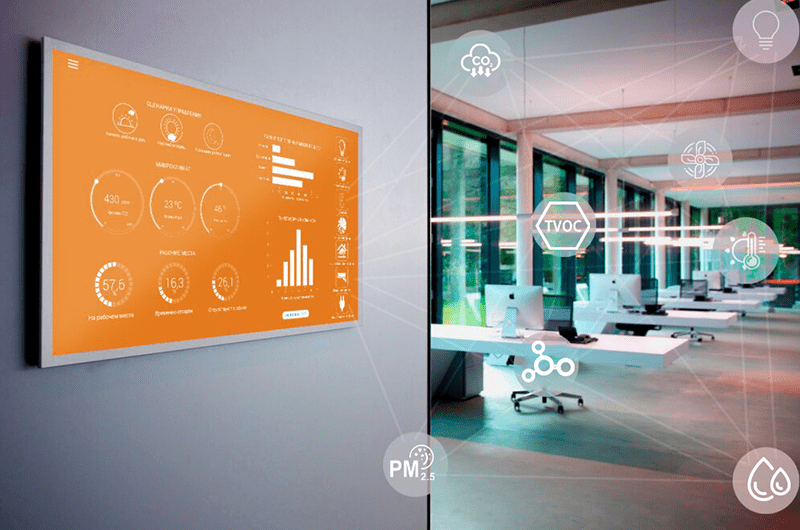
With the improvement of people's living standards, the requirements for indoor environmental quality are becoming higher and higher. The quality of the indoor environment directly affects people's physical health and living comfort. Therefore, indoor environmental monitoring has become an important research field.
Indoor environmental monitoring mainly includes various indicators such as temperature, humidity, air quality, and noise. Among them, air quality is one of the key aspects of indoor environmental monitoring. Air quality primarily depends on pollutants such as dust, particulate matter, and gases in the air. Therefore, detecting and monitoring pollutants like dust and particulate matter in indoor air is a vital part of indoor environmental monitoring.
A laser dust sensor is a sensor based on the principle of optical scattering, which can be used to detect pollutants such as dust and particulate matter in the air. Its working principle is: when dust and particulate matter in the air pass through the laser beam, scattering occurs. The intensity of the scattered light is related to the size, shape, and material of the particles. By measuring the intensity of the scattered light, the concentration of dust and particulate matter in the air can be calculated.
Laser dust sensors have the following advantages:
High measurement accuracy: Laser dust sensors use the principle of optical scattering to accurately measure the concentration of dust and particulate matter in the air.
Rapid response: Laser dust sensors can quickly respond to changes in the concentration of dust and particulate matter in the air.
Strong anti-interference ability: Laser dust sensors utilize optical scattering principles, providing them with strong anti-interference capabilities.
Laser dust sensors have a wide range of applications in indoor environmental monitoring. In devices such as air purifiers, fresh air systems, and smart homes, laser dust sensors are widely used. An air purifier uses a laser dust sensor to detect the concentration of dust and particulate matter in the air and automatically adjusts its operating mode based on the results. A fresh air system detects indoor air quality via a laser dust sensor and automatically regulates the volume of fresh air. A smart home system can monitor indoor air quality through a laser dust sensor and issue alarms or take other measures based on the detection results.
Furthermore, laser dust sensors can also be used for early warning and analysis of indoor environmental quality. By analyzing data from laser dust sensors, trends in indoor air quality can be predicted, and corresponding measures can be taken.
With the continuous development of laser dust sensor technology, its application in indoor environmental monitoring will become even more extensive. Laser dust sensors will provide people with healthier and more comfortable indoor environments.
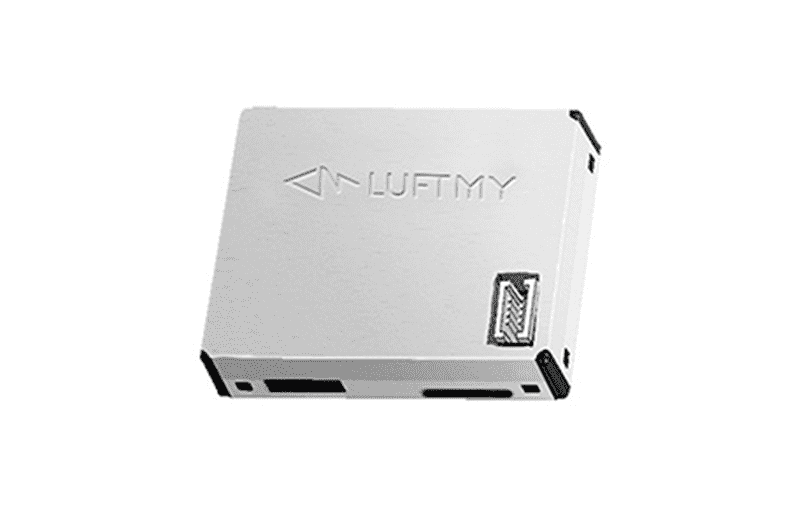
The following are specific applications of laser dust sensors in indoor environmental monitoring:
Air Purifiers: The air purifier is essential equipment for improving indoor environments. Laser dust sensors can detect the concentration of dust and particulate matter in the air in real time and automatically adjust the working mode of the air purifier based on the detection results. This ensures that the air purifier effectively removes air pollutants and improves indoor air quality.
Fresh Air Systems: Fresh air systems can replenish indoor spaces with fresh air and improve air quality. Laser dust sensors can monitor indoor air quality in real time and automatically adjust the volume of fresh air based on the results, ensuring that indoor air always remains at a good level.
Smart Homes: Smart home systems can automatically adjust the operating status of home equipment based on changes in the indoor environment. Laser dust sensors can detect indoor air quality in real time and issue alarms or take other measures based on the results, ensuring that people are promptly aware of changes in indoor air quality and can take appropriate action.
The application of laser dust sensors in indoor environmental monitoring provides people with a healthier and more comfortable indoor environment. As laser dust sensor technology continues to evolve, its application in indoor environmental monitoring will become even more widespread.
