





Technical Support:
158-7527-1139

Consistency output less than ±8-10%
Patented technology, accuracy up to 0.1um
Real-time response, continuous collection for 30,000-50,000 hours
Ultra-low current, 30-50% lower than peers
Simultaneous output of PM1.0, PM2.5, PM10
Service life over 8 years under power-on conditions
Detection Principle: Mie Spherical Scattering Principle
Detection Particle Size Range: 0.1~10 μm
PM2.5 Output Range: 0~1000
Working Conditions: -10~70℃, 0~95% RH
Storage Conditions: -40~80℃, 0~95% (Non-condensing)
Working Voltage: DC 5V±5% (Power Ripple 50mV Max)
Working Current: ≤100 mA
Standby Current: ≤0.5mA
Signal Output: PWM, UART
Mean Time Between Failures: ≥5 years
Product Size: W59*H45*D14(mm)
PM2.5 Output Consistency: >100 ug/m³ max allowable error ±10%
PM2.5 Output Consistency: <100 ug/m³ max allowable error ±10ug/m³
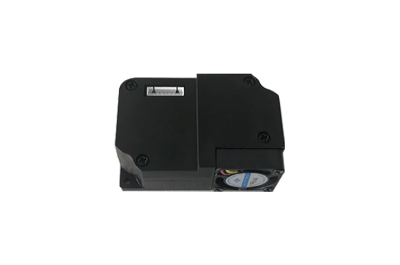
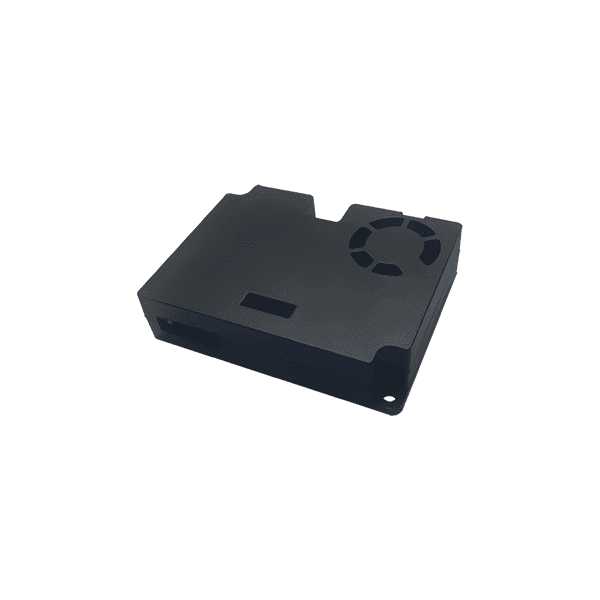
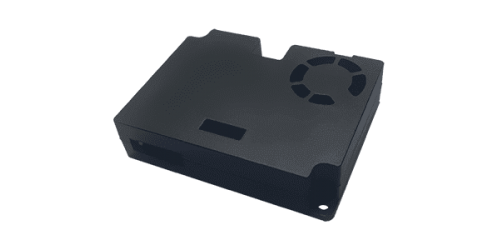
The LD19 is a high-precision particulate matter concentration sensor based on the Laser Mie Scattering theory. It can continuously collect and calculate the number of suspended particles of different sizes in the air per unit volume—namely the particulate matter concentration distribution—and convert this into mass concentration, outputting it via a universal digital interface. This sensor can be embedded in various instruments or environmental improvement equipment related to suspended particulate concentration to provide timely and accurate data.
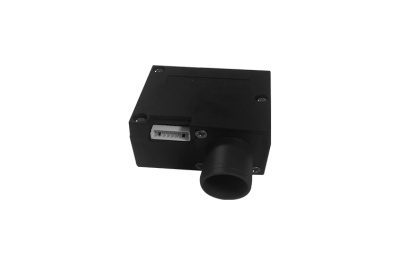
The LF12 is a sensor that does not require an internal fan; its driving air source comes from the host device, which overcomes the defects caused by fans in traditional laser sensors on the market. A high-illuminance and uniform light-sensitive area is set in the center of the scattering cavity inside the housing. A semiconductor laser generator and detector are set outside the scattering cavity. The detector is connected via an amplification circuit to a microcontroller unit that can calculate the particle diameter and quantity based on the amplification circuit’s input signals.
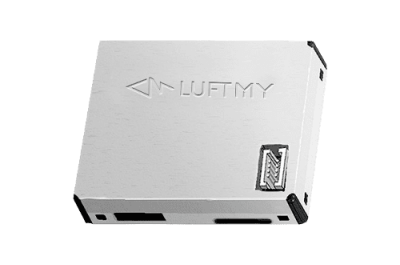
The LD16 series is a high-temperature resistant, long-life, ultra-thin laser dust sensor. Based on the principle of optical scattering and combined with Luftmy’s unique dust source intelligent identification technology, it accurately detects and calculates the number of suspended particles of different sizes per unit volume in various environments. Through mathematical algorithms and scientific calibration, it achieves accurate output of PM2.5 mass concentration. The full metal shell effectively shields electromagnetic interference, providing excellent anti-interference performance.
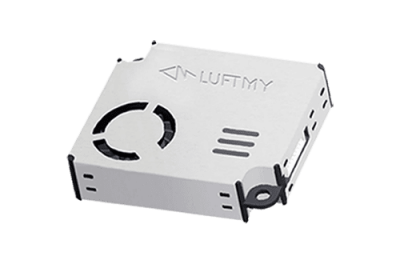
The LD15 series is a high-temperature resistant, long-life, ultra-thin laser dust sensor. Based on the principle of optical scattering and combined with Luftmy’s unique dust source intelligent identification technology, it accurately detects and calculates the number of suspended particles of different sizes per unit volume in various environments. Through mathematical algorithms and scientific calibration, it achieves accurate output of PM2.5 mass concentration. The full metal shell effectively shields electromagnetic interference, providing excellent anti-interference performance.
