

Technical Support:
158-7527-1139

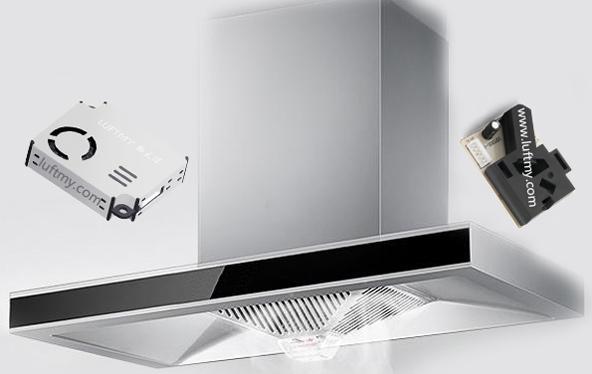
Range hoods represent the largest category among kitchen appliance products and the one with the most intense market competition. Since 2018, the range hood market has entered a consolidation period, where many counterfeit brands and small low-end manufacturers have been phased out. Facing a sluggish market, powerful brands are actively seeking new development paths. With limited room in the incremental market, seizing the trend of replacement in the stock market is an effective way to break through bottlenecks, and technological upgrades have become key. Today, range hood technology is relatively mature. Products have evolved from early Chinese-style range hoods (shallow/deep hood) to European-style (arc, T-shaped, tower-shaped), and then to side-suction range hoods. Currently, European-style and side-suction models dominate the market, and the product landscape has stabilized.
Analysis shows two main technical development paths for range hoods: one is increasing motor power for high airflow, and the other is lowering the suction inlet to lock in fumes at the source and shorten their movement distance. However, both have bottlenecks: high airflow motors bring more noise and power consumption, while lowering the inlet complicates the internal structure and makes cleaning harder. Furthermore, consumers lack clear understanding of the endless variety of range hood products. According to the head of Suning Crowdsourcing, analysis of consumer data shows many users search for or add range hoods to carts without purchasing. Beyond price comparisons, it is suspected that consumers are not truly “satisfied” with mainstream products and are “hesitant” in their choices.
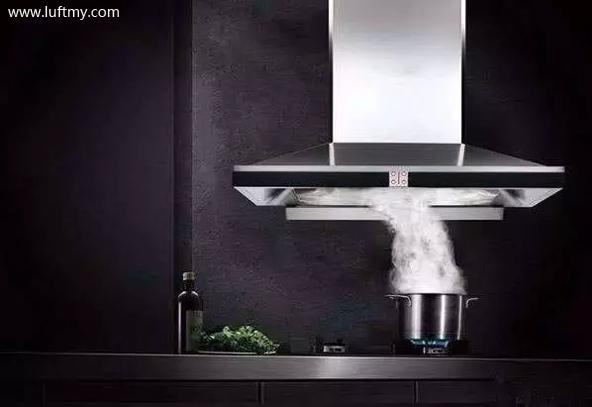
How can the range hood bottleneck be broken? When the general product layout is hard to change, we can start with user-friendly functions and details. This can be divided into internal and external aspects; a range hood with “excellence both inside and out” will lead the future market.
“Internal”——Auto-cleaning
Generally, after long-term use, the interior of a range hood accumulates heavy oil pollutants. Due to its complex structure, users often cannot disassemble and clean it themselves, requiring professional help, which increases the cost of ownership. Range hoods with “auto-cleaning” solve this. Current technologies include using heating wires to melt oil or using steam to dissolve oil followed by a hot water rinse and air drying.
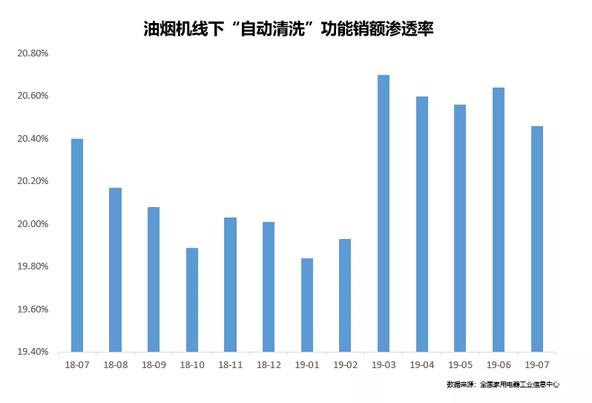
The “auto-cleaning” feature for range hoods has existed for a long time, with penetration reaching 40% for some brands. However, for the industry as a whole, it remains at about 20% penetration. Some consumers remain skeptical about the cleaning effect. Nevertheless, “healthiness” is the current development direction for all household appliances, and this function warrants further exploration.

“External”——Air Monitoring
The kitchen is a disaster area for indoor air pollution. A British study reported that cooking for one hour with poor ventilation is as harmful to health as smoking two packs of cigarettes a day. Users usually focus on removing the “smell” of oil fumes with their range hood but ignore invisible pollution. Data shows that even 10 minutes after turning off the hood post-cooking, PM2.5 levels can still be at “heavy pollution” levels even if the smell is gone, as exhaust takes time to clear and can spread to other areas.
Equipping range hoods with PM2.5 sensors can effectively solve this by monitoring pollution in real-time to control the actual shutdown time. This is a major trend. Products with these sensors usually feature air quality indicator lights, making the extraction effect “visible.” This is the “external” development space for range hoods.
According to national standards, the service life of a range hood is 7 years, after which it should be scrapped. Thus, the replacement demand in the stock market is huge. Range hood manufacturers should push for technological upgrades and healthy products that are “excellent both inside and out” to move consumers. Simultaneously, the industry should establish new iteration standards to drive further upgrades.
