

Technical Support:
158-7527-1139

The most indispensable thing for cooling down and heat stroke prevention is the air conditioner. Many people jokingly say that their lives are saved by air conditioners. It must be said that without an air conditioner, life would be very uncomfortable. I wonder if everyone's most comfortable moment is turning the air conditioner to the lowest temperature and then snuggling into bed.
In the hot summer, the most pleasant thing is to stay at home and turn on the air conditioner to keep cool. However, how many people think about regularly cleaning and disinfecting the air conditioner while enjoying it? Otherwise, the air conditioner will blow out invisible bacteria, fungi, and can even cause a bowl of white rice to go moldy within 72 hours.
Recently, the editor of Luftmy learned that several disease control agencies conducted on-site household air conditioner surveys in Shanghai, Beijing, Shenzhen, and Guangzhou. The findings revealed that: the total number of bacteria on the cooling fins of 88% of air conditioners exceeded the standard, and the total number of mold on the cooling fins of 84% of air conditioners exceeded the standard; the bacteria detected in air conditioner cooling fins can be up to 1000 times over the limit.
According to experts, in addition to absorbing a large amount of dust, air conditioners also harbor pathogens such as mites, bacteria, and fungi. During operation, the bacteria and fungi inside the air conditioner, especially on the cooling fins, are sprayed out from the air outlet and enter the human body through the respiratory tract. This can easily lead to dizziness, fatigue, and even respiratory diseases such as colds, rhinitis, and asthma. Therefore, many air conditioner illnesses are not just caused by the alternation of hot and cold; the pollution inside the air conditioner is also a source of trouble.
Just how many pollution sources are hidden in household air conditioners? Recently, laboratory staff visited ordinary households to conduct on-site observations, sampling, and laboratory cultivation. The experimental results were astounding.
1. Air conditioner makes a bowl of rice go moldy in 72 hours
Test whether the air conditioner produces pollution: take two bowls of equal amounts of white rice, place them on a table under a wall-mounted air conditioner, and cover one of them. Close the doors and windows, and turn on the air conditioner. After 72 hours, the covered rice only slightly discolored, but the bowl of rice exposed under the air conditioner had grown hair-like mold and large mold spots were found.
In this regard, some citizens raised the point that they had just cleaned the filter with detergent and water a month before turning on the air conditioner. Why would this still happen? Relevant experts explained that after an air conditioner is used for a period of time, dust and dirt deposit on the outer cover and filter surface, which are easy to clean. However, the place where the most air conditioner bacteria gather——the cooling fins——is often overlooked. As the core component of air conditioner heat exchange, cooling fins not only accumulate dirt and dust but also breed a large number of germs under the action of condensed water. In addition, when the air conditioner is turned on, doors and windows are usually kept tightly closed, air circulation is poor, and particularly in the muggy and humid summer, germs are more likely to breed.
2. Large amounts of bacteria are hidden in air conditioner cooling fins
Observe how much dirt is hidden on the air conditioner cooling fins with the naked eye: select a household wall-mounted air conditioner that has been used for more than 3 years and has not been cleaned this year. Open the air conditioner cover, and on the exposed filter, a thick layer of dust can be seen; take samples with cotton swabs and paper towels. Remove the filter, and you can see the dark green air conditioner cooling fins. At first glance, there doesn't seem to be much dust, but scraping the cooling fins with a cotton swab reveals black-gray flocculent sludge. Sampling with a white paper towel shows a large amount of dirt attached to the cooling fins.
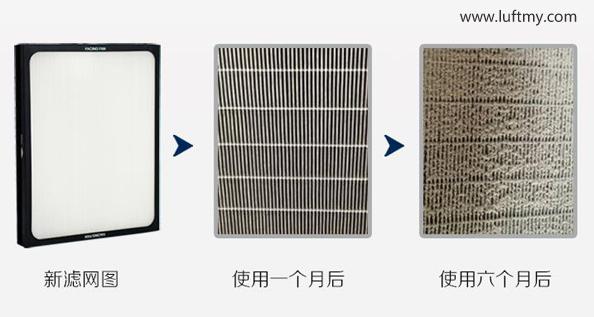
Does the black flocculent sludge contain pathogens? Luftmy editor noted that relevant experts introduced that professional health agency testing found a large number of bacteria and fungi hidden on the cooling fins of household air conditioners, with an average total colony count as high as 4765 per square centimeter. Pathogens mainly include mold, Legionella, Staphylococcus aureus, and many other germs. When the air conditioner is running, the pathogens on the cooling fins are sprayed out from the air outlet and enter the human body, easily causing dizziness, fatigue, and even respiratory diseases such as colds and pneumonia.
On air conditioner cooling fins that have been idle for a long time, many mites, molds, and germs will accumulate. Because people cannot intuitively judge the cleanliness of air conditioner air with the naked eye, the pollution of household air conditioners is easily overlooked. Relevant health experts pointed out that when the air conditioner is running, a large number of pathogens on the cooling fins are sprayed from the air outlet and spread to every corner of the room. People staying in an air conditioner environment for a long time will feel dizzy, fatigued, and experience a decrease in immunity, and in severe cases, they may suffer from respiratory infectious diseases.

In an air conditioner environment, the health of infants and young children should be given special attention. Relevant environmental health experts said that the air inhalation of an infant when quiet is twice that of an adult. Children aged 0-6 grow and develop very quickly, and the damage caused by environmental toxins poses a great risk of permanent and irreversible functional impairment.
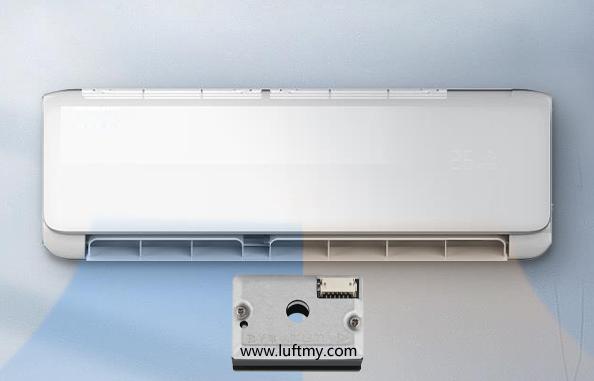
Regular cleaning of air conditioners is necessary. Improving indoor air quality by installing air purifiers is a choice for many people at present. However, general air conditioners and air purifiers are relatively large and occupy a lot of space when placed separately. Luftmy editor noticed that many manufacturers have launched smart air conditioners that integrate cooling and purification. Not only can they cool and heat, but they can also perform air purification. Through built-in PM2.5 dust sensors and air quality sensors, indoor air quality is monitored in real-time. Once the environmental air quality or PM2.5 is detected to be too high, the purification function of the air conditioner is activated to keep the indoor air fresh.
