

Technical Support:
158-7527-1139

Robot cleaners and vacuum cleaners are both designed for hygiene, capable of cleaning dust and fine debris from the floor to bring convenience to our lives. However, many people are unsure of the differences between a robot vacuum cleaner and a manual vacuum cleaner. Next, the LUFTMY editor will introduce these differences and the performance improvements brought by built-in dust sensors in robot vacuums and vacuum cleaners.
I. Applications of Robot Vacuums and Vacuum Cleaners
1. Many users likely own vacuum cleaners, which were originally designed to suction dust and prevent respiratory damage. With continuous technological updates, vacuum cleaners are now divided into many types. Their use has expanded from simple dust suction to cleaning debris. Especially with water-filtration vacuum cleaners, they can even clean liquid waste like broken eggs or spilled ketchup, and the scope of cleaning is no longer limited to the floor.
2. While vacuum cleaners were meant for interiors and furniture, their characteristics allow for other tasks that robot vacuums cannot do. For example, when storing seasonal clothes in large plastic bags, a vacuum cleaner can extract the air to reduce pest risks and compress volume; it can also be used to remove dust from desktops and laptops, or find small lost items. A robot vacuum can only assist with the last point.
3. Thus, traditional vacuum cleaners are versatile for sofas, rooms, wardrobes, beds, and cars. Users can maximize their value through imaginative uses.
II. Cleaning Aspects of Robot Vacuums and Vacuum Cleaners
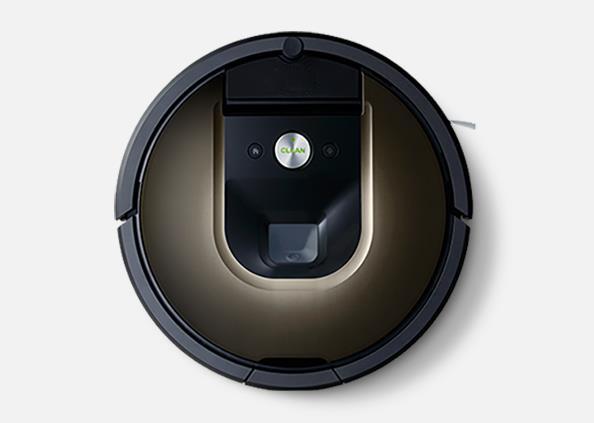
1. The purpose of a “robot vacuum” is clear: it is mainly for cleaning floors and maintaining overall floor tidiness. Although its scope is not as wide as a vacuum cleaner, its specialized functionality is powerful.
2. Due to design differences, their working principles and effects vary. A robot vacuum primarily uses high-speed rotating brushes to sweep debris and dust into a dust box. It involves two steps: “sweeping” and “suctioning.” This more detailed workflow allows the robot vacuum to be more thorough on floors compared to a standard vacuum cleaner.
3. Furthermore, because robot vacuums are smaller, they can reach corners like under sofas and cabinets, offering nearly 99% coverage. With a power consumption of only 20W-30W compared to the 1000W+ of vacuum cleaners, they also have unique advantages in noise reduction and energy efficiency.
III. Usage of Robot Vacuums and Vacuum Cleaners
1. Vacuum cleaners require manual operation to “guide” the suction. In contrast, robot vacuums are smarter. With flat bodies, self-powered wheels, and detection sensors, they can work autonomously based on preset commands.
2. When using a robot vacuum, you simply set the program before leaving home. It will actively detect dirt, clean it, and avoid obstacles like furniture. By the time you return from work, the floor is already clean.
3. Additionally, robot vacuums automatically return to a charging dock when finished or when the battery is low, making them safe and convenient.
IV. Robot Vacuums and Vacuum Cleaners with Built-in Dust Sensors
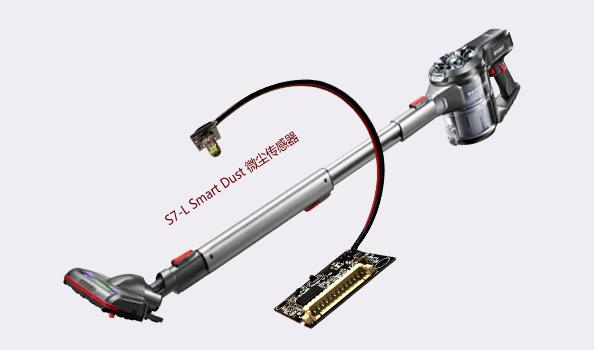
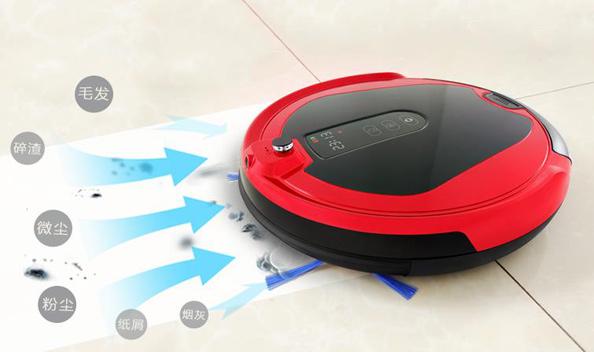
LUFTMY has developed the S7-L Smart Dust dust sensor specifically for cleanliness detection in robot vacuums and intelligent vacuum cleaners. Utilizing optical transmissive principles and installed in ventilation ducts, this sensor accurately measures the count and concentration of particles like mites, dust, and hair fibers, providing real-time cleanliness data for floors, carpets, bedsheets, and car interiors.
