

Technical Support:
158-7527-1139

In spring, all things revive, and various flowers compete for beauty during this time. Many flower lovers go to parks and scenic spots to enjoy the blooms, but for people with pollen allergies, this season requires great attention. Every spring, the number of people seeking treatment for pollen allergies in hospitals increases significantly. Dust sensors are used for spring pollen concentration monitoring, allowing allergy sufferers to effectively avoid places with high pollen concentrations.
Pollen allergy is a common and frequent disease that seriously endangers human health. The clinical manifestations of patients with pollen allergies vary from person to person, mainly including symptoms such as runny nose, watery eyes, sneezing, nasal itching, and itchy eyes. These are often mistaken for a cold, and in severe cases, they may induce bronchial inflammation, asthma, and pulmonary heart disease.

For patients with pollen allergies, understanding the actual situation of pollen concentration in the air in different seasons and regions plays an important role in the diagnosis and prevention of pollen allergies. China has a vast territory with obvious climate differences between the north and south and a wide variety of vegetation; therefore, the types of allergenic pollen vary greatly. In order to accurately monitor the pollen concentration in the air, professional monitoring equipment must be used. You can use a dust sensor, such as LUFTMY's LD15 laser dust sensor, which is a high-precision particulate matter concentration sensor based on Laser Mie scattering theory. It can continuously collect and calculate the number of suspended particles of different sizes in the air per unit volume, i.e., the particulate matter concentration distribution, which is then converted into mass concentration and output via a universal digital interface. This sensor can be embedded in various instruments or environmental improvement equipment related to suspended particulate matter concentration, providing timely and accurate concentration data.
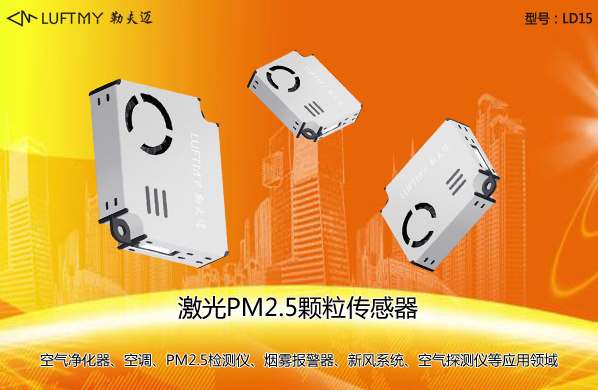
Through monitoring with the LD15 laser dust sensor, the amount of pollen can be monitored in real-time 24 hours a day and the pollen concentration can be predicted. Relevant personnel can analyze and compare pollen concentration monitoring data based on the monitoring results, helping to identify plant species that cause the most public allergies during different periods and providing timely advice to relevant government departments.
Currently, some large cities have installed dust sensor monitoring, reporting daily pollen concentration data alongside PM2.5 data. LUFTMY recommends that patients with rhinitis, especially those allergic to pollen, stay informed about local air conditions and wear masks when going out to alleviate allergy symptoms.
