

Technical Support:
158-7527-1139

Due to the influence of haze, more and more fresh air purification products have entered thousands of households. Although these products vary, their principles are generally similar. Most of them filter out particulate matter in the air through filters. The main indicators include dust and PM2.5. By adding detection sensors to fresh air purification products, the air status can be monitored in real-time (dust detection sensors at the front end of the filter). The operation of the fresh air ventilator is then controlled based on the detection data. This not only allows users to intuitively see the air quality but also enables scientific and reasonable control of the fresh air purification equipment, achieving more efficient and energy-saving air purification performance.
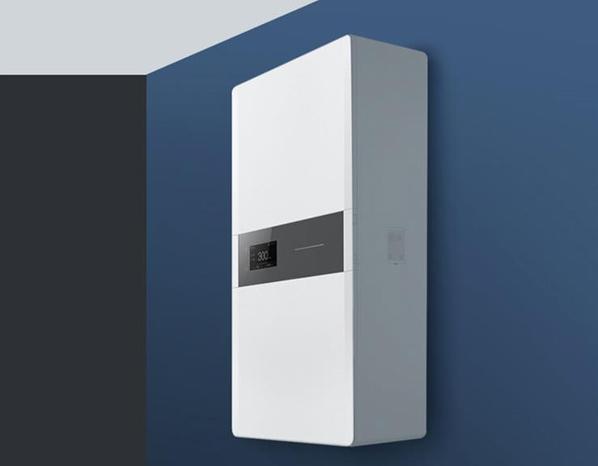
Next, the Luftmy editor will introduce the application of the PM2.5 dust detection sensor GPSM in smart fresh air ventilators. This smart ventilator mainly consists of 2 dust detection sensors, a temperature and humidity sensor, a PTC heating component, a main control chip, power management, a WiFi module, an axial fan, and filters. Its electrical component block diagram is shown in the figure below.
Fresh Air Ventilator Component Block Diagram - Luftmy LUFTMY
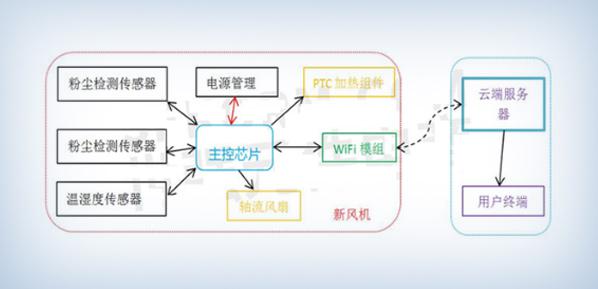
This smart fresh air ventilator is mainly used for indoor air purification. It detects the particulate matter content in the air through two dust sensors installed at the front and back ends of the filter. The main control chip controls the operation of the axial fan based on the sensor data, causing the air to pass through the filter for purification. It also judges the filtration effect and the remaining service life of the filter based on the data from the two sensors. At the same time, the ventilator can upload key operating parameters, such as sensor data, fan status, and PTC heating status, to a cloud server via WiFi. Users can operate the ventilator via a mobile phone, further improving the user experience.
In this fresh air ventilator, the dust sensor is the key component for intelligent operation, used to detect dust content parameters in indoor air. Therefore, the performance of the sensor determines whether the detected air quality parameters are accurate and whether the ventilator can operate efficiently and save energy. Additionally, since this ventilator is positioned as a mid-to-low-end air purification product, the cost of components must be emphasized during selection. Considering both points, this ventilator uses Luftmy's PM2.5 dust detection sensor HPD05.
Luftmy's PM2.5 dust detection sensor HPD05 is an optical sensor that detects dust concentration in the air. It has a significantly improved ability to detect ultra-fine particles, measuring particles from PM0.3 to PM10.0. This makes it more accurate than traditional sensors in confirming PM2.5/PM1.0 mass concentration values. Its internal principle involves an infrared LED and a light-receiving sensor with intersecting optical axes. When a dusty airflow passes through the intersection area, the dust reflects the infrared light, and the intensity is proportional to the dust concentration. The light-receiving sensor detects the reflected light, and via a signal conditioning circuit, outputs the measured concentration via PWM or UART. This method is reliable and low-cost, making it suitable for this smart ventilator.
The dust concentration sensor model HPD05 uses a DC-5V power supply with a power consumption of only 85mW. It offers PWM pulse output or IIC digital interface output options and can measure real-time PM1.0 or PM2.5 values. The structure is compact and lightweight (W59xH45xD22mm) with a simple wiring interface for ease of use.
Regarding installation, the HPD05 air pollution gas sensor can form a constant airflow through a heating resistor to improve stability and reliability. Furthermore, in this ventilator, since the axial fan creates strong airflow that can affect detection, the sensor is placed in a specially designed air passage to avoid interference with detection accuracy. For dust concentration sensor pricing, please consult online.
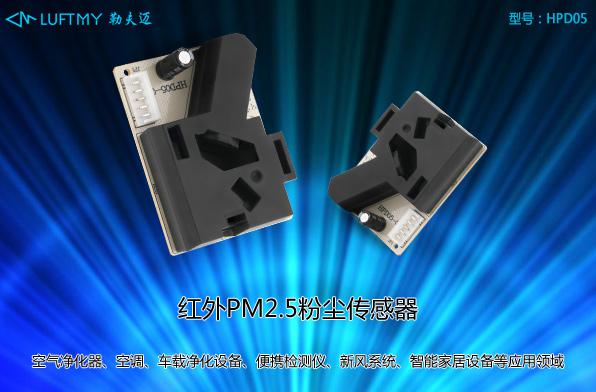
Luftmy's high-precision infrared PM2.5 sensor HPD05 uses the principle of optical scattering. The HPD05 product offers stable detection and high production efficiency, providing dual advantages. It features small size, high precision, low power consumption, short response time, and stable operation in high dust concentrations. This infrared particle sensor is applicable to air purifiers, fresh air ventilators, etc.
