Technical Support:
158-7527-1139


With the continuous acceleration of urbanization, air quality has become a matter of great concern. Factors such as industrial emissions, vehicle exhaust, and domestic pollution have led to the accumulation of fine particulate matter in the air, posing a threat to people's health. Therefore, more and more people are choosing to install air purifiers to improve indoor air quality. Within these air purifiers, the infrared dust sensor plays a crucial role, helping us monitor and improve indoor air in real-time.
Air Quality and Health
First, let us understand why focusing on indoor air quality is vital. Research shows that indoor air can be more polluted than outdoor air because there are many indoor sources that can release harmful particles, such as volatile organic compounds (VOCs), dust, pollen, bacteria, and viruses. Breathing these pollutants can lead to a range of health issues, including allergic reactions, respiratory infections, asthma, and other respiratory diseases.
Air purifiers remove pollutants from indoor air through methods like filtration, adsorption, and chemical reactions to improve indoor air quality. To work effectively, these purifiers need to monitor the dust concentration in the air in real-time and automatically adjust their operation mode as needed. This is where the infrared dust sensor comes into play.
Principles of the Infrared Dust Sensor
An infrared dust sensor is a device that uses infrared optical principles to detect dust concentration. Its working principle is based on the phenomena of light scattering and absorption. When dust particles in the air pass through the sensor, they scatter the infrared light; part of the light is absorbed, and another part is received by the sensor. By measuring the intensity of the received light, the sensor can calculate the dust concentration.
These sensors usually include a light source and a receiver, with an air passage between them. The light source is typically an infrared LED (light-emitting diode) that emits an infrared beam, while the receiver measures the intensity of the scattered and absorbed light. Based on the difference in measured light intensity, the sensor can determine the dust concentration.
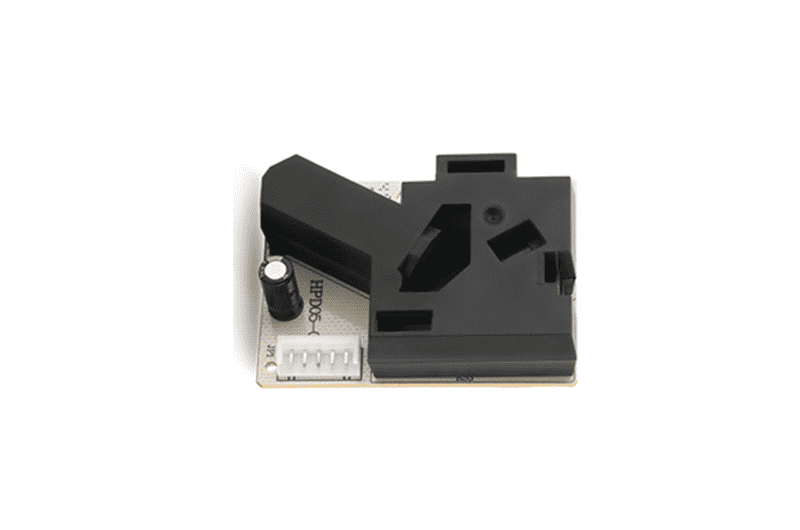
Applications of Infrared Dust Sensors in Air Purifiers
The application of infrared dust sensors in air purifiers can be divided into the following aspects:
Dust Detection and Monitoring: Air purifiers need real-time information about the dust concentration in indoor air. Infrared dust sensors can quickly and accurately detect fine particulate matter in the air and transmit this information to the purifier's control system.
Automatic Adjustment of Operating Mode: Based on changes in dust concentration, the air purifier can automatically adjust its operating mode. When indoor air is relatively clean, the purifier can reduce power to save energy. When air quality declines, it can automatically increase operating intensity to ensure the indoor air remains fresh.
Alarm Function: If indoor dust concentration rises to a dangerous level, the infrared dust sensor can trigger an alarm to remind the user to take action, such as replacing the filter or increasing the purifier's runtime, to reduce the dust concentration.
Data Recording and Analysis: Some advanced air purifiers can also use infrared dust sensors to record and analyze air quality data. This helps users better understand the trends in indoor air quality changes and adjust their lifestyle habits and purifier usage accordingly.
The application of infrared dust sensors in air purifiers is a significant factor in improving indoor air quality. By monitoring dust concentration, they enable air purifiers to automatically adapt to different environmental conditions, thereby removing harmful particulate matter more efficiently. This not only helps protect people's health but also contributes to reducing energy consumption and operating costs. Therefore, the application of infrared dust sensor in air purifiers provides us with a cleaner and healthier indoor living environment, making them an indispensable part of modern life.