

Technical Support:
158-7527-1139

With the increasing severity of air pollution, more and more people are paying attention to air quality monitoring. Infrared dust sensors are commonly used in air quality monitoring due to their low cost and ease of use. When purchasing an infrared dust sensor, the following factors need to be considered:
The measurement range of an infrared dust sensor refers to the diameter range of dust particles that the sensor can detect. Depending on the measurement range, infrared dust sensors can be divided into the following two types:
Universal type: Can detect dust particles between 0.3um and 5um.
PM2.5 type: Specifically designed for detecting PM2.5 particles, with a measurement range of 0.3um to 2.5um.
2. Sensitivity
Sensitivity refers to the degree of the sensor's response to changes in dust particle concentration. The higher the sensitivity, the more sensitive the sensor is to changes in dust concentration, and the more accurate the measurement results.
Response time is the time it takes for the sensor to detect dust particles and output a signal. The shorter the response time, the faster the sensor reacts to changes in dust particle concentration.
4. Repeatability
Repeatability refers to the consistency of measurement results when the sensor measures the same concentration of dust particles multiple times under the same conditions. Better repeatability means more reliable measurement results.
5. Stability
Stability refers to the degree of fluctuation in measurement results during long-term use of the sensor. Better stability leads to more accurate measurement results.
6. Price
The price of infrared dust sensors varies greatly, so you need to consider your own budget when purchasing.
Based on the above factors, you can conduct a comprehensive evaluation of infrared dust sensors and choose the product that suits you.
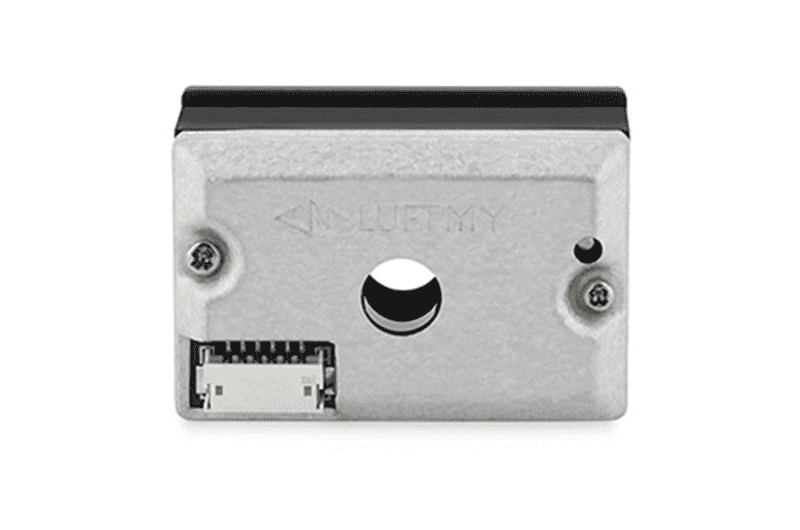
Precautions for Purchasing Infrared Dust Sensors
● Choose sensors produced by regular manufacturers to ensure product quality.
● Carefully read the sensor manual to understand the product's performance and usage methods.
● When purchasing, you can compare different models of sensors from the same brand to choose the most suitable product.
Applications of Infrared Dust Sensors
Infrared dust sensors are widely used in air quality monitoring, factory environmental monitoring, indoor air quality monitoring, and other fields. In air quality monitoring, infrared dust sensors can monitor dust concentration in real-time, providing data support for air pollution control. In factory environmental monitoring, infrared dust sensors can detect dust generated during the factory production process, providing a basis for factory environmental protection management. In indoor air quality monitoring, infrared dust sensors can detect dust in indoor air, providing a reference for indoor air purification.
