

Technical Support:
158-7527-1139

With the development of technology and the improvement of people's living standards, air conditioners have now entered every household, and many people have become inseparable from them. There are many types of sensors used in air conditioners, the most important of which are temperature and humidity sensors. They play a vital role in air conditioning. Luftmy editors have noticed that dust in urban environments is increasing day by day, and many air conditioner manufacturers have tried to add dust sensors to air conditioners. Adding dust sensors to air conditioning units has become a new trend.
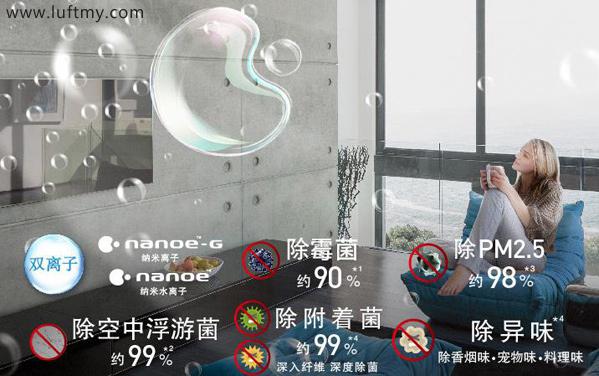
Dust sensors can simultaneously monitor PM1.0, PM2.5, and PM10 particles. Air conditioners installed with dust sensors can refresh indoor air based on real-time monitored dust data, controlling the dust concentration in the indoor environment within a reasonable range to avoid harm to human health caused by excessive dust concentration. In addition, the air intake of the fan can be controlled based on the monitored dust concentration data to meet energy-saving and environmental protection requirements.
What is a dust sensor?
A dust sensor is also called a PM2.5 sensor. It can be used to detect the mass concentration of dust in the air around us in μg/m3, which is the PM2.5 value. Aerodynamics usually refers to dust with a diameter of less than 10μm that can enter the alveolar area as respirable dust. Most dust particles with a diameter of more than 10μm are deposited by impact and are deposited in the nasopharynx when inhaled by the human body; dust below 10μm can enter the deep part of the respiratory tract. Most of the dust deposited in the alveoli is below 5μm.
The dust sensor HPD05 adopts the principle of laser scattering. The light emitted by the laser encounters dust to produce light scattering. The scattered light is converted into an electrical signal (pulse) through a photoelectric converter. The intensity of the light is proportional to the strength of the converted electrical signal, and the larger the particle, the larger the pulse signal (peak value) obtained. Through the peak value and number of pulses at this time, the numerical concentration of each particle size can be obtained.
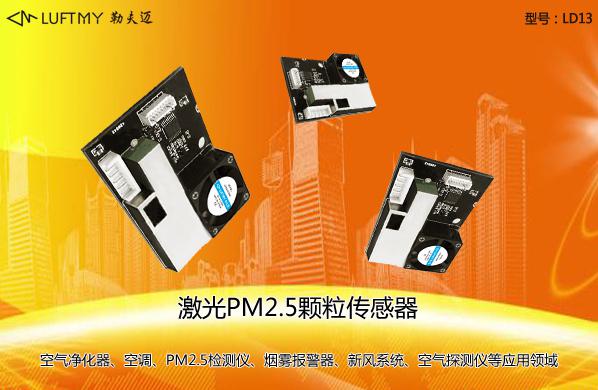
The PM2.5 air quality detection module HPD05 uses the optical scattering principle to detect the concentration of dust in the air. The sensor has a built-in infrared light-emitting diode and a high-sensitivity photoelectric receiving sensor. The infrared light-emitting diode emits light that produces reflected light when it encounters dust. The photoelectric sensor reflects the dust concentration in the air by detecting the intensity of this reflected light. The sensor directly outputs a PWM signal, and the PWM width is the current concentration value. The dust concentration value can also be output through the IIC serial signal in units of ug/m3. The HPD05 air detection instrument has stable detection capability and high production efficiency, offering dual advantages. Luftmy PM2.5 monitoring sensor HPD05 features small size, high accuracy, low power consumption, short response time, and stable operation under high dust concentrations. This air conditioner dust sensor can be applied in PM2.5 detection instruments, etc.
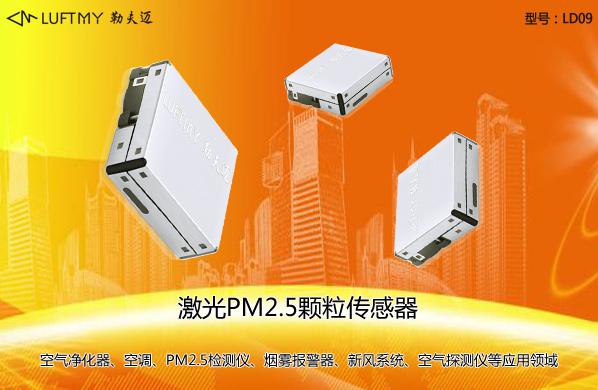
The PM2.5 air quality detection module LD11 is a high-precision particle concentration sensor based on Laser Mie Scattering theory. It can continuously collect and calculate the number of suspended particles of different particle sizes in the air per unit volume, namely the particle concentration distribution, and then convert it into mass concentration and output it in the form of a general digital interface. Laser PM2.5 sensor manufacturer Luftmy's high-precision air quality smog detection module LD11 features small size, high accuracy, strong anti-interference ability, low power consumption, long lifespan, zero false alarm rate, and short response time. This air conditioner dust sensor can be embedded in various instruments or environmental improvement equipment related to suspended particle concentration in the air, such as PM2.5 detection instruments, to provide timely and accurate concentration data.
