

Technical Support:
158-7527-1139

The common filter material structure of air purifiers is usually selected from HEPA mesh + activated carbon filtration technology. HEPA filters can block pollutants such as PM2.5, smoke, and mites, while activated carbon filters can absorb harmful substances such as odors, mildew, and formaldehyde.
Filter materials for air purifiers should be chosen for their antibacterial properties. When an air purifier filters dust mites, bacteria are also adsorbed onto the surface of the filter. Many substances in the dust will become nutrients for bacteria and mold. When these harmful bacteria re-enter the air, they cause secondary air pollution. Therefore, antibacterial filter materials are essential.
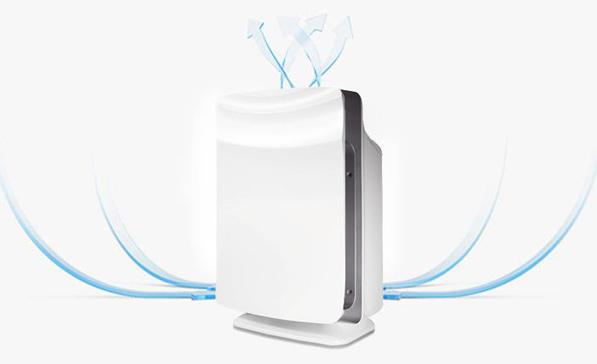
Main functions of air purifiers
1. Removal of particulate matter, such as PM2.5, bacteria, pollen, etc. Most air purifiers are very effective at this.
2. Removal of gaseous pollutants, such as formaldehyde, benzene, garbage odors, glue/paint smells, etc. Most purifiers are not very effective, though a few professional purifiers perform well in removing small amounts of formaldehyde.
3. Release of negative ions (also called water ions, negative oxygen ions, nano-mist, etc., which are almost the same thing) for fresh air.
4. Humidification to increase air comfort.
Currently, the first function is quite obvious in most machines. Generally, you can buy a good one for under 1000 RMB. Few machines perform well on point 2. Most machines have the third function. Some machines have a humidification function (avoid buying ultrasonic humidifiers, which are a type of spray).
Personally, I believe the second point is the most important. While vacuuming for three to five years is manageable, formaldehyde and benzene can immediately cause dizziness and nausea upon decoration pollution. Long-term exposure may lead to serious illnesses. In fact, beyond odors, few machines are truly effective against formaldehyde. Such machines generally require a large filter, as small filters have little effect.
Additionally, indoor air pollution consists of either gases or extremely small dust particles. Microorganisms are invisible. Therefore, when choosing an indoor purifier, it is necessary to select one with strong sensing capabilities, high sensitivity, and powerful purification capacity.
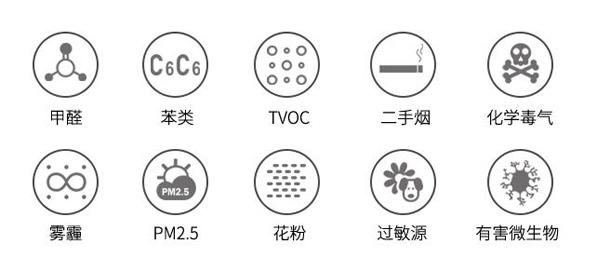
The role of the built-in PM2.5 sensor in air purifiers
In the current field of air purification, PM2.5 sensors have become standard hardware for purification equipment. Their function is to monitor the concentration of particles like PM2.5 in the air. The working principle is as follows: a constant light source (such as an infrared LED) is set inside the PM2.5 sensor. When air passes through the light, particles within it scatter the light, leading to attenuation of light intensity. The relative attenuation rate is proportional to the concentration of particulate matter. Given the application of PM2.5 sensors in air purification equipment, LUFTMY recommends the HPD05 infrared PM2.5 sensor and the LD13 laser dust sensor:
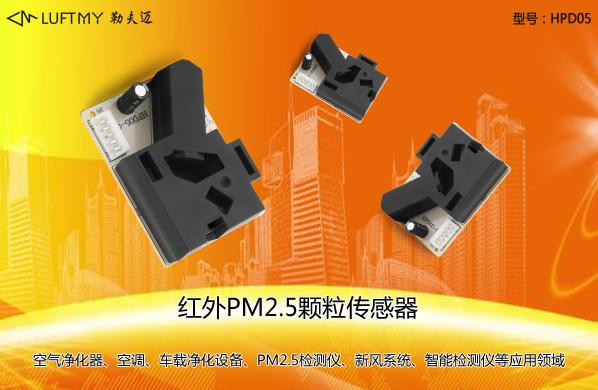
Particulate matter sensor supplier LUFTMY's infrared dust sensor HPD05 uses the principle of optical scattering to detect dust concentration in the air. The sensor features a built-in infrared LED and a high-sensitivity photoelectric receiving sensor. The infrared LED emits light that reflects when encountering dust. The photoelectric sensor reflects the dust concentration by detecting the intensity of this reflected light. The sensor directly outputs a PWM signal, where the PWM width represents the current concentration value. It can also output dust concentration values via IIC serial signals in units of ug/m3. The HPD05 dust particle counter has stable detection capabilities and high production efficiency, offering dual advantages. The LUFTMY HPD05 particulate sensor features small size, high precision, low power consumption, short response time, and stable operation under high dust concentrations. This air purifier dust sensor can be applied in air purifiers, fresh air systems, etc.
