

Technical Support:
158-7527-1139

In smoggy weather, you can turn on purifiers at home and wear masks when going out, but what about when you are driving? Breathing happens every moment, and cleaning your car should not just be about surface cleanliness. Cleanliness that is invisible to the naked eye is even more important. For the health of your family and yourself, air cleaning inside the car is also essential. How to choose an excellent car air purifier?
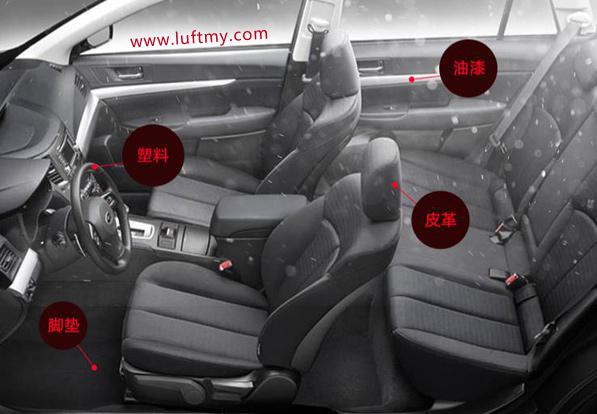
Air pollution inside a car includes: irritating smells often encountered, such as formaldehyde, benzene, and other harmful substances used in the production of interior materials like plastics and leather; air conditioning systems that accumulate pollutants and dust mites due to lack of cleaning; exhaust fumes leaking into the cabin due to sealing defects; and secondhand smoke that lingers for a long time.
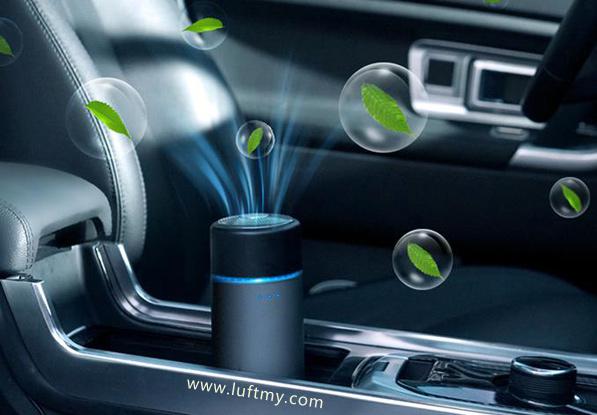
Purification methods for car purifiers are relatively consistent. Common ones include activated carbon purification, which can adsorb chemical odors like formaldehyde, toluene, and benzene; high-efficiency HEPA filters, which can purify exhaust particles, secondhand smoke particles, and PM2.5; and photocatalyst technology, which kills germs such as Legionella while decomposing chemical odors like formaldehyde and toluene to a certain extent.
The new national standards for air purifiers have officially been implemented. The new national standard clarifies four core indicators affecting the purification effect of air purifiers.
1. CADR (Clean Air Delivery Rate)
2. CCM (Cumulate Clean Mass)
3. Energy Efficiency Level
4. Noise Standard
And "car air purifiers" are included in the scope that can refer to this standard for execution. CADR refers to the Clean Air Delivery Rate, which is the "ability to provide clean air under rated conditions and specified test conditions."
To choose a good car purifier, primarily look at the "it" mentioned in our title, which refers to the CADR value. The CADR value is a vital indicator; the higher the CADR value, the higher the cleaning capacity and efficiency.
The PM2.5 sensors used in car air purifiers on the market currently include infrared PM2.5 sensors and laser PM2.5 sensors. While there is little difference in basic performance, the laser principle is superior in overall performance.
As an infrared dust sensor supplier, Luftmy's infrared sensor HPD05 for air purifiers uses the optical scattering principle to detect dust concentration. The sensor integrates an infrared light-emitting diode and a high-sensitivity photoelectric receiver sensor. The infrared LED emits light that reflects when encountering dust, and the photoelectric sensor reflects the dust concentration in the air by detecting the intensity of this reflected light. The sensor directly outputs a PWM signal, where the PWM width represents the current concentration value. It can also output dust concentration values via IIC serial signals in units of ug/m3. The HPD05 air detection product offers stable detection capability and high production efficiency, providing dual advantages. The Luftmy infrared dust sensor HPD05 features small size, high precision, low power consumption, short response time, and stable operation under high dust concentrations. This infrared dust sensor can be applied in air quality monitors and dust particle detectors. Please check online for air quality detector prices.
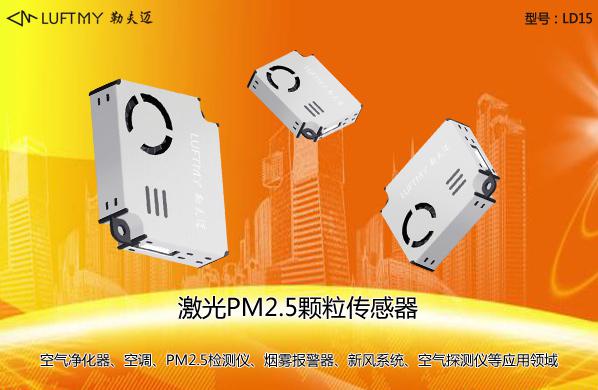
Car air purifiers with built-in particle counting sensors can more effectively detect and monitor PM2.5 concentrations in the car. The LD15 air quality sensor module from light scattering PM2.5 sensor manufacturer Luftmy is a high-precision particulate concentration sensor based on Laser Mie Scattering theory. It can continuously collect and calculate the number of suspended particles of different sizes in the air per unit volume (i.e., particle concentration distribution), then convert it into mass concentration and output it via a universal digital interface. The Luftmy light scattering PM2.5 sensor LD15 features small size, high precision, strong anti-interference capability, low power consumption, long lifespan, zero false alarm rate, and short response time. This light scattering PM2.5 sensor can be embedded in various instruments or environmental improvement equipment related to suspended particulate concentration, such as air detection instruments and car air purifiers, providing timely and accurate concentration data.
