

Technical Support:
158-7527-1139

With the development of technology, the industry entry barrier for car air purifiers has become lower, and more and more enterprises are entering the car air purifier industry. Faced with a diverse market, how can consumers identify and purchase high-quality products?
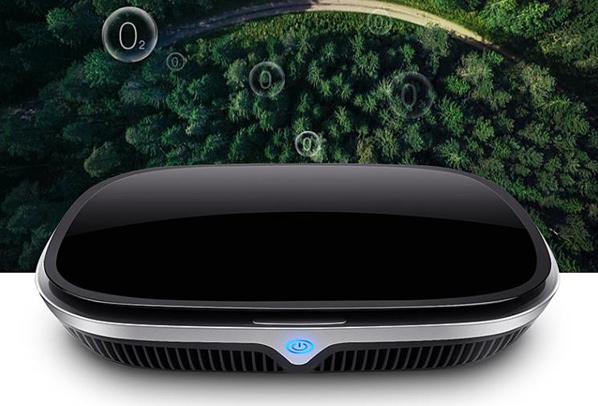
Purchase recommendations for car air purifiers:
1. Is it convenient and safe to place in the car?
Convenience and safety are the primary considerations: because if it is inconvenient to place in the car or poses safety hazards after placement, even the best air purifier should not be chosen.
Appearance and Volume: Most car air purifiers on the market are designed for flat placement, with a few designed for special placement.
Manufacturing Materials: Generally speaking, wear-resistant and high-temperature resistant materials are better than fragile ones.
2. Is the air purification in the car comprehensive and efficient?
Convenience and safety are basic factors, while purification effect is the key decisive factor.
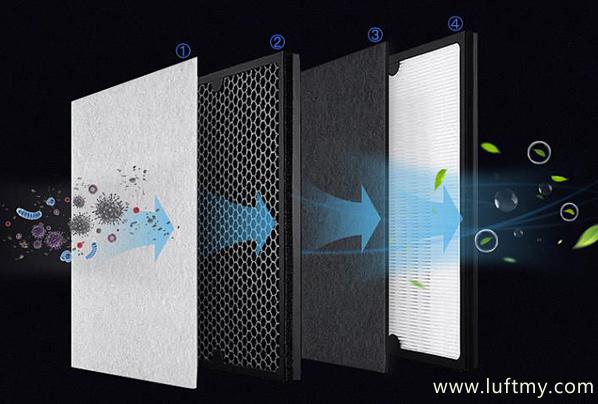
Purification Methods: Air purifiers are generally divided into "Filter" purification and "Ion Group" purification. Filter purification mainly involves using a fan to draw air into the machine and filtering it through a mesh. Ion Group purification primarily involves an ion generator spraying ion groups into the air to actively purify air pollution.
Duct Design: Due to the many "obstacles" inside a car, comprehensive purification of every corner requires scientific air duct design. For instance, filter-based air purifiers need efficient inlet duct designs, while ion air purifiers require scientific outlet duct designs.
3. Car air purifiers with built-in laser dust sensors
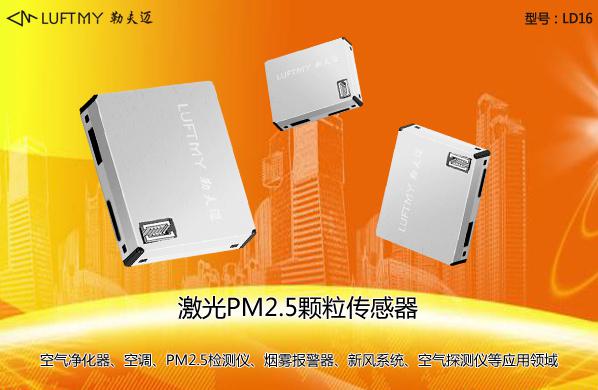
Car air purifiers with built-in laser dust sensors can more effectively detect and monitor PM2.5 concentrations in the car. The LD16 air quality sensor module from Luftmy, an air quality detection equipment manufacturer, is a high-precision particulate concentration sensor based on Laser Mie Scattering theory. It can continuously collect and calculate the number of suspended particles of different sizes in the air per unit volume (i.e., particle concentration distribution), then convert it into mass concentration and output it via a universal digital interface. The Luftmy car air sensor LD16 features small size, high precision, strong anti-interference capability, low power consumption, long lifespan, zero false alarm rate, and short response time. This air quality sensor module can be embedded in various instruments or environmental improvement equipment related to suspended particulate concentration, such as air quality monitors, dust counters, and car air purifiers, providing timely and accurate concentration data.
Luftmy focuses on the research, production, and sales of optical particulate matter sensor technology. Guided by the corporate culture of "Craftsmanship Dreaming" and adhering to the service tenet of "Customer First," Luftmy has applied for and obtained multiple invention patents, utility model patents, and core algorithm software copyrights through continuous technological breakthroughs and innovation. Luftmy sensors, including car air sensors, have received widespread acclaim in the industry for performance indicators such as measurement accuracy, stability, consistency error, and anti-interference capability.
