Technical Support:
158-7527-1139

Laser sensors are devices that utilize the principles of laser reflection and refraction to measure physical quantities such as distance, speed, and angle. They offer advantages such as high measurement precision, fast response speed, and strong anti-interference capability, making them widely used in industrial, medical, security, and transportation fields.
Basic Principles of Laser Sensors
The fundamental principle of laser sensors is to use the reflection and refraction of laser light to measure physical quantities. Among these, laser triangulation is the most commonly used measurement principle. This principle involves a laser emitter sending out a laser beam that hits the object being measured, which is then picked up by a receiver as a reflected beam. Based on the propagation time or angle of the laser beam from the emitter to the object and then to the receiver, the distance between the object and the sensor can be calculated.
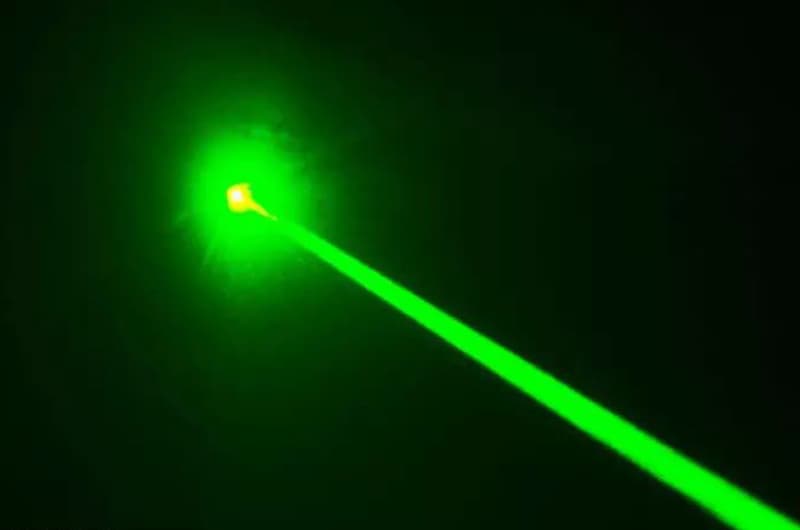
Common Application Scenarios for Laser Sensors
Laser sensors have broad application prospects. Below are some common scenarios:
△ Distance Measurement: The most common application of laser sensors is distance measurement. They can measure the distance between an object and the sensor, as well as the object's size and shape. In industry, laser sensors are used to measure the dimensions, position, and speed of parts to ensure product quality. In logistics, laser sensors measure the size and weight of packages for sorting and transportation.
△ Spatial Data Acquisition: Laser sensors can also be used for 3D spatial data acquisition. They can quickly and accurately collect terrain data and building models for 3D modeling and urban planning. In construction, laser sensors measure building heights and shapes for construction and maintenance. In surveying, they are used to measure terrain and roads for map drawing.
△ Security Monitoring: Laser sensors can implement security monitoring by detecting object movement or intrusion, used in anti-theft and fire alarms. in factories and warehouses, laser sensors detect the entry of personnel and objects to prevent safety accidents. In transportation, they monitor vehicle and pedestrian movement to ensure traffic safety.
△ Machine Vision: Laser sensors can enable machine vision by detecting object characteristics such as shape and color for image recognition and target tracking. In industry, they are used for robot navigation and operation to improve production efficiency. In medical fields, laser sensors are used for surgical navigation and auxiliary diagnosis to increase surgery success rates.
△ Drive Control: Laser sensors can implement drive control by detecting the motion status of objects to control the movement of equipment like robots and cars. In industry, laser sensors are used in robot welding and handling. In transportation, they are used for autonomous driving to improve traffic safety.

Future Development of Laser Sensors
Laser sensors have vast application prospects. As technology advances, the scenarios for laser sensors will become more diverse. Below are some future trends:
△ Integration: With the development of integrated circuit technology, laser sensors will become more integrated, with smaller sizes and lower power consumption.
△ Intelligence: Laser sensors will become more intelligent, possessing autonomous learning and adaptation capabilities.
△ Diversification: Laser sensors will become more diverse, offering stronger adaptability and extensibility.
The laser sensor is a device with broad application potential. As technology continues to evolve, it will be applied in even more fields, bringing more convenience to people's lives and work.