

Technical Support:
158-7527-1139


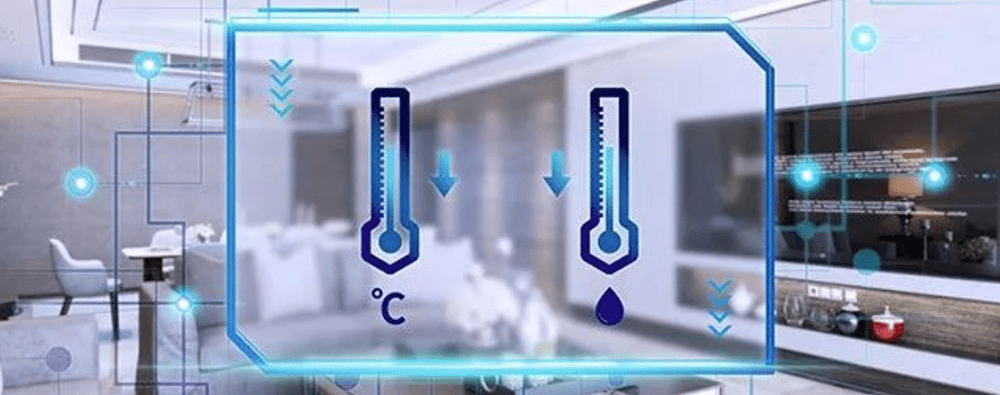
Temperature and humidity sensors refer to sensors that can measure temperature and humidity and convert them into electrical signals. Temperature and humidity are important factors affecting people's lives, production, and the environment. Temperature and humidity sensors are widely used in various fields.
Working Principle of Temperature and Humidity Sensors
There are two main working principles for temperature and humidity sensors:
Resistive Sensors: These sensors utilize the temperature and humidity sensitivity of metal or semiconductor materials to measure these parameters. When temperature or humidity changes, the resistance value of the sensor also changes, and this change can be measured and converted through a circuit.
Resistive sensors can be further divided into the following types:
● Thermistors: These are metallic materials whose resistance changes with temperature. The temperature sensitivity refers to the ratio of the change in resistance to the change in temperature.
● Semiconductor Thermistors: These are semiconductor materials whose resistance changes with temperature. They offer higher temperature sensitivity than metallic thermistors.
● Humidity Sensitive Resistors (Hygristors): These are metal or semiconductor materials whose resistance changes with humidity. Humidity sensitivity refers to the ratio of the change in resistance to the change in humidity.
Capacitive Sensors: These sensors use the property that the dielectric constant of a capacitor changes with temperature and humidity. When temperature or humidity changes, the capacitance value of the sensor changes, which can be measured and converted via a circuit.
Capacitive sensors can be further divided into the following types:
● Thin-Film Capacitive Sensors: These consist of capacitors formed by metal thin films and insulating thin films. When temperature or humidity changes, the thickness of the metal film or insulating film changes, leading to a change in capacitance.
● Crystalline Capacitive Sensors: These consist of capacitors made of crystalline materials and insulating thin films. Changes in temperature or humidity cause changes in the volume of the crystal or the thickness of the insulation, resulting in capacitance changes.
Application Fields of Temperature and Humidity Sensors
The application fields of temperature and humidity sensors are very extensive, mainly including the following aspects:
Industrial Field: Applications in the industrial sector include automatic control of greenhouses, food processing, precision instruments, electronic product manufacturing, etc.
● In greenhouse automation, temperature and humidity sensors can monitor the environment inside the greenhouse and automatically adjust it according to changes to ensure optimal crop growth.
● In food processing, temperature and humidity sensors monitor the processing environment to ensure food safety and quality.
● In precision instruments, temperature and humidity sensors control the equipment environment to ensure normal operation.
Agricultural Field: Applications include integrated water and fertilizer management, pest and disease warning, environmental monitoring, etc.
● In integrated water and fertilizer management, temperature and humidity sensors monitor soil conditions and automatically regulate application to improve crop yield and quality.
● In pest and disease warning, temperature and humidity sensors monitor the growth environment and predict risks based on future development trends.
With the continuous development of sensor technology, temperature and humidity sensors will be further improved in the following aspects:
● Performance Enhancement: Measurement accuracy, sensitivity, and stability will be further improved.
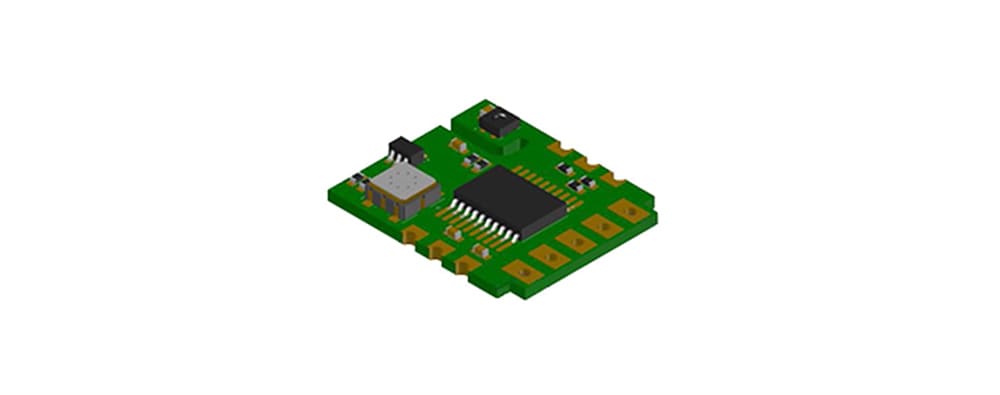
● Miniaturization: Sensors will become smaller, lighter, and consume less power.
● Intelligence: Sensors will become more intelligent, enabling data analysis, fault diagnosis, and other functions.
Temperature and humidity sensors are an indispensable type of sensor in modern society with wide-ranging applications. As sensor technology evolves, they will be applied even more extensively, bringing greater convenience and safety to people's lives and production.
