

Technical Support:
158-7527-1139

Many products have high requirements for workshop cleanliness during processing. For instance, during the COVID-19 pandemic, mask production cleanliness was a key indicator of quality. A laser dust sensor can measure cleanroom grades with precise digital data.
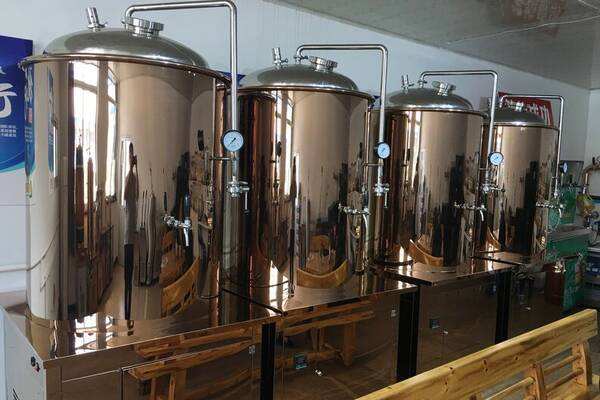
A workshop is a basic production unit consisting of teams, equipment, and personnel. In electronic workshops, such as semiconductor facilities, ensuring particulate matter does not exceed standard ranges is essential for product qualification; this is known as the cleanroom grade standard.
Cleanroom standards are typically classified by suspended particle concentration limits. A laser dust sensor is an instrument used to measure the quantity and size distribution of dust particles per unit volume. It offers fast testing and wide dynamic distribution, making it a primary monitoring tool for industries like spray painting and environmental products.
In precision machinery workshops, cleanliness requirements are extremely high. A laser dust sensor is essential equipment. Having such an instrument allows staff to easily monitor dust conditions from an office, enabling an intelligent product experience.
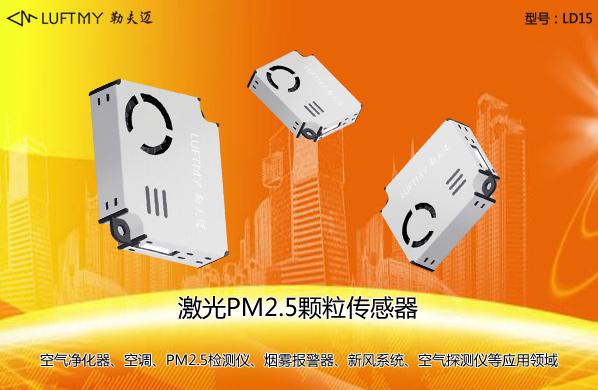
When high particle concentrations are detected, managers can be notified to take corrective measures, ensuring safe production and high-quality products. Luftmy's LD15 laser dust sensor uses the Mie spherical particle scattering principle. The sensor uses a laser to irradiate suspended particles, and a photoelectric detector collects the scattered light intensity, converting it into a voltage for data processing based on Mie theory. This calculates the equivalent particle size and quantity. The LD15 laser dust sensor can be embedded in various instruments or environmental improvement equipment.
