

Technical Support:
158-7527-1139

Laser sensors are sensors that use laser technology for measurement. A laser sensor is a new type of measuring instrument. Its advantages include non-contact long-distance measurement, fast speed, high precision, large measuring range, and strong resistance to light and electrical interference. Currently, laser sensors are used in many fields. Which brand is best for high-precision laser sensors?
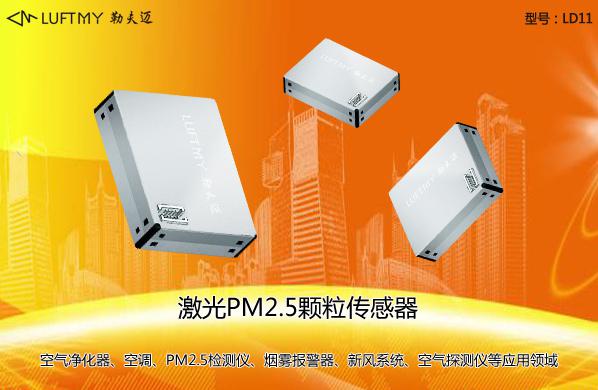
Laser Sensor Working Principle:
When a laser sensor operates, the laser emitting diode first targets and emits a laser pulse. After being reflected by the target, the laser light scatters in all directions. Part of the scattered light returns to the sensor receiver, where it is captured by the optical system and imaged onto an avalanche photodiode. An avalanche photodiode is an optical sensor with an internal amplification function, allowing it to detect extremely weak light signals and convert them into corresponding electrical signals.
Laser Sensor Classification:
Laser sensors can be divided into four types based on the working substance.
Solid-state laser sensors: The working substance is solid. Commonly used types include ruby lasers, neodymium-doped yttrium aluminum garnet (YAG) lasers, and neodymium glass lasers. Their structures are generally similar, characterized by being small, robust, and high-power. Neodymium glass lasers provide the highest pulsed output power, reaching tens of megawatts.
Gas laser sensors: The working substance is gas. There are currently various gas atom, ion, metal vapor, and gas molecule laser sensors. Common types include PM2.5 laser sensors, CO2 laser sensors, Helium-Neon laser sensors, and Carbon Monoxide laser sensors. Their shape is like a common discharge tube, characterized by stable output, good monochromaticity, and long life, but with lower power and conversion efficiency.
Liquid laser sensors: These can be divided into chelate lasers, inorganic liquid lasers, and organic dye lasers. The most important is the organic dye laser, whose main feature is continuously adjustable wavelength.
Semiconductor laser sensors: This is a younger type of laser sensor, with the Gallium Arsenide (GaAs) laser being relatively mature. Features include high efficiency, small size, light weight, and simple structure, making them suitable for use on aircraft, ships, tanks, and for infantry portable use. They can be made into rangefinders and sights. However, output power is small, directivity is relatively poor, and they are significantly affected by ambient temperature.
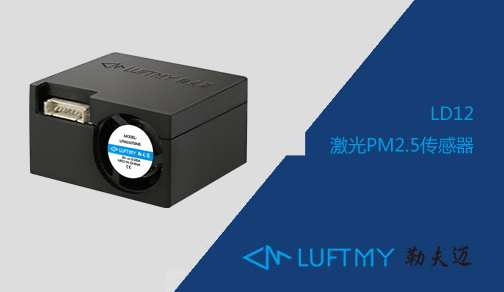
The most prominent advantage of laser sensors compared to infrared sensors is high precision. Which brand is best for high-precision laser sensors? The laser dust sensor is a high-precision particulate matter concentration sensor based on Laser Mie Scattering theory. The combination of Laser Mie spherical scattering principles and Luftmy’s spatial measurement patents enables accurate measurement; zero false alarm rate; real-time response with continuous collection support; minimum resolution particle size of 0.1μm; six-sided omni-directional shielding combined with software anti-interference algorithms for stronger anti-interference performance. Luftmy has its own R&D team and production lines, offering outstanding advantages in product control and quality. To obtain product specifications and solutions, please contact customer service!
