

Technical Support:
158-7527-1139

The database of an enterprise computer room is known as the lifeline of the enterprise, relating to the information and operational processes of every department. To ensure the normal operation of the data center, monitoring the air quality of the computer room environment is also particularly important. Among them, particulate matter and corrosive gases are the biggest influencing factors in the computer room environment.
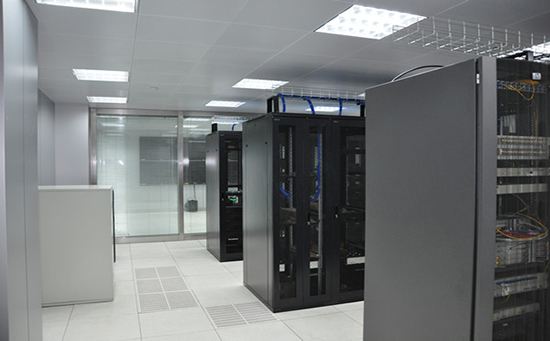
Corrosive Gases
When a computer room is built in a city with poor environmental quality, or near chemical plants, major traffic arteries, or heavily polluted areas, corrosive gases may exist in the ambient air. These corrosive gases include: sulfur dioxide (SO2), nitrogen oxides (NOX), hydrogen sulfide (H2S), etc.
After corrosive gases intrude into the equipment, they can affect the insulation resistance of the equipment, and in severe cases, cause equipment short circuits. Long-term exposure to such an environment will also have an adverse impact on distribution frame ports, chassis, etc. Under conditions of high humidity in the computer room, the corrosion of equipment and components will be more severe, and situations such as poor heat dissipation and short circuits are likely to occur.
Therefore, when laying out the new generation of computer room environment monitoring systems, they will not only meet the original construction standards but also pay special attention to the air quality inside the computer room due to the maintenance needs of the equipment. If the monitoring and control of air quality in the computer room can be done well, it will undoubtedly reduce the maintenance costs of the computer room and make the equipment more durable, reliable, and efficient.
Particulate Matter
When opening a piece of equipment in a computer room, we usually find a large amount of dust inside, which is the accumulation of suspended particulate matter from the air. When the equipment has a fan, these particles are sucked into the device. Although there are dust filters to block them, a thick layer of dust will still appear over time, affecting the equipment in the room.
When the dust filter of the equipment is blocked, it will reduce the performance of the heat sink, and the temperature of the components inside the device will rise accordingly. Staying in this condition for a long time will reduce the life of the components. Serious cases may cause downtime or damage due to equipment overheating, increasing maintenance costs.
When particulate matter in the air combines with humid air, it will affect the insulation performance of components and circuits, thereby increasing the equipment failure rate, reducing equipment life, and increasing maintenance costs.
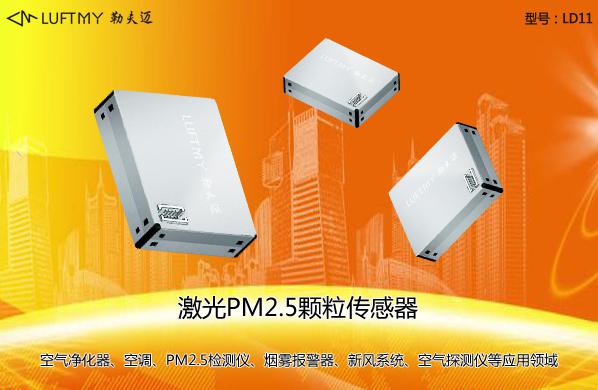
In order to prevent high concentrations of particulate matter from affecting equipment in the computer room environment, Luftmy recommends the LD11 laser particulate matter sensor, which can be embedded in computer room environment monitoring equipment to provide timely and accurate particulate matter concentration data. It adopts the Mie spherical particle scattering principle; that is, the laser sensor uses a laser to irradiate suspended particulate matter in the air to produce light scattering. The photodetector collects the scattered light intensity within a certain angular range, linearly converts the scattered light intensity into a voltage, and then sends it to the data processing system. The data processing system performs data processing according to the Mie scattering theory and a pre-compiled program to obtain the equivalent particle size and the number of particles of different sizes per unit volume.
