Technical Support:
158-7527-1139

In recent years, environmental quality issues have increasingly attracted attention. For a better living experience, many families use air purifiers, and some indoor venues also install indoor environment detectors to monitor various parameters and take corresponding measures to improve the indoor environment. What data can an indoor environment detector monitor? The Luftmy editor will provide a brief overview.
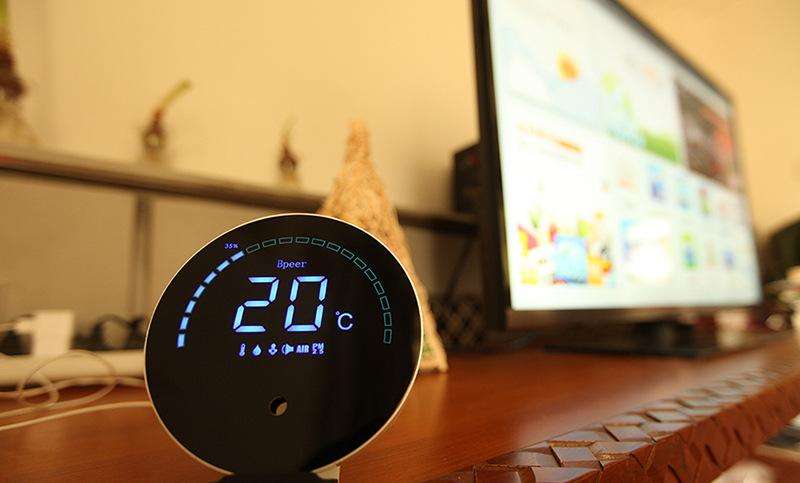
1. Temperature and Humidity Detection
Temperature and humidity sensor technology is relatively mature, and these are the initial parameters that can be monitored in indoor environments. Changes in temperature and humidity are environmental factors that people can directly perceive indoors and are important indicators of human comfort. For example, excessively high temperatures will increase the release of pollutants such as formaldehyde, while excessively low temperatures will disturb the autonomic nervous system and lead to a decrease in concentration. Similarly, high humidity causes mold to grow faster, while low humidity causes dry mouth, sore throat, and affects work quality. Therefore, although temperature and humidity parameters are inconspicuous, they are quite important for environmental monitoring.
2. Air Pollutant Detection
Air pollutants in indoor environments have long been clearly listed in the "Indoor Air Quality Standard" GB/T 18883. However, due to the limitations of gas sensor technology, not all gas pollution parameters in the table can achieve real-time online indoor monitoring. Some gases still require expensive and large-scale testing instruments. Gas pollutant sensors that can be maturely applied to the civilian level include, but are not limited to: formaldehyde, TVOC, carbon monoxide, carbon dioxide, nitrogen dioxide, etc. The common point is that these parameters are invisible to the naked eye, and long-term exposure to high concentrations will have adverse effects on human health.
3. Noise Detection
Monitoring noise parameters lets indoor personnel know if the sound environment is within a healthy range. When noise exceeds 80 decibels or more, it is not only very loud but can also cause symptoms such as headaches and irritability. Long-term exposure to a noisy environment can cause negative reactions such as inability to concentrate, slow thinking, reduced work and learning efficiency, and easy fatigue.
4. Particulate Matter Detection
Both PM10 and PM2.5 belong to particulate matter, and among them, PM2.5 has a smaller particle size and can enter deeper parts of the respiratory tract. Particles with a diameter of 10μm are usually deposited in the upper respiratory tract, while those below 2μm can penetrate deep into the bronchioles and alveoli, causing adverse health effects. PM2.5 was identified as a universal and major environmental carcinogen by the International Agency for Research on Cancer as early as 2013. For indoor environments, PM2.5 is generated through both indoor and outdoor channels. Indoor smoking, cooking, and human activities all generate PM2.5, and outdoor atmospheric pollution entering indoors is also an important source. Therefore, for indoor environmental health quality, particulate matter monitoring is indispensable.
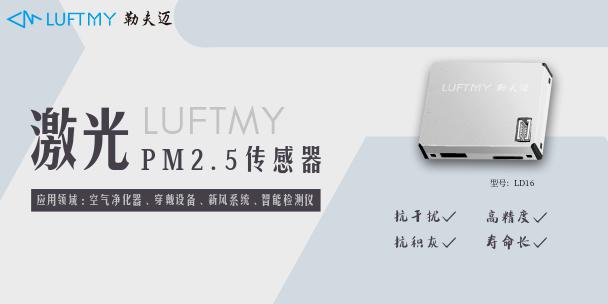
In order to make the PM2.5 concentration data detected by the indoor environment detector more accurate, Luftmy recommends the LD16 laser PM2.5 particulate matter sensor. Embedded in the indoor environment detector, it can detect particles in the range of 0.1~10μm, with a zero false alarm rate and high-precision output of concentration data. To obtain the solution for laser PM2.5 dust sensors, please contact customer service.