

Technical Support:
158-7527-1139

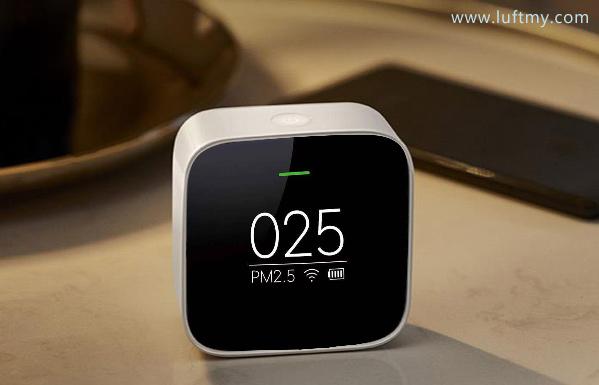
Luftmy PM2.5 dust sensor (dust detector) is a high-tech product integrating aerodynamics, digital signal processing, and opto-mechatronics. It is mainly used to detect the mass concentration of dust (PM value) in the atmosphere. It is suitable for fields and occasions such as indoor air detection and monitoring, urban grid monitoring, and mobile monitoring, and is the core module of atmospheric quality detection systems.
Currently, sensors for measuring PM2.5 mainly use two methods: infrared and laser. Laser methods are further divided into the turbidity method and the particle counting (laser cutting) method.
Infrared Method and Turbidity Method:
Due to insufficient light intensity, infrared can only be measured by the turbidity method. The so-called turbidity method involves emitting light on one side and receiving it on the other; the more turbid the air, the greater the energy loss of the light, which determines the current air turbidity.
The infrared principle can also accurately measure PM2.5, but if the light emission and reception parts are covered by dust adsorbed by static electricity, it will directly lead to inaccurate measurements.
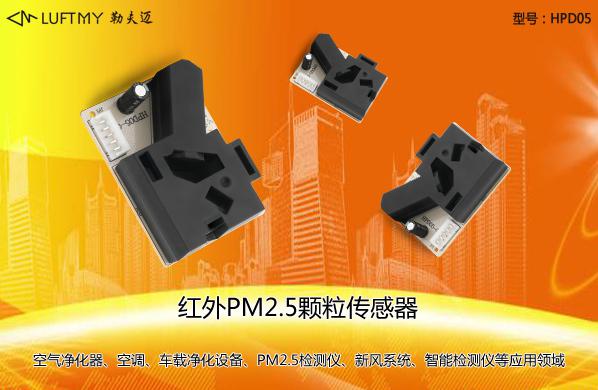
The infrared light scattering dust sensor HPD05 uses the principle of optical scattering to detect the concentration of dust in the air. The sensor has a built-in infrared light-emitting diode and a high-sensitivity photoelectric receiving sensor. The infrared LED emits light that generates reflected light when it encounters dust. The photoelectric sensor reflects the dust concentration in the air by detecting the intensity of this reflected light. The sensor directly outputs a PWM signal, and the PWM width represents the current concentration value. It can also output dust concentration values through IIC serial signals in units of ug/m3. The HPD05 air detection instrument has stable detection capability and high production efficiency, offering dual advantages. The Luftmy infrared high-precision dust sensor HPD05 features small size, high precision, low power consumption, short response time, and stable operation under high dust concentrations. This infrared high-precision dust sensor can be applied in PM2.5 detection instruments, etc.
Laser Method and Particle Counting Method:
There are many related papers on the laser scattering method, which does not directly measure turbidity. A common feature of this type of sensor is that it requires a fan (or pump suction) because suspended particles in the air cannot be measured if the air is not flowing. Through mathematical models, the particle size and air flow rate of the gas passing through the sensor can be roughly calculated. After complex mathematical algorithms, a relatively realistic PM2.5 value is finally obtained. This type of sensor uses laser scattering and is immune to dust adsorbed by static electricity. Of course, if the sensor is completely blocked by dust, it will naturally be unable to measure.
The disadvantage is that the lifespan of the laser is relatively short. If it runs continuously, it basically has a lifespan of only about a year, and this is the lifespan achievable after the manufacturer optimizes the algorithm. However, it is sufficient for most occasions, and if not run continuously, the laser's lifespan can be even longer.
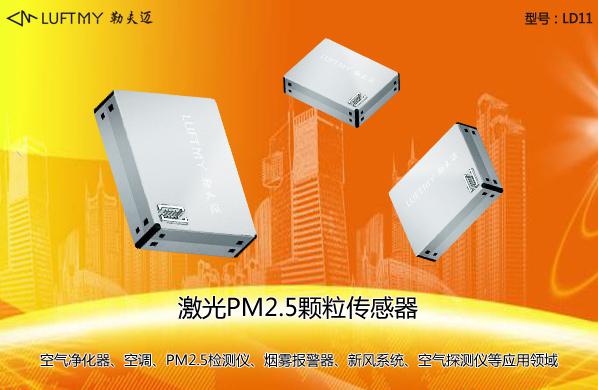
The laser dust particle sensor module LD11 is a high-precision particle concentration sensor based on the laser Mie scattering theory. It can continuously collect and calculate the number of suspended particles with different particle sizes in the air per unit volume, i.e., the particle concentration distribution, then convert it into mass concentration, and output it in the form of a general digital interface. The Luftmy laser dust particle sensor LD11 features small size, high precision, strong anti-interference ability, low power consumption, long lifespan, zero false alarm rate, and short response time. This high-sensitivity fine particle sensor can be embedded in various instruments or environmental improvement equipment related to suspended particle concentration in the air, such as PM2.5 detection instruments, to provide timely and accurate concentration data.
