

Technical Support:
158-7527-1139

While focusing on indoor environmental quality, to achieve better purification effects and improve air quality, more and more enterprises and public institutions, especially service-oriented organizations such as restaurants, hotels, and clubs, are choosing to install indoor air quality monitors. Compared to the previous testing by professional testing agencies, indoor air quality monitors can provide long-term online monitoring and display real-time data, playing a good evaluation and warning role for indoor environment purification. So, what is the price of an indoor air quality monitor? As the old saying goes, “you get what you pay for,” which is perfectly applicable to indoor air quality monitors. Of course, there are certain differences among the monitors themselves. The editor of Luftmy Intelligent Technology will answer this for you next.
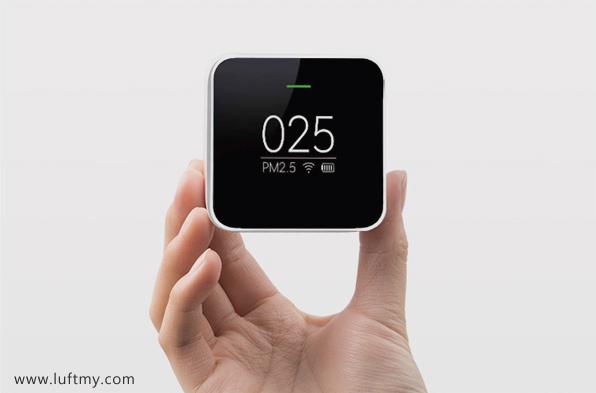
Luftmy PM2.5 monitor is a dedicated testing instrument used to measure the value of PM2.5 (fine particulate matter) in the air. It is suitable for the determination of public environments, atmospheric environments, and indoor air, and can also be used for the evaluation and analysis of air purifier purification efficiency.
Indoor air quality monitors are usually focused on detecting indoor air quality, and depending on the installation site and detection requirements, the types of detection instruments differ. The common 5-in-1 and 8-in-1 refer to the detection items, such as temperature, humidity, PM2.5, PM10, formaldehyde, TVOC, carbon dioxide, etc. In some special places, there are also detection needs for noise, light, and oxygen. Due to different detection items, the sensor components in the equipment are defined differently; naturally, detection instruments with more sensors will have higher prices. Furthermore, even for the same detection item, there are differences in detection accuracy. For example, some detection items can be accurate to 0.0001 units, while conventional ones can only detect 0.1 units, which naturally sets the instrument prices apart. Therefore, when purchasing indoor environment monitoring instruments, you must focus on the detection items and monitoring accuracy, which are the keys to determining the price of indoor air quality monitors.
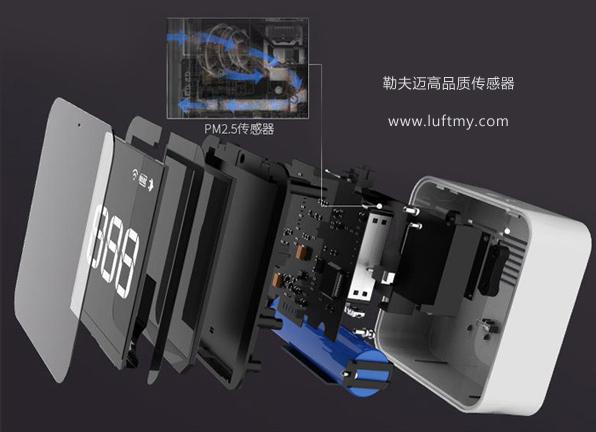
In addition, the detection demand is also reflected in the form of data. Some users look for equipment for long-term monitoring and analysis but often unknowingly end up looking at handheld air detectors. Actually, these are two different forms of indoor air quality monitors: one is the simple handheld detector, similar in shape to a spring scale, which shows the detection value when turned on, but values often cannot be exported and can only serve as a simple estimate. The Market Supervision Bureau once conducted calibration tests on handheld detectors on the market, and the results showed that over 80% of handheld detectors could not meet the requirements for precise measurement. The other is the indoor environment online monitoring system, which is more complex than handheld detectors. It is based on a networked mode, transmitting detection data to various screens and operating systems such as computers and mobile phones. Through long-term fixed-point detection of a certain area, it can accurately count the indoor environmental conditions in the current area and export historical data in forms like tables and charts, playing a good supervisory role for tracing indoor environment pollution sources and improving the environment. The essence of both handheld detectors and indoor environment online monitoring systems is to detect the indoor environment, but the actual application scenarios and processes are far apart, so it is natural that the purchase price is proportional to the practical functions.
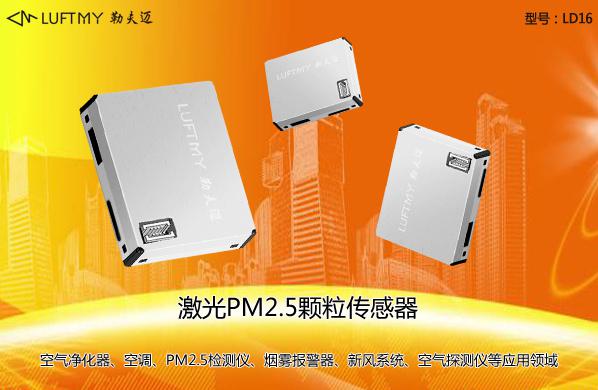
Dust sensor brand Luftmy high-precision laser PM2.5 sensor LD11 is a high-precision particulate matter concentration sensor based on the Laser Mie scattering theory. It can continuously collect and calculate the number of suspended particles of different particle sizes in the air per unit volume, namely the particle concentration distribution, and then convert it into mass concentration, outputting it in the form of a general digital interface. Luftmy laser digital PM2.5 sensor LD11 has characteristics such as small size, high precision, strong anti-interference ability, low power consumption, long life, zero error alarm rate, and short response time. This high-precision laser PM2.5 sensor can be embedded in various instruments related to the concentration of suspended particles in the air, such as air detectors or environment improvement equipment, to provide timely and accurate concentration data.
Finally, it is worth mentioning that there is currently no standard to regulate indoor air quality monitors. To purchase formal instruments, you still need to look for formal brands, such as Luftmy Intelligent Technology. Their indoor air quality monitors all pass measurement calibration inspection reports, ensuring the accuracy of the instruments.
