

Technical Support:
158-7527-1139

Whenever we enter our car the next morning, we often smell a strong odor, which indicates that the air inside the car has been completely polluted. For a healthy cabin space, how can we eliminate air pollution inside the car?
Facing in-car air pollution, most people think of using air fresheners or perfumes to mask the odors. In fact, this method is useless against air pollution. First, many air pollutants are colorless and odorless, making them undetectable by smell; simply masking the odor treats the symptom but not the root cause. Second, many low-quality fresheners themselves contain volatile pollutants, which may cause even more serious secondary pollution.

So, how do we correctly remove air pollution in the car and improve air quality? Luftmy Technology provides the following methods:
1. Open windows for ventilation
Ventilation is the simplest and most feasible method. Frequently opening windows for ventilation can effectively reduce harmful substances such as formaldehyde and benzene, and alleviate odors. However, note that if the outdoor air quality is poor, more harmful particles like PM2.5 will enter the car. You can use a handheld PM2.5 detector for monitoring!
2. Remove plastic packaging from new cars promptly
Remove plastic packaging from a new car in time. These protective films prevent odor gases trapped under the plastic from dissipating, and the plastic itself can produce harmful gases.
3. Use solid activated carbon
Placing activated carbon is one of the commonly used methods to remove formaldehyde and odors. Due to its strong adsorption capacity, small size, and flexible placement, activated carbon is favored by many consumers. However, its adsorption capacity is limited and it saturates easily. It is recommended to use activated carbon in conjunction with other methods for better results!
4. Try not to smoke in the car
Avoid smoking in the car as gases produced by tobacco combustion are difficult to dissipate in a closed cabin. If you do smoke, open the windows and turn off the air conditioning to help the smoke smell dissipate.
5. Install a car air purifier
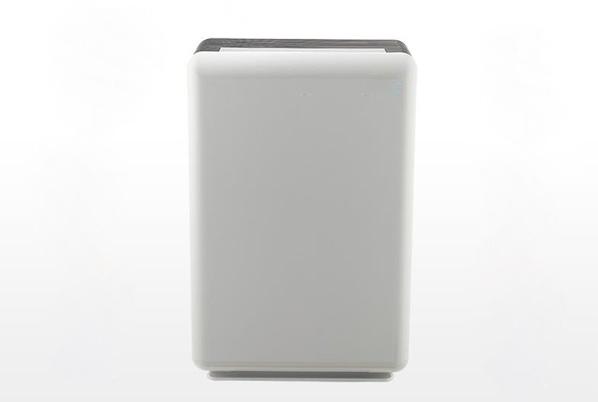
Car air purifiers can efficiently purify the air inside and remove hidden bacteria. Therefore, if you want to quickly and effectively purify the cabin air, a car air purifier is an indispensable device.
Because the space inside a car is small and airtight, even minor air pollution can reach high concentrations and cause significant harm to the human body. You can use Relance's formaldehyde detectors and PM2.5 detectors to monitor air quality!
6. Use a PM2.5 detector
A PM2.5 detector is a specialized instrument used to measure the value of PM2.5 (fine particulate matter) in the air. It is suitable for measurements in public places, atmospheric environments, indoor air, and car interiors, and can also be used to evaluate the purification efficiency of air purifiers. This air quality particle detector uses a laser PM2.5 sensor based on the Mie spherical particle scattering principle developed and produced by Luftmy, adopting the POS particle swarm algorithm to invert particulate mass concentration for fast and accurate data reading.
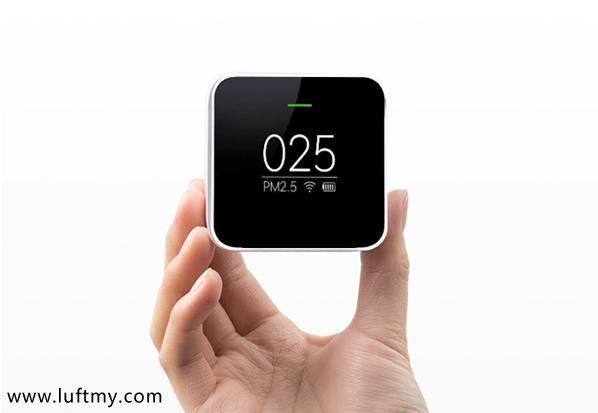
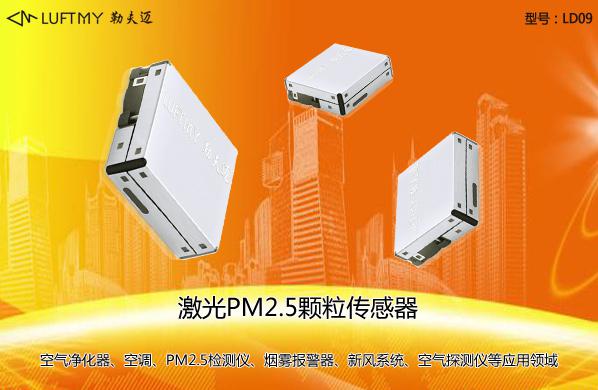
In the current air purification field, PM2.5 sensors have almost become standard hardware for purification equipment, used to monitor the concentration of particles like PM2.5. Given the application of PM2.5 sensors in purification devices, Luftmy recommends the infrared PM2.5 sensor HPD05 and the laser dust sensor LD09:
Automotive air quality sensor manufacturer Luftmy's air quality monitor LD09 is a high-precision particulate concentration sensor based on Laser Mie Scattering theory. It can continuously collect and calculate the number of suspended particles of different sizes per unit volume of air (concentration distribution), convert it to mass concentration, and output it via a universal digital interface. The Luftmy LD09 features small size, high precision, strong anti-interference, low power consumption, long lifespan, and zero false alarm rate. This sensor can be embedded in various instruments related to suspended particle concentration, such as air quality testers and particle counters, to provide timely and accurate concentration data.
Automotive air quality sensor supplier Luftmy's air quality monitor GDS06 uses the optical scattering principle to detect dust concentration. The sensor features a built-in infrared LED and a high-sensitivity photoelectric receiver. Light emitted by the LED reflects when encountering dust, and the sensor reflects the dust concentration by detecting the intensity of the reflected light. It outputs a PWM signal directly (where PWM width is the concentration value) or via IIC serial signals in ug/m3. The GDS06 dust particle counter provides stable detection and high production efficiency. It features small size, high precision, low power consumption, and stable operation under high dust concentrations, suitable for air quality testers and particle counters.
