

Technical Support:
158-7527-1139

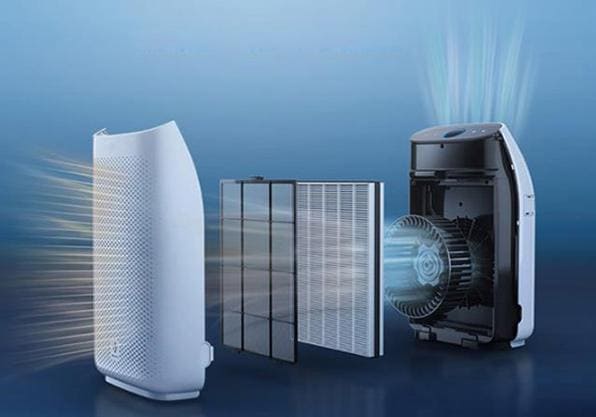
The higher the concentration of PM2.5 in the air, the more serious the air pollution. As air pollution becomes increasingly severe, everyone is paying more attention to PM2.5. PM2.5 refers to particulate matter in the ambient air with an aerodynamic diameter less than or equal to 2.5 micrometers.
To achieve more accurate monitoring of PM2.5 in the atmosphere, Luftmy editors have learned that China has built the world's largest atmospheric monitoring station network. The national PM2.5 monitoring network has been completed, and online monitoring technologies for PM2.5, ozone, and volatile organic compounds (VOCs) have also been significantly improved. Scientific instruments are playing a more major role in atmospheric monitoring, allowing the general public to understand the released PM2.5 concentration values more timely.
Regarding the haze existing indoors, staying inside is only relatively safe. The World Health Organization has listed indoor environmental pollution as one of the top ten killers of human health. Statistical data shows that under normal circumstances, indoor air pollution levels are 5-10 times higher than outdoor pollution, and nearly half of the world's population is exposed to indoor air pollution. Currently, major air purifiers, air conditioning systems, and fresh air systems are equipped with PM2.5 sensor technology, such as particulate matter concentration detection sensors, to monitor indoor PM2.5 content in real-time for better indoor air purification.
Luftmy laser PM2.5 sensors feature excellent consistency, stability, and accuracy. They support serial port output, PWM, and PWM output, offering continuous sampling, real-time response, low power consumption, long lifespan, strong anti-interference, and a resolution of particles as small as 0.1μm. They can be widely used in air purifiers, fresh air systems, portable instruments, air detectors, air quality monitoring equipment, air conditioners with purification functions, smart home devices, and other scenarios.
The laser dust sensor module LD11 is a high-precision particulate matter concentration sensor based on the laser Mie scattering theory. It can continuously collect the distribution of particulate matter concentration, convert it into mass concentration, and output it in the form of a universal digital interface. This particulate matter concentration detection sensor can be embedded into various instruments or environmental improvement equipment related to the concentration of suspended particulate matter in the air, providing timely and accurate concentration data.
Which air sensor brand is better? Luftmy focuses on the R&D, production, and sales of optical particulate matter sensor technology. Its infrared dust sensors, laser dust sensors, PM2.5 sensor modules, micro-dust sensors, particulate matter sensors, dust sensor modules, and air quality sensors have all received widespread acclaim in the industry.
