Technical Support:
158-7527-1139

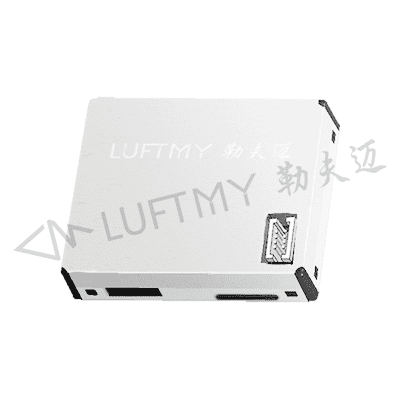
Nowadays, more and more people are discovering that environmental pollution is becoming increasingly serious, while attention to quality of life is growing. Air purification has become a major topic in today's society. Dust sensors, as essential tools for measuring air quality indicators, are of paramount importance in air purification applications and are widely used in air purifiers, air conditioners, humidifiers, fresh air systems, smart homes, and other scenarios.
In the air purifiers we are familiar with, low-precision infrared PM2.5 sensors are generally used for particles such as indoor dust, pollen, microorganisms, dust mites, and cigarette smoke. These belong to qualitative measurement, which can only measure an approximate PM2.5 concentration range for estimation. The measurement results are for reference only and have low accuracy; they are generally used to judge the dust pollution level. Their advantage is low cost.
Currently, requirements for air purification equipment or systems are increasing. They are no longer limited to simple pollution level detection; more importantly, they pursue high-precision measurement data. New PM2.5 laser sensors are based on quantitative measurement, capable of detecting particles as small as 0.3μm and accurately measuring PM1.0, PM2.5, and PM10 values. With high precision and superior performance, their price is no longer a disadvantage compared to infrared dust sensors; instead, they are a high-cost-performance choice.
When choosing sensors on the market today, considerations typically include output mode, size, measurement accuracy, response speed, current consumption, service life, measuring range, sensitivity, consistency, and stability.