

Technical Support:
158-7527-1139

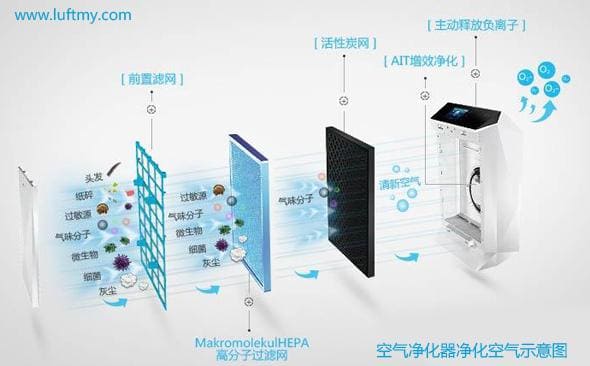
Air purifiers have gained increasing attention due to environmental pollution issues. Particles in the air with a diameter less than or equal to 2.5 micrometers are small, have a large surface area, and high activity. They easily carry toxic and harmful substances such as heavy metals and microorganisms. These particles stay in the atmosphere for long periods and can travel long distances, significantly impacting air quality.
PM2.5 is widely present in our daily indoor environments. Therefore, it is essential to find an effective method to detect PM2.5 concentration in a specified environment, provide timely feedback to users’ portable electronic devices when the concentration exceeds a preset threshold, and allow users to remotely control relevant devices via Bluetooth or other means to effectively reduce PM2.5 concentration, thus mitigating the threat of high PM2.5 levels in that environment.
Compared with traditional air purifiers, which mostly use infrared PM2.5 sensor modules, the sensitivity and real-time measurement of airborne PM2.5 is slightly inferior to laser dust sensor modules. With the development of laser technology, applying laser PM2.5 sensors in air purifiers allows more accurate and timely detection of PM2.5 concentration in the current environment.
Indoor PM2.5 sensors use laser PM2.5 sensors to collect real-time PM2.5 concentration data. Based on the collected data, the motor speed is automatically adjusted, driving air circulation through the designated environment. Air passes through a dedicated PM2.5 filter to reduce PM2.5 content. Simultaneously, air quality information and other auxiliary data are displayed on the built-in LCD screen, and users can monitor air quality and adjust purification levels in real-time via mobile apps using Bluetooth. This provides a simple and reliable method to purify inhalable fine particles, achieving effective air purification.
