Technical Support:
158-7527-1139

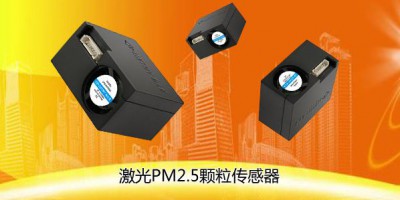
Dust concentration sensors are mainly used for continuous monitoring of indoor dust concentrations and other workplaces. To satisfy existing indoor air quality needs, high-tech sensors have been developed for real-time monitoring of dust concentration based on light scattering theory in natural airflow states.

Nowadays, many indoor environments choose to purchase indoor air quality detectors to view pollutant concentration indicators in real-time. Different types of detection instruments are often varied and have different usage methods, though they are largely similar. Consumers often encounter confusion about how to use them upon first contact after purchase. Therefore, the editor from LUFTMY Intelligent Technology has summarized the usage methods of air quality monitoring instruments currently on the market for your convenience.
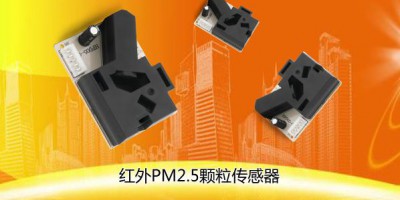
The working principle of dust sensors is developed based on the principle of light scattering. Fine particles and molecules produce light scattering when illuminated, while simultaneously absorbing part of the light energy. When a beam of parallel monochromatic light enters the measured particle field, it is affected by scattering and absorption, causing light intensity attenuation. In this way, the relative attenuation rate can be determined, which linearly reflects the relative concentration of dust. The light intensity is proportional to the converted electrical signal; by measuring the signal, the relative attenuation rate and the dust concentration in the field can be determined.
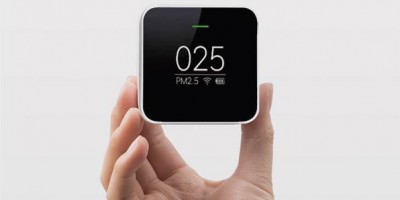
In daily life, whether in offices or other public places, pollutants in indoor air have become "invisible killers" threatening human health. Most people are uncertain about whether their indoor air quality is truly good, forcing them to make a choice. Hiring a third-party testing agency is both troublesome and expensive, requiring many procedures for results. Therefore, most people choose to buy an indoor air quality detector. However, the variety of indoor air quality detectors on the market is dazzling. Is the data they detect truly reliable? How should one choose an indoor air quality detector? Let the editor from LUFTMY Intelligent Technology explain the inner workings for you.
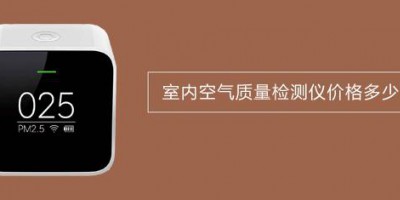
While focusing on indoor environmental quality, more and more enterprises and institutions, especially service-oriented organizations like restaurants, hotels, and clubs, are choosing to install indoor air quality detectors to achieve better purification effects. Compared to traditional professional testing, indoor air quality detectors allow for long-term online monitoring and real-time data display, serving as a warning and evaluation tool for indoor environmental purification. So, how much is an indoor air quality detector? As the old saying goes, "you get what you pay for," which is perfectly applicable here. Of course, there are differences between the detectors themselves, which the editor from LUFTMY Intelligent Technology will explain next.

Poor ventilation and excessive pollutants cause indoor air quality to decline. How can we avoid this? What are the improvement measures? What is the role of portable PM2.5 detectors?
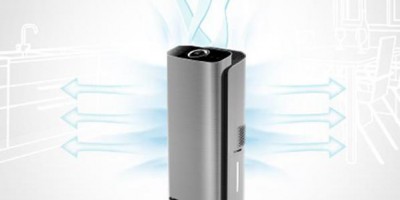
There are many laser sensors on the market with different principles. Laser PM2.5 sensors are versatile, compact, and accurate, suitable for purifiers, smart homes, and HVAC systems.

Floating dust particles < 10µm can float for a long time and enter the respiratory tract. These are harmful, especially when < 2.5µm, as they deposit in the lungs. Control of such pollution is gaining attention.
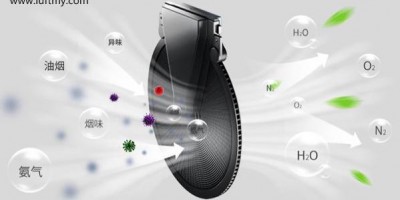
PM2.5 refers to particles with a diameter ≤ 2.5 micrometers, which can enter the lungs. Many industries like metallurgy and construction easily produce large amounts of dust.
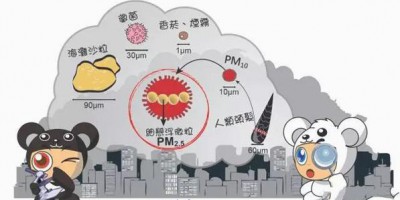
According to a Tsinghua University report, indoor PM2.5 pollution has a more obvious impact on people than outdoor pollution, with indoor inhalation being four times higher than outdoor.

As the economy grows, air pollution worsens with industrialization. Smog has become a key air quality parameter. China has released standards for monitoring, and PM2.5 was added to the national air quality standard.
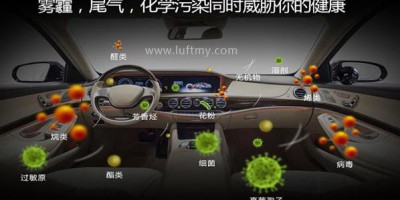
Air quality is a general concern. For example, in-vehicle air quality: Are there odors? Is there pollution? How are standards judged? How to meet the needs of drivers for a comfortable environment?