

Technical Support:
158-7527-1139

PM2.5 refers to particulate matter in the atmosphere with a diameter less than or equal to 2.5 microns. It is an inhalable particulate matter with a diameter less than 1/20 of a human hair. In industrial production, it is easy to generate large amounts of PM2.5 dust, such as in industries like metallurgy, machinery, building materials, light industry, and power.
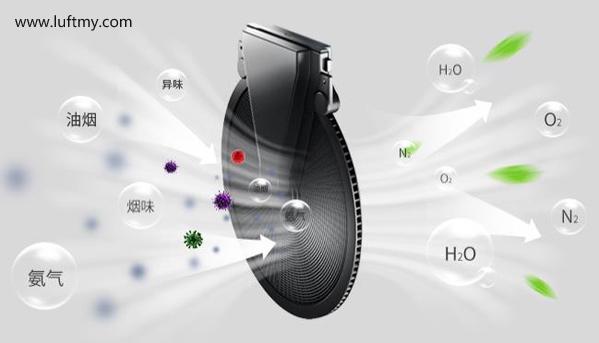
PM2.5 fine particles have a small diameter and remain suspended in the atmosphere for a long time. They can travel and diffuse over long distances and usually contain large amounts of toxic and harmful substances, which has a significant impact on human health. When PM2.5 exceeds the standard, for every increase of 10 micrograms per cubic meter, the emergency visits and mortality rates of the cardiovascular system in hospitals will increase by 6% to 7%, and hypertension emergency visits will increase by 5%. When smoggy weather occurs frequently, PM2.5 air pollution and dust have become issues that people cannot ignore. With increasing traffic congestion and car ownership, the degree of air pollution continues to deepen.

To ensure good indoor air quality, air conditioners and purifiers have become the first choice for most people to purify the air. Current air conditioners are equipped with PM2.5 sensors and have filtering and dust removal functions, which can improve indoor air quality to a greater extent. The working principle of the PM2.5 dust sensor in the air conditioner lies in its silver ion electrostatic dust collector. When the dust content in the air is too high, the silver ion electrostatic dust collector starts automatically, adsorbing dust onto the dust collection plate and filter screen through high-voltage electrostatic technology.
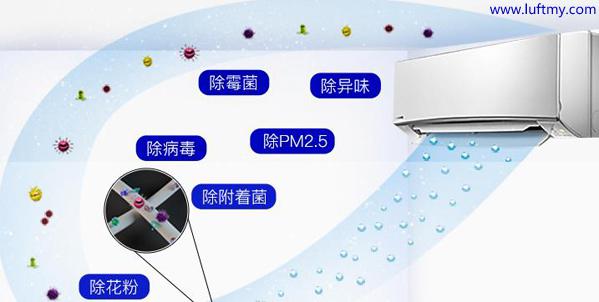
Many PM2.5 dust sensors can now simultaneously monitor both PM2.5 and PM10 particles and monitor the dust concentration in indoor and outdoor air in real time. After adding a PM2.5 dust sensor to the air conditioner, the unit can update indoor air based on the monitored dust data. Additionally, the fan intake volume can be controlled based on this, thereby achieving energy-saving and environmental protection requirements. Therefore, incorporating PM2.5 dust sensors into air conditioners to keep people away from dust pollution will become a new trend and a new development direction for the air conditioning industry. In view of this situation, Luftmy recommends the PM2.5 sensor LD10 commonly used in air conditioners, with details as follows:
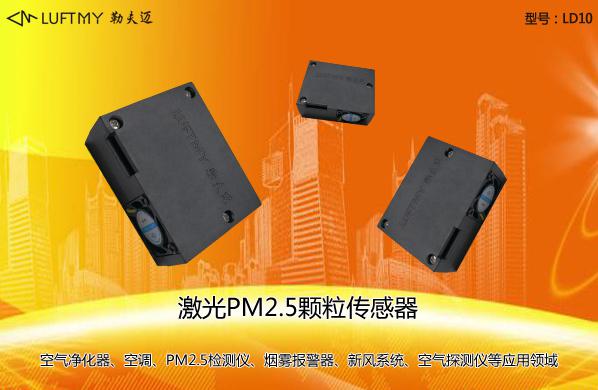
The LD10 laser particulate matter sensor is a high-precision particle concentration sensor based on Laser Mie Scattering Theory. This laser gas sensor is a small module for detecting dust particles in the air, featuring small size, high detection accuracy, good repeatability, high consistency, real-time response with continuous sampling, strong anti-interference capability, use of an ultra-quiet fan, and 100% factory testing and calibration. It offers high detection accuracy, short response time, and product miniaturization. This PM2.5 dust sensor can be embedded in various instruments or environmental improvement equipment related to suspended particle concentration, such as air conditioners with purification functions and air purifiers, providing timely and accurate concentration data.
