

Technical Support:
158-7527-1139

Aerosol particles with a diameter of less than 10 microns can float in the air for a long time and enter the human respiratory tract through breathing. These particles, also known as inhalable particulate matter, are granular floating substances produced when materials burn, which are very harmful to health. When the particle size is less than 2.5 microns, most can be deposited into the lungs through the respiratory tract, making them even more harmful to the human body. Aerosol pollution is an important aspect of air pollution, and the issue of its control has gradually attracted public attention.

Due to their small size, aerosol particles accumulate continuously in the atmosphere with long floating times and wide coverage. When they come into contact with sulfur dioxide and oxygen in the air, the sulfur dioxide is partially converted into nitrogen trioxide, and sulfur increases the acidity of the air, causing the degree of pollution to gradually worsen. In addition, small-diameter aerosol particles (PM2.5) in the air also promote the reaction between oxygen and sulfur dioxide to form sulfur trioxide, which is one of the main sources of acid rain. Aerosol is also a carrier and catalyst for many pollutants, as it can adsorb various harmful and toxic substances emitted into the atmosphere.
Generally speaking, the main sources of small-diameter aerosol (PM2.5) are industrial production, automobile exhaust emissions, and other residues emitted during combustion processes. The main source of PM2.5 is anthropogenic emissions. Some gaseous pollutants emitted by human activities are converted into PM2.5 in the air. Direct emissions mainly come from combustion processes, such as the burning of coal, gasoline, and diesel, incineration of straw and firewood, burning of garbage, etc.
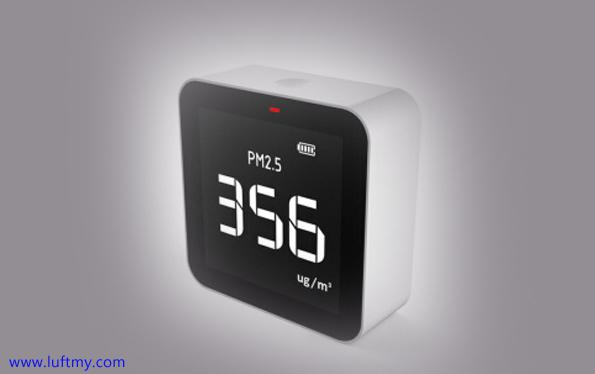
PM2.5 sensors can be used to detect aerosol concentration. The PM2.5 sensor is internally equipped with an infrared light-emitting diode and a phototransistor. Their optical axes intersect; when the dust airflow passes through the intersection of the optical axes, aerosol particles appear in the infrared light, and the reflection intensity of the reflected light is proportional to the dust concentration. The infrared LED emits light which generates reflected light upon encountering dust. The PM2.5 sensor detects the intensity of the reflected light and outputs a signal. The dust concentration is determined based on the signal intensity, and two different Pulse Width Modulation (PWM) signals are output to distinguish the concentration of different dust particles. Luftmy's GDS06 and HPD05 sensors can be used for aerosol concentration detection:
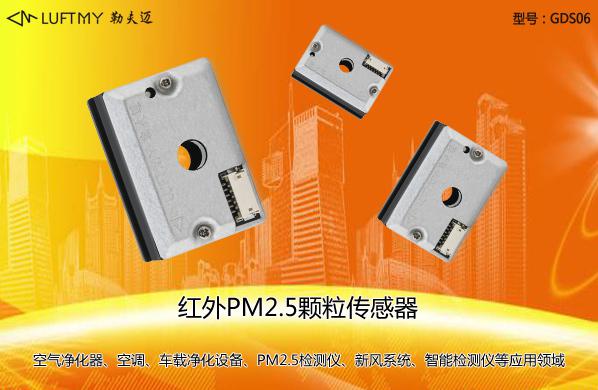
Overview of Luftmy Particle Sensor Module PM2.5 Sensor GDS06:
The PM2.5 sensor GDS06 detects particles of about 0.3 microns, such as indoor dust, pollen, microorganisms, dust mites, and cigarette smoke, measuring the concentration of suspended particles in spaces no larger than 10 microns. The signal of the PM2.5 sensor GDS06 is converted into a PWM output through internal circuits and programs. The GDS06 product features stable detection capability and high production efficiency, offering dual advantages.
Features of Luftmy Laser Particulate Matter PM2.5 Sensor:
The HPD05 high-quality PM2.5 sensor is a small module that uses the principle of optical scattering to detect dust particles in the air. It features small size, high detection accuracy, good repeatability, high consistency, real-time response with continuous sampling, strong anti-interference capability, and uses an ultra-quiet fan. The sensors are 100% inspected and calibrated before leaving the factory.
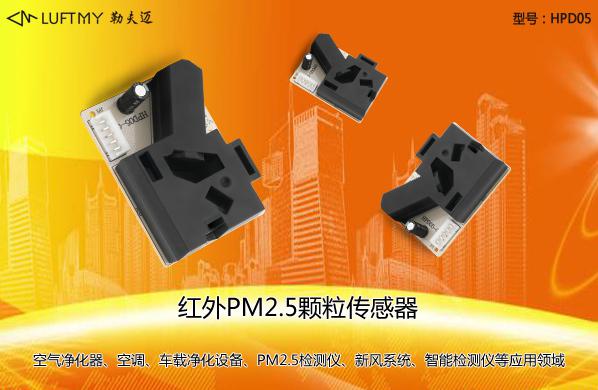
Luftmy, an infrared dust PM2.5 sensor manufacturer, provides the miniature PM2.5 sensor HPD05, which utilizes the principle of optical scattering to obtain particle concentration. Through the conversion of optical paths and circuits, it measures the dust concentration within the detection range. As a miniature PM2.5 sensor supplier, Luftmy's high-precision PM2.5 sensor HPD05 features small size, high accuracy, low power consumption, short response time, and stable operation under high dust concentrations. This high-precision PM2.5 sensor can be applied in air purifiers, fresh air systems, etc.
