

Technical Support:
158-7527-1139

Fine particulate matter in the air, such as dust, smoke, pollen, and bacteria, although invisible, has a significant impact on our health and environmental quality. Therefore, developing efficient and accurate methods to monitor and measure fine particulate matter in the air is particularly important. In this field, laser dust sensors play a key role, utilizing laser technology to detect and quantify the concentration and size of fine particulate matter.
What is a Laser Dust Sensor?
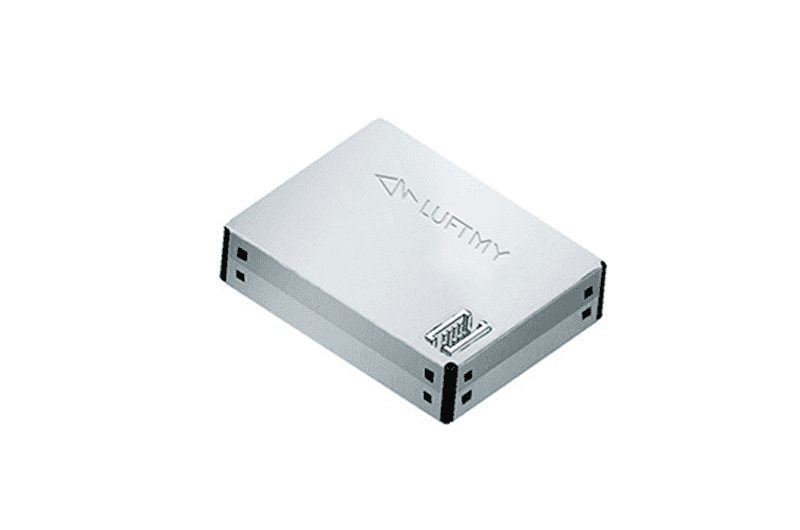
A laser dust sensor is a high-precision optical instrument used for detecting and measuring fine particulate matter in the air. They utilize the principle of interaction between laser beams and fine particulate matter to achieve precise measurements of particulate concentration. These sensors typically consist of a laser light source, a light scattering device, and a receiver, using light scattering methods to detect and measure the characteristics of particulate matter.
Working Principle
The working principle of a laser dust sensor is based on light scattering. When a laser beam illuminates fine particulate matter in the air, the light interacts with the particles, and a portion of the light is scattered in various directions. A receiver is positioned on one side to collect the scattered light. By measuring the intensity and angle of the scattered light, the sensor can determine the size and concentration of the particulate matter.
Specifically, the sensor detects fine particulate matter through the following steps:
● Emitting a Laser Beam: The sensor emits a beam of monochromatic laser light through a laser, usually red or green laser light.
● Light-Particle Interaction: The beam hits the fine particulate matter in the air, which absorbs and scatters the light.
● Collecting Scattered Light: The receiver collects the scattered light and measures its intensity and scattering angle.
● Data Analysis: The sensor determines the size and concentration of the particles by analyzing the characteristics of the scattered light. Larger particles typically produce more scattered light, while higher concentrations lead to stronger scattering signals.

Advantages and Applications
Laser dust sensors possess many advantages, making them an ideal choice for detecting fine particulate matter:
● High Precision: These sensors provide high-precision measurements of particulate concentration and size, making them highly valuable in scientific research, environmental monitoring, and industrial applications.
● Real-time Monitoring: Laser dust sensors can monitor fine particulate matter in real-time, helping to take timely measures to improve indoor air quality or address environmental pollution issues.
● Versatility: They can be used to detect various types of fine particulate matter, from dust and smoke to bacteria and pollen.
● Non-invasive: Compared to traditional sampling methods, laser dust sensors do not require damaging the particulate samples, making them more suitable for certain special applications.
The application range of these sensors is broad, including but not limited to the following areas:
● Air Quality Monitoring: Used in urban air quality monitoring stations to monitor concentrations of fine particles like PM2.5 and PM10, helping governments and the public better understand air quality.
● Industrial Control: In industrial processes, laser dust sensors can be used to monitor particles on production lines to ensure product quality and employee health.
● Laboratory Research: Researchers can use these sensors to study the behavior of particles under different conditions, gaining deeper insight into their characteristics.
In summary, laser dust sensors are highly sophisticated tools for detecting fine particulate matter in the air. Their working principle is based on light scattering, determining particle size and concentration by measuring the characteristics of scattered light. These sensors have broad application prospects in fields such as environmental monitoring, industrial control, and scientific research, contributing to improved air quality and quality control in production processes.
