

Technical Support:
158-7527-1139


When we talk about air quality sensors, we are usually referring to a device capable of measuring and monitoring the concentration of pollutants in the air. These sensors have a wide range of applications in various environments, including indoor and outdoor air quality monitoring, industrial emission control, and personal health management. This article will delve into how air quality sensors work to help you better understand the principles and applications of this technology.
Sensor Types:
First, let's understand the main types of air quality sensors. Common air quality sensors include:
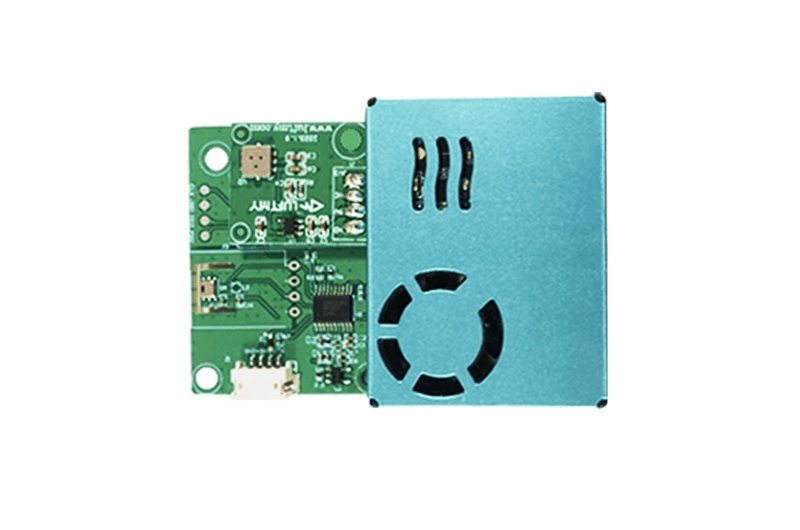
● Particulate matter sensors: These sensors are used to measure tiny particles in the air, such as PM2.5 and PM10. They typically use laser or light scattering technology to detect the number and size of particles.
● Gas sensors: These sensors are used to detect the concentration of specific gases, such as carbon monoxide (CO), sulfur dioxide (SO2), nitrogen oxides (NOx), and formaldehyde. They use various chemical or physical methods to measure gas concentrations.
● Humidity and temperature sensors: These sensors measure the humidity and temperature levels in the air, which are crucial for air quality monitoring as they affect the distribution and concentration of pollutants in the air.
Working Principle:
Different types of air quality sensors employ different working principles. Below are examples of working principles for some common sensors:
● Particulate matter sensors: Particulate matter sensors usually use laser or light scattering technology. They determine the number and size of particles by emitting a laser beam into the air and measuring the light scattered by the particles. Higher concentrations of particles result in more light scattering.
● Gas sensors: Gas sensors can adopt various working principles, including electrochemical, optical, semiconductor, and infrared. For example, electrochemical sensors measure gas concentration by measuring changes in current or voltage between the gas and an electrochemical electrode. Different gases cause different electrochemical reactions, allowing the sensor to identify specific gases.
● Humidity and temperature sensors: These sensors typically use resistive, capacitive, or electronic components to measure humidity and temperature. Humidity sensors measure moisture content, while temperature sensors measure the temperature of the air. This data helps in a more comprehensive assessment of air quality.
Application Areas:
Air quality sensors play a key role in several fields:
● Environmental monitoring: In both indoor and outdoor settings, sensors are used to monitor particulate matter and gas concentrations to determine air quality and help take necessary measures, such as ventilation or purification.
● Industrial applications: Used to monitor harmful gas emissions in factories and production environments to ensure worker safety and environmental protection.
● Health management: In some personal health devices, such as air purifiers and health monitors, sensors are used to monitor indoor air quality and alert users to take action.
● Urban planning: Used to monitor air quality in cities and help governments take measures to improve the urban environment.
Air quality sensors are a key technology that, through different working principles, are used to monitor and measure parameters such as particulate matter, gas, humidity, and temperature in the air. They play a critical role in multiple fields such as environmental monitoring, industry, health management, and urban planning, helping to improve our quality of life and ensuring that we breathe fresh and healthy air. With the continuous development of technology, air quality sensors will continue to evolve, providing us with more accurate air quality data to help us better manage and improve air quality.
