

Technical Support:
158-7527-1139

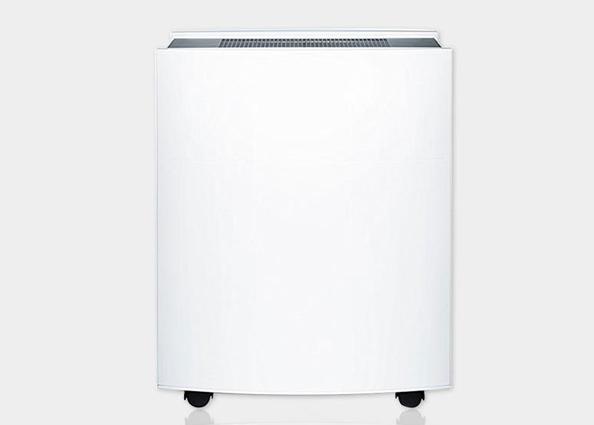
With the improvement of living standards, the general public's requirements for air environmental quality have also increased accordingly. Various public places such as large shopping malls and supermarkets, high-end hotels, business buildings, parking lots, theaters, gymnasiums, libraries, and amusement parks are scattered throughout the city. These places are densely populated and have high mobility. For citizens, people pay more attention to the quality of urban air and home air every day. However, insufficient attention is paid to the air quality of public places. Relatively speaking, more and more families are using air purification devices with built-in PM2.5 sensors to purify indoor air.
1. Indoor air pollutants in public places exceed standards
In some public places such as large malls and supermarkets, excessive crowds during peak hours cause carbon dioxide to seriously exceed standards. Additionally, newly renovated hotels and entertainment venues seriously pollute the indoor environment due to poor ventilation and low-quality building decoration materials.
2. Serious pollution in centralized air conditioning systems of public places
The centralized air conditioning ventilation systems in many public places are not cleaned for a long time, resulting in a large number of pollutants forming in the air conditioning ducts. Once operated for a long time, the indoor air quality drops sharply, making it easy to trigger the spread of respiratory infectious diseases.
3. Insufficient fresh air input in centralized air conditioning systems
According to national regulations, the minimum fresh air volume in public places should reach 30 cubic meters per person per hour to solve air quality problems caused by enclosed spaces.
However, since the energy consumption of processing fresh air accounts for more than 20% of air conditioning energy consumption, some operators turn the fresh air volume very low or even close it completely to save operating costs. This leads to poor air circulation, fresh air not reaching indoors, and harmful gases not being exhausted, causing indoor air pollution.
Components of Air Quality Monitoring Systems for Public Places
1. Sensors
Sensors include PM2.5 sensors, CO2, VOC gas sensors, temperature, humidity, air flow speed, etc. These independent air quality sensors transmit very accurate measured data to the data acquisition equipment.
2. On-site Data Acquisition Equipment
Equipped with multiple data interfaces, with optional 8 or 16-channel digital sensor interfaces. It uses industrial-grade low-power high-performance embedded processors. Users can set the upper and lower alarm limits of the sensors themselves, and transmit data to the remote control center via GPRS/3G/ADSL, etc. Through this system, viewing on-site CO2, temperature, humidity, VOC wind speed, and other data via software truly realizes remote monitoring and management.
3. On-site LED Display
Through the on-site LED display, it is convenient for people to understand the air quality of public places on the spot. It helps to improve the service quality of public places such as shopping malls, hospitals, and stations, and ensures the health and safety of the public.
4. Central Data Monitoring Center
Concentrates all information and transmits it to the monitoring center through the network, realizing functions such as air quality collection, data storage, real-time alarm, historical data analysis, statistics, and processing for public places, ensuring good air quality in the venue.
