

Technical Support:
158-7527-1139

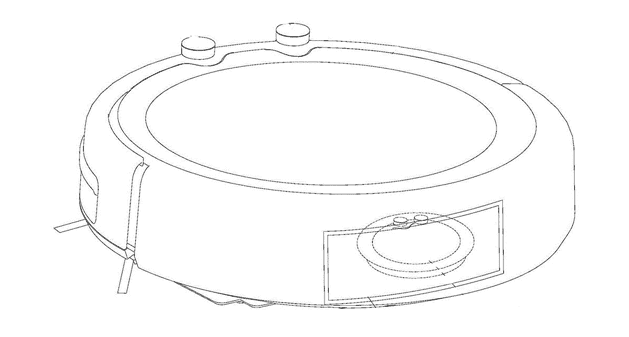
Sweeping robots are increasingly entering households, and they are no longer just symbolic fancy toys as they were in the past. However, during the purchase process, many interested friends are dazzled by various performance data provided by merchants. Therefore, the Luftmy editor provides some reference suggestions here.
1. Dust box capacity of the sweeping robot
The dust box is an important device in sweeping. Its main function is to hold the dust and dirt cleaned by the sweeper. The size of the dust box is closely related to the cleaning range. If the dust box is too small, inhaled dust will clog the filter. A minor impact might be incomplete suction, while a major impact could lead to secondary air pollution or malfunction. Therefore, the Luftmy editor suggests that the dust box capacity should not be too small and should be adapted to the area of the house.
2. Body height of the sweeping robot
In fact, the height of the sweeping robot has little to do with actual performance improvement, but it has a great impact on cleaning coverage. First, you need to determine the minimum space height you want to clean at home, such as under tables, beds, and cabinets. Once you know the height, you can understand how tall the sweeping robot needs to be to ensure higher cleaning coverage.
3. Sensitive obstacle avoidance of the sweeping robot in complex environments
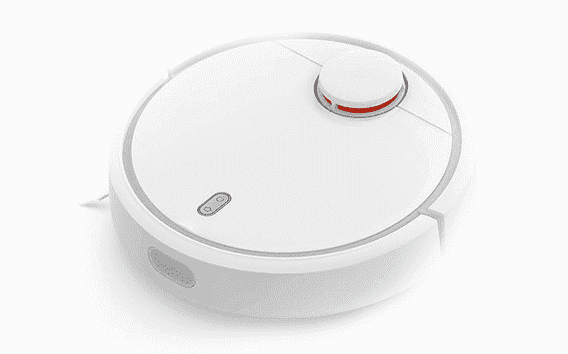
The primary job of a sweeping robot is to sweep the floor, and to do it well, it must possess many skills. One is to move freely in complex home environments, sensitively avoiding obstacles to protect itself and furniture from damage. To achieve this, the sweeper needs to be "smart" enough, which is mainly reflected in the configuration of the detection system. There are two main types of detection systems used: the most common is infrared induction detection, which is small, low-cost, and flexible in design; the other is bionic ultrasonic radar detection, which is larger and more expensive but has higher accuracy. However, only a few manufacturers use it in small quantities.
4. Cleaning level of the sweeping robot
Indeed, sweeping robots cannot reach the level of manual cleaning, nor can they truly free people's hands—even a sweeping robot costing nearly 10,000 yuan cannot achieve such an effect. During the cleaning process, you may find that it misses debris right next to it, which is a common comparison of one-time cleaning degrees.
5. The micro-dust sensor: A powerful tool for sweeping robots
To help a sweeping robot achieve a more ideal cleaning effect, the support of a micro-dust sensor is required. It can display real-time floor cleanliness data, allowing the robot to better complete cleaning tasks for particles like dust and hair fibers.
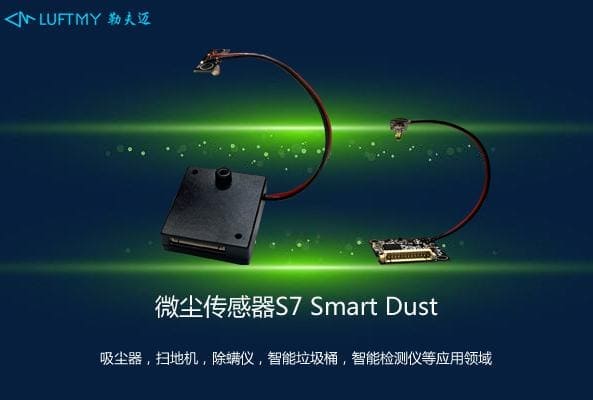
The Luftmy micro-dust sensor S7 Smart Dust utilizes the optical opposed-beam principle. Installed in the ventilation ducts of mite removers, vacuum cleaners, and sweeping robots, it accurately measures the quantity and concentration of particles like mites, dust, and hair fibers, displaying real-time cleanliness data for floors, carpets, sheets, sofas, and car interiors.
The Luftmy micro-dust sensor can be used in sweeping robots, mite removers, vacuum cleaners, and other equipment to intuitively present the cleaning effect and cleanliness of surfaces to the user. The equipment intelligently controls the motor speed based on sensor data, achieving silence, energy saving, and extending motor life.
