

Technical Support:
158-7527-1139

With the improvement of people's living standards and the rapid development of computer technology and artificial intelligence science, intelligent robot technology has gradually become a hotspot in the field of modern robotics research. A healthy and comfortable home environment is increasingly being prioritized by more people. Luftmy editor noted that buying and decorating houses have become popular topics of conversation, but the dirty and exhausting cleaning work after renovation has become another major problem troubling housewives. For many families, cleaning robots have become an essential small appliance for home maintenance.
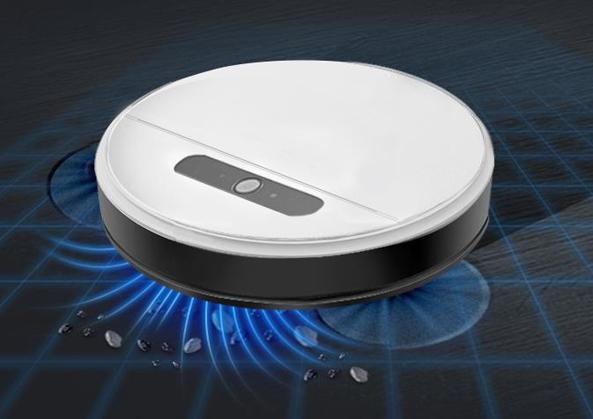
The automatic sweeping robot, which automatically cleans room floors, integrates many disciplines such as mechanics, electronics, sensor technology, computer technology, control technology, robotics, and artificial intelligence. As a pioneer in the practical development of intelligent mobile robots, the sweeping robot, also known as an automatic cleaner, intelligent vacuum, or robotic vacuum cleaner, is a type of smart home appliance. It can automatically complete floor cleaning tasks in a room using artificial intelligence. Generally, it uses brushing and vacuuming methods to suck ground debris into its internal dustbin, thereby achieving floor cleaning. This design of the sweeping robot adopts a brush-and-vacuum method. The body is a wireless machine, mainly disc-shaped, and operates on rechargeable batteries. Operation is done via remote control or by pressing corresponding buttons on the machine's control panel. This sweeping robot can be scheduled for cleaning and can charge itself. It is equipped with an ultrasonic ranging sensor at the front to detect obstacles. If it encounters a wall or other obstacles, it will turn automatically and follow a rectangular path starting from the room edges to clean the area systematically.
I. Working Principle and Characteristics of Sweeping Robots
The sweeping robot is controlled by a microcomputer and can achieve automatic navigation for floor cleaning and vacuuming. By using a bumper, it can avoid and bypass obstacles, ensuring corners are cleaned. At the same time, the design of two oversized side brushes allows for more thorough cleaning of corners and floors. The relative rotation of the two cleaning wheels ensures that trash does not slip away from the bottom of the body, making cleaning more complete. The dual function of sweeping and vacuuming allows dust to enter the collection box more regularly and smoothly. By installing photoelectric sensors on the front wheel and the sweeping wheel power box, the robot has the function of automatically preventing the body and brushes from getting stuck. Luftmy editor noticed that when stuck, it will automatically reverse or shut down. Infrared reflection detectors are installed on the bumper to automatically judge if there is a cliff ahead and bypass it.
1. Time-saving and labor-saving, improving work efficiency and energy utilization: The entire cleaning process does not require human control, reducing the operational burden, allowing people to use the saved time for other meaningful things;
2. Low noise: Less than 50 decibels, ensuring a noise-free cleaning process;
3. Air purification: Built-in activated carbon to adsorb harmful substances in the air;
4. Lightweight and compact: Easily cleans dead corners that ordinary vacuum cleaners cannot reach.
II. Key Technologies of Sweeping Robots
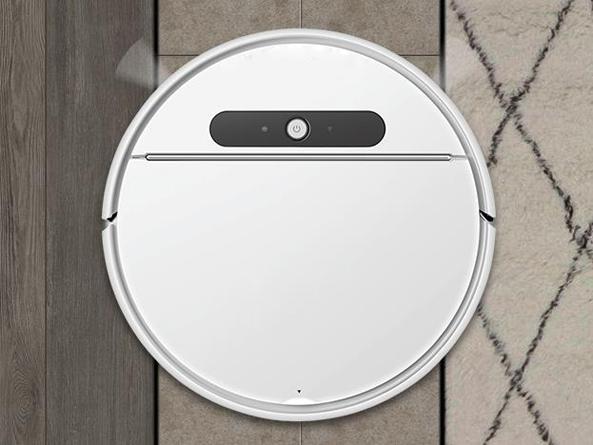
A sweeping robot system usually consists of four parts: the mobile mechanism, the perception system, the control system, and the vacuuming system;
The mobile mechanism is the main body of the sweeping robot, which determines its movement space, and generally adopts a wheeled mechanism;
The perception system generally uses ultrasonic rangefinders, contact and proximity sensors, infrared sensors, and CCD cameras.
With the rapid development of computer technology, artificial intelligence, sensor technology, and mobile robot technology in recent years, the research and development of sweeping robot control systems have a solid foundation and good development prospects. The control and working environment of sweeping robots are often uncertain or variable; therefore, safety, reliability, anti-interference, and cleanliness must be considered. It is particularly important to use sensors to detect the environment, analyze signals, and understand the environment through appropriate modeling methods. Recent research on intelligent robots shows that for autonomous mobile robots working in complex unstructured environments, further automation depends on pattern recognition, obstacle identification, real-time data transmission, and appropriate AI methods. Further development of global models is also needed for robots to obtain global information.
The key technologies that are currently developing rapidly and have a significant impact on sweeping robots are: sensor technology, intelligent control technology, path planning technology, sweeping technology, and power supply technology.
III. The Role of Micro-dust Sensors in Identifying Dust Cleanliness for Sweeping Robots
The application benefits of sensors in vacuum cleaners and sweeping robot products: the cleaning effect of the equipment and the cleanliness of floors, carpets, and bed sheets are intuitively presented to the user through sensor output data and LED color displays. The device intelligently controls the motor speed based on dust sensor data to achieve silence, energy saving, and extended motor life.
