

Technical Support:
158-7527-1139

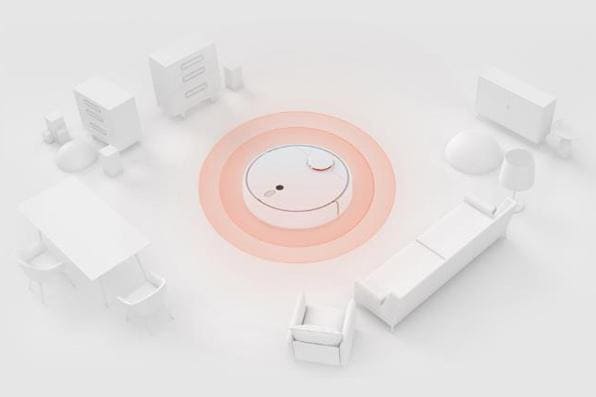
With the arrival of the smart era, automatic sweeping robots have become increasingly common in our daily lives. However, some people do not know much about these new technologies. Take the automatic sweeping robot as an example: do you know how to use a sweeping robot? Luftmy editor has learned that there are many new sweeping robot products on the market. Is the sweeping robot dust identification sensor carried by the robot more intelligent?
The purpose of dust sensors and dust particle sensors is that when the sensor detects particles continuously hitting the sensor sheet, the machine determines there is more dust in the area and starts the spot cleaning mode to repeat cleaning in that area, so as to better clean up dust and garbage. By displaying data through the dust sensor, real-time cleanliness display is achieved and presented more intuitively to the user, improving the application capability of the sweeping robot and making it more intelligent.
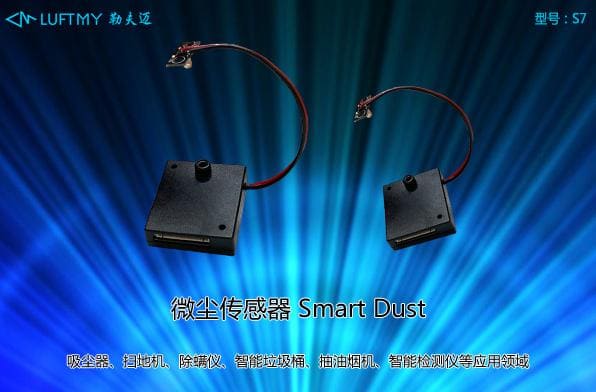
The vacuum cleaner dust identification sensor S7 Smart Dust uses the optical transmission principle. Installed in the ventilation ducts of sweeping robots and other equipment, it accurately measures the quantity and concentration data of particles such as mites, dust, and hair fibers, and displays real-time cleanliness data for floors, carpets, sheets, sofas, car interiors, etc.
Application benefits of Luftmy dust detection sensor S7 Smart Dust in vacuum cleaners and sweeping robot products:
1. The vacuum cleaning effect of the device and the cleanliness of floors, carpets, bed sheets, etc., are intuitively presented to the user through sensor output data and LED color display;
2. The device intelligently controls the motor speed based on sensor data, achieving quietness, energy saving, and extending motor life.
How to use a sweeping robot?
Fully automatic sweeping robots can effectively help you complete floor cleaning work; however, due to technical constraints, they also have limitations. For example, complex room environments can make them overwhelmed, and dangerous small items can damage their working components.
1. Clear any toys, building blocks, books, and other items from the cleaning area. Pay more attention to slightly longer nails, as they can easily jam the sweeping robot;
2. Clean up cables or wires scattered on the ground. Although most sweeping robots claim they can handle rooms full of power strips, believe me, if it sucks in one end of a wire, it will only result in a breakdown;
3. Pay attention to soft items such as curtains, bed sheets, sofa covers, etc. Anything dragging on the ground should be tucked away. If sucked in by the sweeping robot, you will face more complicated housework;
4. Close the curtains when working, and do not make the room too bright. Sweeping robots have light-controlled sensors; under strong light, they might become "blind";
5. Pay attention to the dust box. Do not assume the sweeping robot can clean the whole room at once without intervention. The dust box might get full after cleaning only half a room;
6. If your sweeping robot unfortunately lacks a drop-prevention function, please watch out for your stairs to prevent it from rushing down and scattering trash everywhere;
7. Try not to work on carpets, as that will drain the battery very quickly;
The robot is very smart, featuring not only automatic cleaning and scheduled cleaning but also automatic recharging. Most people can operate it. Cleaning the dust box is also very simple. It has a high-end and grand appearance, making it very suitable for modern families. Maintenance is convenient, and all parts can be disassembled for cleaning. Luftmy focuses on the research, production, and sales of optical particulate matter sensor technology. It has been widely praised in the industry for many performance indicators such as measurement accuracy, stability, consistency error, and anti-interference. The dust particle sensor S7 developed by Luftmy can display cleanliness in more real-time.
