

Technical Support:
158-7527-1139

No robot can function without sensors. For a robot to possess intelligent behavior, it must constantly perceive the external environment to make corresponding decision-making actions.
1. Ultrasonic Sensors
Ultrasound is a type of sound wave within a certain frequency range that propagates at a constant rate in the same medium. At the interface of different media, reflection occurs. Utilizing this characteristic, the distance can be measured by calculating the time interval between the emitted wave and the reflected wave.
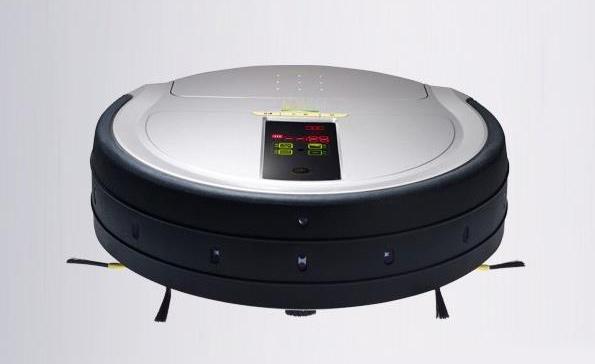
In robot vacuum cleaners, the obstacle avoidance function is realized using this ultrasonic ranging principle. Its sensor system consists of three pairs (each pair including a transmitting probe and a receiving probe), totaling six ultrasonic sensor heads.
A separate oscillation circuit generates an ultrasonic signal with a fixed frequency of 40kHz and an amplitude of 5V. Under the control signal from the controller, the 40kHz signal is applied to both ends of the transmitting probe to emit ultrasonic waves. When the signal encounters an obstacle, it generates a reflected wave. Once received, the distance to the obstacle can be accurately determined. Additionally, the size of the obstacle can be preliminarily estimated based on the signal amplitude.
The ultrasonic sensor adopts a direct reflection detection mode. Objects in front of the sensor reflect part of the emitted waves back to the receiver, allowing the sensor to detect the target. The microcontroller system then processes this to judge the size, distance, and general attributes of the object.
2. Infrared Ranging Sensors
Infrared ranging sensors detect the distance of obstacles based on the principle that infrared signals reflect with different intensities at different distances. It features a pair of infrared transmitting and receiving diodes. The transmitter emits a specific frequency of infrared light, and the receiver picks up the reflection. By processing the returned signal, the robot can identify changes in the surrounding environment.
3. Contact Sensors
Contact thickness sensors usually employ inductive, capacitive, potentiometric, or Hall-effect displacement sensors for contact-based measurement. To reduce wear during continuous measurement of moving objects, rolling contacts are often installed. These sensors can measure object height and spatial volume. Versatile cleaning robots use this to detect obstacle height and make further operational decisions.
4. Infrared Photoelectric Sensors
The turbidity sensor is fixed inside the tank. It uses an infrared LED of a specific wavelength to penetrate the solution. By detecting the transmitted light intensity, it measures turbidity. As the particle size and density of dust or media in the solution change, the photocurrent of the receiving phototransistor varies linearly. The filtered output provides a detection signal related to turbidity.
5. Anti-collision Sensors
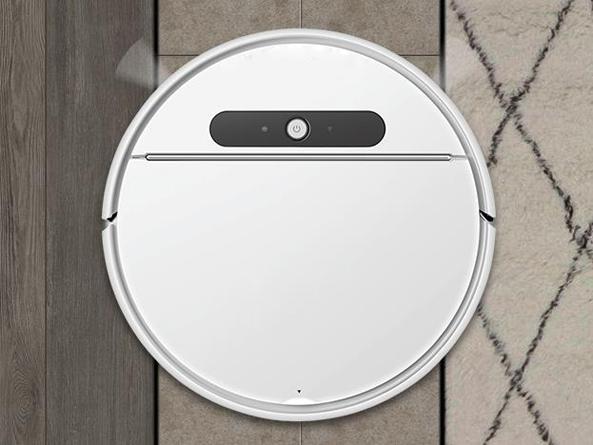
Due to various factors, robot vacuums may inevitably hit obstacles. To handle this, photoelectric switch sensors are used to sense collisions and their approximate locations.
A collision plate of approximately 180° is designed at the front, with photoelectric switches on both sides. These consist of infrared pairs. When the plate is struck, it blocks a specific internal hole, obstructing the infrared light and signaling the control system. This structure avoids errors from blind spots. Any collision will trigger a response from the left or right switches, allowing the robot to react according to the collision direction.
6. Anti-drop Sensors
To prevent robot vacuums from falling down stairs, three anti-drop sensors are installed on the bottom. These also use ultrasound for ranging. When the robot reaches an edge, the sensor measures the distance to the floor. If it exceeds a limit, the controller signals the robot to turn and change direction.
7. Anti-overheating Sensors
To prevent motor overheating and circuit damage, two temperature sensors are installed on the circuit board. When the motor reaches a certain limit, the first sensor stops the robot and runs a cooling fan. Once the temperature drops sufficiently, the second sensor signals the robot to resume work.
8. Photosensitive Sensors
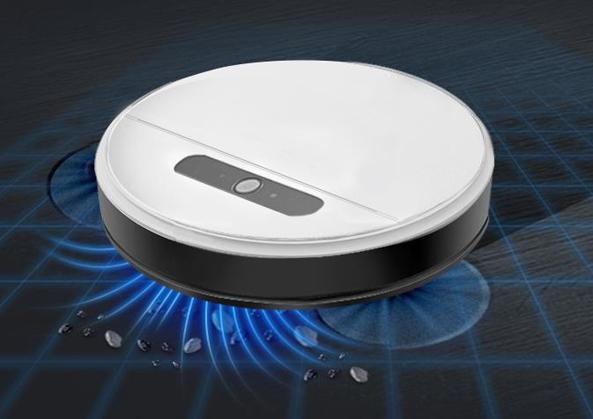
Areas under beds, sofas, and cabinets are often dirtier and require focused cleaning. Eight photosensitive sensors are mounted on the front. When light intensity increases (meaning the robot has left the dark area), the controller makes the robot turn back into the dark to continue cleaning.
9. Dust Bin Full Sensors
Variable dielectric capacitive sensors are installed on both sides of the dust bin. Since dust has a different dielectric constant than air, the capacitance changes when the dust reaches the sensor level, triggering an alarm to remind the owner to empty the bin.
10. Low Battery Auto-Return Function
When the battery is low, the robot vacuum automatically returns to its base. It emits infrared signals that are detected by the charging station, which then responds with its own signal to guide the robot back.
11. Edge Detection Sensors
This is a mechanical switch with a roller trigger, allowing the robot to hug the wall closely and clean corner dead zones more effectively.
12. Photoelectric Encoders
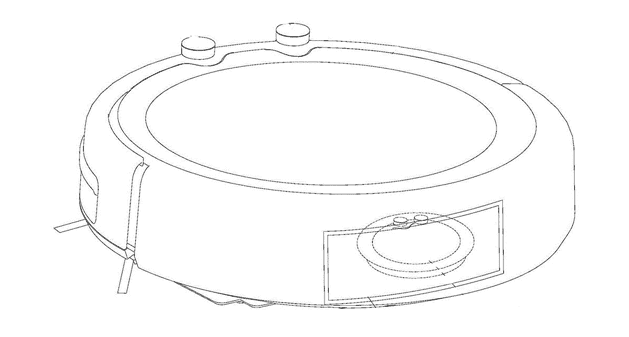
These detect position and speed. They are coaxially connected to the drive motors and record pulses corresponding to rotation angles. Using physical parameters like gear ratios, the robot calculates its instantaneous position relative to a reference point—a process known as odometry.
13. Electronic Compass
Using the Earth's magnetic field, this sensor measures the deflection angle relative to magnetic north. It consists of high-reliability magnetic sensors and driver chips, providing high precision and resistance to magnetic interference by calculating angles across three dimensions.
14. Gyroscope
To compensate for electromagnetic interference affecting the compass or wheel slip affecting encoders, the gyroscope accurately measures the angle, angular velocity, and acceleration of the moving object to ensure precise orientation.
