

Technical Support:
158-7527-1139

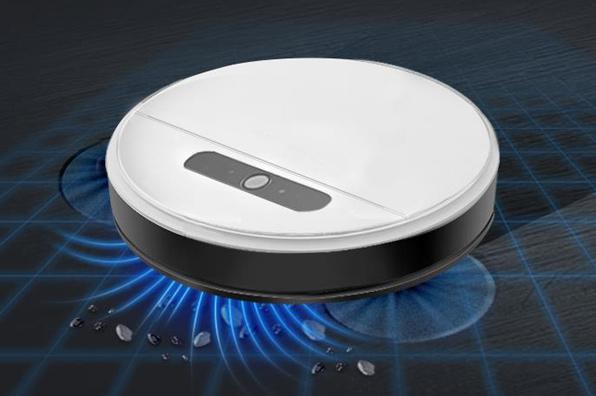
Intelligent equipment has been applied and developed in many fields. Repetitive and mechanical work will inevitably be greatly affected and even gradually replaced by artificial intelligence. Specifically, will the tedious tasks of cleaning our homes every day be handled by AI? The answer is yes. With the development of technology, many high-tech products applying Smart Home technology have sprung up. Smart Sweeping Robots equipped with Fine Dust Identification Sensors are among those with high penetration rates and great market potential. So, how should we choose a suitable smart Sweeping Robot? Today, the editor from Luftmy will share a few purchasing tips.
1. Accuracy of the Positioning System
The accuracy of the intelligent positioning system is key. We all know that whether a Sweeping Robot can plan its cleaning depends on its positioning technology. There are three main positioning technologies used by sweeping robots on the market: RPS laser positioning system, vSLAM visual positioning system, and wireless carrier indoor positioning system. These three are known as the most advanced positioning technologies globally.
2. Battery Life
Battery life is an important part pursued by almost all electronic products, and Sweeping Robots are no exception. Sweeping robots on the market are generally powered by lithium batteries. Relatively speaking, lithium batteries have a longer service life, longer cycles, and are safer, though the price is relatively higher. The current breakpoint recharge function is also very good; it allows the robot to continue cleaning without starting over and wasting time. We all want their "energy" to be on standby at any time.
3. Hardware Configuration Lifespan
High-quality motors have the advantages of high suction and low energy consumption, and their lifespan is three times that of ordinary motors. Luftmy has learned that Sweeping Robot motors on the market fall into two main categories: ordinary motors and brushless motors. The latter is currently the best vacuum motor on the market, with a service life of up to 7-10 years under normal conditions. Most importantly, it can release high suction power of up to 2000PA.
4. Comprehensiveness of the Detection System
The detection system is very important; it is like the eyes of a smart Sweeping Robot. Without it, the robot wouldn't know where it is. A good detection system allows the machine to see the home environment clearly during work, preventing collisions and falls for self-protection. Sweeping robots on the market usually use infrared detection or bionic ultrasonic radar devices. Additionally, some Sweeping Robots use RPS laser ranging. Bionic ultrasonic and RPS laser ranging technologies are more costly, and the corresponding product prices are higher. In addition to these three devices, some Sweeping Robot manufacturers have innovatively adopted a combined detection method of infrared and bionic ultrasonic, commonly known as dual-detection, which has a relatively higher cost.
5. Application of Sweeping Robot Fine Dust Sensor Technology
The application of Sweeping Robot dust identification sensor technology can improve the Sweeping Robot's intelligent judgment of cleanliness regarding dust and particles. Dust Sensor display data allows users to more intuitively judge whether to let the Sweeping Robot continue working. At the same time, the vacuum cleaner Fine Dust Identification Sensor data intelligently controls the motor speed, achieving quiet operation, energy saving, and extending motor life, indirectly increasing the usage duration of the Sweeping Robot.
