

Technical Support:
158-7527-1139

Temperature and humidity sensors refer to sensors that detect temperature and humidity levels. They can measure temperature through principles such as thermistors, capacitive elements, or thermocouples, and measure humidity through principles such as capacitive, infrared, or resistive methods.
Temperature and humidity have a significant impact on the food production process. Temperature affects the speed of chemical reactions, microbial growth rates, and enzyme activity, thereby influencing the quality, taste, and shelf life of food. Humidity also affects the water absorption rate, solubility, and expansion rate of food, which in turn impacts the food's form and texture.
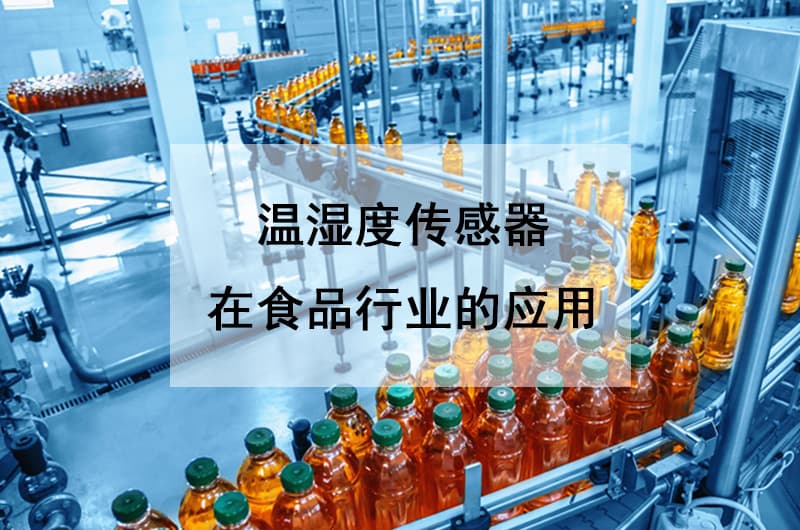
The application of temperature and humidity sensors in the food industry is mainly reflected in the following aspects:
Raw Material Storage
During the raw material storage process, temperature and humidity control is vital. Excessive or insufficient temperatures can cause raw materials to deteriorate, affecting food quality. High or low humidity can also cause materials to absorb moisture or dry out, affecting the taste of the final product. Temperature and humidity sensors can monitor the storage environment in real-time, providing timely information to help companies control the storage environment and ensure the quality of raw materials.
Production and Processing
In the food production and processing stage, temperature and humidity control is also very important. Temperature and humidity affect the processing results and subsequent food quality. For example, during the production of baked goods, improper temperature control can lead to food being burnt or undercooked; in soy sauce production, improper humidity control can make the sauce too thick or too thin. Temperature and humidity sensors can monitor the processing environment in real-time to help companies ensure consistent food quality.
Transportation and Storage
During food transportation and storage, temperature and humidity control is crucial as well. Extreme temperatures or humidity can lead to food spoilage. For instance, improper temperature control during the transport of frozen foods can cause thawing; in the storage of dry goods, improper humidity can lead to moisture absorption. Sensors monitor these environments in real-time to help companies safeguard food quality.
Temperature and humidity sensors can also be used for food safety monitoring. Changes in these conditions affect microbial growth speed, thus impacting food safety. Sensors provide real-time monitoring to help companies detect food safety risks and ensure consumer protection.

The application of temperature and humidity sensors in the food industry offers the following advantages:
Improved Production Efficiency
These sensors help companies monitor the processing environment in real-time, providing timely data that allows for better control. This helps enterprises increase production efficiency and reduce costs.
Ensuring Food Safety
Used for food safety monitoring, they help detect risks and ensure the safety of food products, which is of great significance for protecting consumer health.
With the continuous development of the food industry, the application of temperature and humidity sensors will become even more widespread. Their use can help food enterprises achieve efficient and safe production, guarantee food safety, and meet consumer demands.
