

Technical Support:
158-7527-1139

In large cities, the subway is one of the most important transportation tools for commuting. Because it is efficient, unobstructed, and environmentally friendly, most people prefer to travel by subway. Since subways are usually underground, there are many environmental issues to consider, such as air quality, temperature, and humidity, making the environmental control system particularly important. This system is composed of many sensors. Below, Luftmy will explain the application of various sensors in subway environmental control systems.
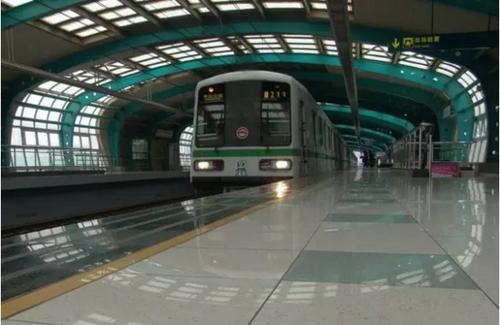
Subways have a high passenger flow and significant changes in the required fresh air volume. Therefore, the air conditioning load of the subway varies greatly, and automatic control means must be used to achieve energy savings. In this regard, indoor temperature and humidity sensors can be installed in subway station halls, platform areas, on trains, and in important equipment rooms to monitor real-time temperature and humidity. The subway environmental control system can reasonably adjust the operating conditions of each station system based on these parameters to maintain a comfortable environment. Additionally, these conditions can be displayed on screens for passengers to understand the current temperature and humidity.
Application of CO2 Sensors in Subway Environments:
In stations, carbon dioxide concentration increases due to human respiration. When the CO2 concentration reaches a high value, the current air quality poses a threat to passenger health. Therefore, the subway environmental control system can adjust the operating conditions of the station's public areas in a timely manner based on data collected by CO2 sensors to ensure good air quality. People will no longer feel dizzy from hypoxia due to excessive crowds.
Application of PM2.5 Sensors in Subway Environments:
Usually, indoor PM2.5 particulate pollution is also quite serious, especially when crowded. Although it is invisible and intangible, it causes significant harm to the human body. The development of PM2.5 sensors allows people to view the PM2.5 situation in the subway more intuitively. At the same time, the environmental control system can monitor these parameters at all times. Once they exceed the standard, it can intelligently start the exhaust ventilation or air purification system to improve the air quality within the station and the subway cars.
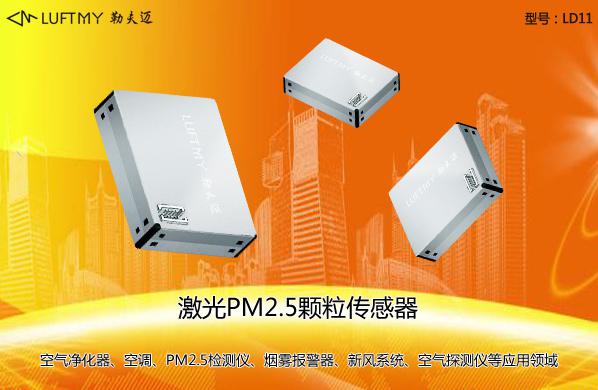
Luftmy's PM2.5 sensors include both infrared and laser sensors, which can be installed in environmental control systems such as fresh air systems and air purifiers to detect PM2.5 values. Among them, the laser dust sensor uses the Mie spherical particle scattering principle to send data to a processing system. The system processes the data according to the Mie scattering theory using pre-compiled programs to obtain the equivalent particle size and the number of particles of different sizes per unit volume. It features high sensitivity, a long lifespan, and real-time response for continuous collection. To obtain detailed product specifications, please contact customer service.
