

Technical Support:
158-7527-1139

Current air purifiers are used in many fields. They can purify polluted air and make indoor air fresh and natural. Especially in some public places, pollution is very serious, which can cause health hazards if not treated for a long time. Correct use of the air purifier is very important so that the full function of the product can be exerted. Therefore, in the process of using the air purifier, everyone should keep these points in mind.
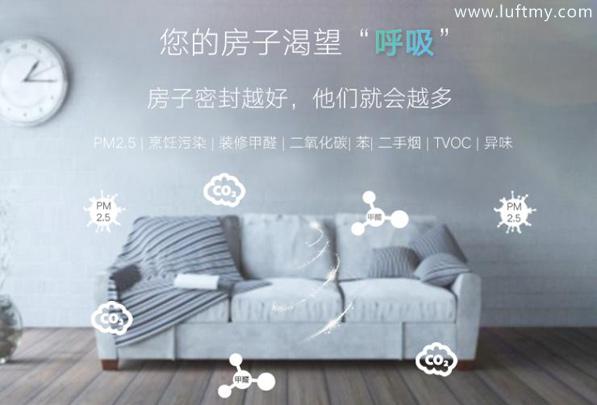
I. Applicable places for air purifiers
They can be used in new houses or renovated rooms and are suitable for people of all ages and groups, including those with asthma and allergies; hotels and public places, as well as enclosed spaces; use in hospitals can reduce infections and prevent the spread of diseases. In addition, they can also be used in places where pets are kept to remove odors and restore fresh air.
II. People suitable for using air purifiers
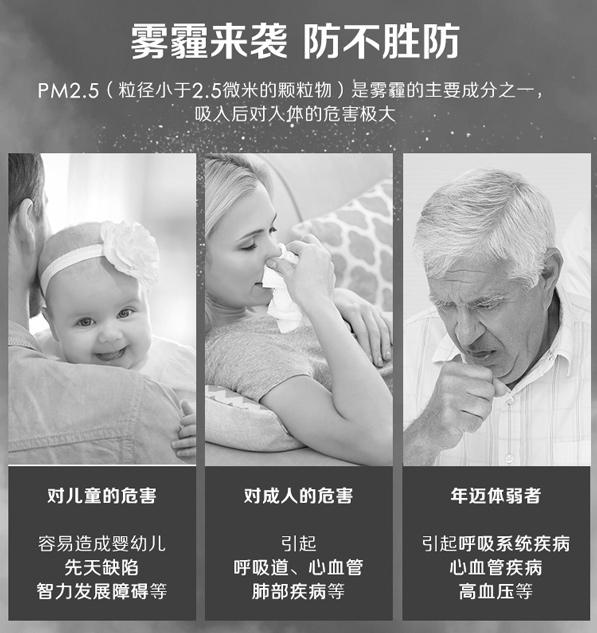
All kinds of people can use them, especially pregnant women and children. Their body functions are relatively weak, and a polluted air environment will cause their immunity to drop rapidly, and even cause dizziness, sweating, and heart diseases in severe cases. They need an air purifier to regulate the air. Only when the absorbed air is clean can these problems be avoided.
Office workers are also very suitable, because many offices have poor air circulation. A group of people working in an enclosed place for a long time will affect their condition and health, reduce work efficiency, and may even cause cancer.
In addition, people with respiratory diseases are also suitable. Air pollution can cause many respiratory diseases. Especially the elderly are physically weak, and respiratory problems such as bronchitis and pharyngitis are very serious. If they can breathe fresh and natural good air, these diseases can be avoided.
III. Maintenance and cleaning of air purifiers
It is not enough to just know how to use an air purifier; you must also pay attention to maintenance, do a good job in various cleaning tasks, monitor air quality and pollution status at all times, and regularly clean and replace filters.
When cleaning, note that the first layer of coarse filter can be directly rinsed with water. If it is a combined coarse and fine synthetic filter, it should be exposed to sunlight according to the usage time and adsorption degree, and then cleaned with a hair dryer or vacuum cleaner. Doing this repeatedly two or three times can clean it. Remember not to tap the filter, as this will not only affect the filtering function but also damage the internal structure.
A good product needs the correct use method and attention to daily issues, because only in this way can the service life be increased. You should not treat it casually just because the quality has improved. The points mentioned above are worth learning seriously. Only by using the air purifier correctly can you 100% exert the advantages of the purifier.
IV. Built-in dust sensor of air purifier
In the current field of air purification, the PM2.5 sensor has almost become the standard hardware for purification equipment, and its effect is to monitor the concentration of particles such as PM2.5 in the air.
The air purifier PM2.5 sensor LD15 is a high-precision particle concentration sensor based on Laser Mie Scattering theory. It can continuously collect and calculate the number of suspended particles of different particle sizes in the air per unit volume, namely the particle concentration distribution, and then convert it into mass concentration and output it in the form of a general digital interface. Luftmy air purifier PM2.5 sensor LD15 features small size, high accuracy, strong anti-interference ability, low power consumption, long lifespan, zero false alarm rate, and short response time. This air purifier dust sensor can be embedded in various instruments or environmental improvement equipment related to suspended particle concentration in the air, such as air quality detector brands, indoor particle counters, air particle counters, air purifiers, etc., to provide timely and accurate concentration data.
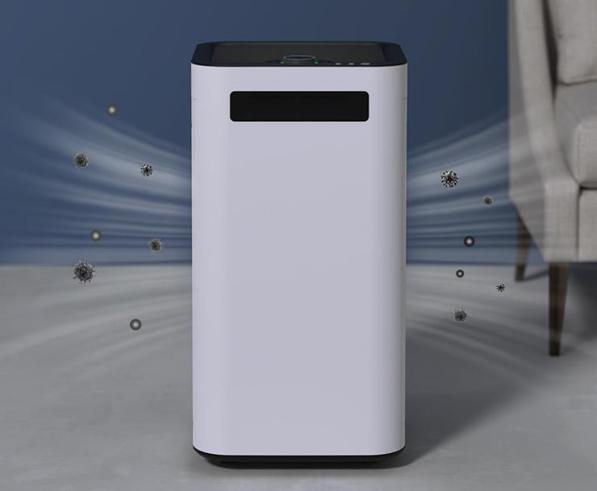
Luftmy air purifier dust sensor HPD05 uses the optical scattering principle to detect the concentration of dust in the air. The sensor has a built-in infrared light-emitting diode and a high-sensitivity photoelectric receiving sensor. The infrared light-emitting diode emits light that produces reflected light when it encounters dust. The photoelectric sensor reflects the dust concentration in the air by detecting the intensity of this reflected light. The sensor directly outputs a PWM signal, and the PWM width is the current concentration value. The dust concentration value can also be output through the IIC serial signal in units of ug/m3. The light scattering particle counter HPD05 product has stable detection capability and high production efficiency, offering dual advantages. Luftmy air purifier dust sensor HPD05 features small size, high accuracy, low power consumption, short response time, and stable operation under high dust concentrations. This high-precision PM2.5 sensor can be applied in air purifiers, air quality detector brands, indoor particle counters, air particle counters, etc.
