Technical Support:
158-7527-1139

Fine particulate matter, also known as fine particles or PM2.5, refers to particles in the ambient air with an aerodynamic equivalent diameter of less than or equal to 2.5 micrometers. We all know that PM2.5 particles are very harmful to the human body. These particles enter the body through the respiratory system and directly affect the lungs; moreover, smaller particles can even enter the bloodstream and other organs directly. The average person breathes about 10,000 liters of air per day. Once the air contains pollutants, human health will inevitably be harmed.
PM2.5 fine particulate matter refers to particulate matter in the ambient air with an aerodynamic equivalent diameter of 2.5 microns or less. It can remain suspended in the air for a long time; the higher the concentration in the air, the more serious the air pollution. Although PM2.5 is only a small part of the earth's atmospheric components, it has a significant impact on air quality and visibility. Compared with coarser atmospheric particles, PM2.5 has a small particle size, large surface area, and high activity, making it easy to attach to toxic and harmful substances such as heavy metals and microorganisms.

Meteorologists and medical experts believe that hazy weather caused by fine particles is more harmful to human health than dust storms. Particles with a size of 10 microns or larger will be blocked outside the human nose; particles with a size between 2.5 and 10 microns can enter the upper respiratory tract, but some can be discharged through phlegm or the nasal cavity. When the internal cilia are blocked, the harm to human health is relatively small; however, fine particles with a diameter of less than 2.5 microns are equivalent to one-tenth of a human hair and are not easily blocked. When inhaled, they go directly into the bronchi, interfere with gas exchange in the lungs, and cause diseases including asthma, bronchitis, and cardiovascular diseases.
Luftmy editor has learned that in order to prevent people from inhaling too many harmful particles, it is necessary to monitor PM2.5 in the air. This requires a PM2.5 sensor, also known as a dust sensor. The PM2.5 sensor can be used to detect the dust concentration in the air around us, which is the PM2.5 value.
The working principle of the PM2.5 sensor is developed based on the principle of light scattering. Particles and molecules will scatter light under illumination while absorbing part of the light's energy. When a beam of parallel monochromatic light is incident on the particle field to be measured, it is affected by scattering and absorption around the particles, and the light intensity attenuates. In this way, the relative attenuation rate of the incident light through the concentration field to be measured can be obtained. The relative attenuation rate basically reflects the relative concentration of the dust to be measured linearly. The intensity of the light is proportional to the intensity of the electrical signal from photoelectric conversion. By measuring the electrical signal, the relative attenuation rate can be obtained, and then the dust concentration in the field to be measured can be determined.
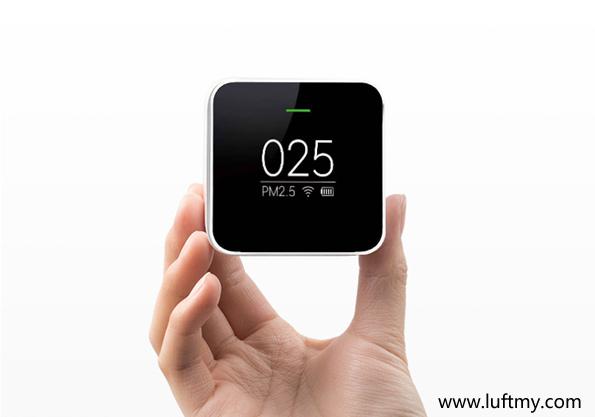
A PM2.5 detector is a specialized testing instrument used to measure the value of PM2.5 (inhalable particulate matter) in the air. It is suitable for the determination of public environments, atmospheric environments, indoor air, and car interior air, and can also be used for the evaluation and analysis of air purifier purification efficiency. The dust particle detector and air quality monitor use the laser PM2.5 sensor based on the Mie spherical particle scattering principle developed and produced by Luftmy, utilizing the POS particle swarm algorithm to invert the mass concentration of particulate matter, providing fast and accurate data reading.
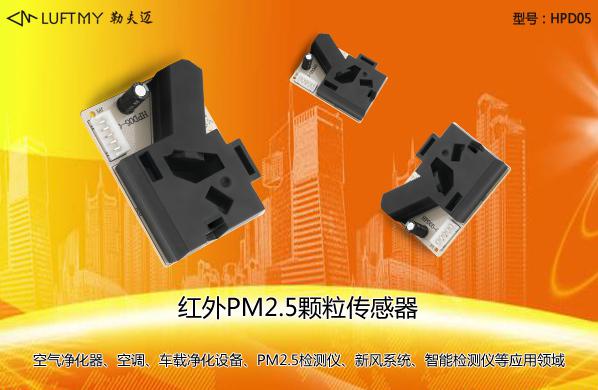
Infrared dust sensor supplier Luftmy's infrared dust sensor HPD05 uses the optical scattering principle to detect the concentration of dust in the air. The sensor has a built-in infrared light-emitting diode and a high-sensitivity photoelectric receiving sensor. The infrared LED emits light that generates reflected light when it encounters dust. The photoelectric sensor reflects the concentration of dust in the air by detecting the intensity of this reflected light. The sensor directly outputs a PWM signal, where the PWM width is the current concentration value. The dust concentration value can also be output through the IIC serial port signal, with the unit being ug/m3. The HPD05 dust particle counter product has stable detection capabilities and high production efficiency, offering a dual advantage. Luftmy's infrared dust sensor HPD05 features small size, high precision, low power consumption, short response time, and stable operation under high dust concentrations. This infrared dust sensor can be applied in air quality monitors, dust particle detectors, etc.
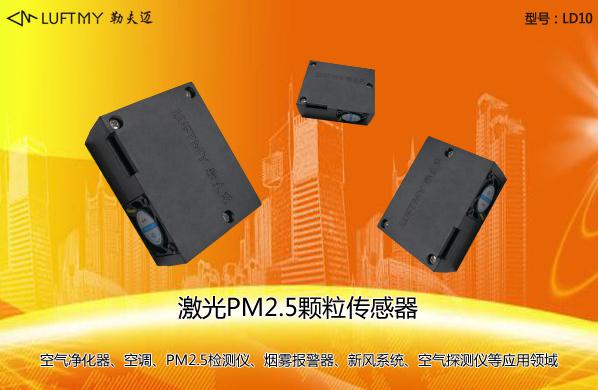
Laser digital PM2.5 sensor manufacturer Luftmy's silent laser dust PM2.5 sensor LD10 is a high-precision particulate matter concentration sensor based on the laser Mie scattering theory. It can continuously collect and calculate the number of suspended particles of different sizes in the air per unit volume, namely the particle size distribution, and then convert it into mass concentration to output in the form of a universal digital interface. Luftmy's laser digital PM2.5 sensor LD10 features small size, high precision, strong anti-interference ability, low power consumption, long life, zero error alarm rate, and short response time. This laser digital PM2.5 sensor can be embedded in various instruments related to the concentration of suspended particles in the air, such as air quality monitors and dust particle detectors, or environment improvement equipment to provide timely and accurate concentration data.