

Technical Support:
158-7527-1139

Winter is the coldest season of the year. To keep warm, people often close doors and windows, leading to poor indoor air circulation and the accumulation of pollutants, which affects health. However, a fresh air system can effectively improve indoor air quality, so a fresh air system is even more necessary in winter.
Why is indoor air pollution said to be more serious in winter?
Because in winter, to keep warm, people often close doors and windows, resulting in lack of air circulation and the accumulation of indoor air pollutants. These pollutants include:
● Harmful gases such as formaldehyde and benzene from indoor decoration materials
● Kitchen fumes and odors generated during cooking
● Volatile organic compounds (VOCs) like formaldehyde and ammonia released by furniture and carpets
● Carbon dioxide exhaled by the human body and other waste gases
● Outdoor pollutants (such as haze, PM2.5, etc.)
These pollutants can cause various harms to human health, including respiratory diseases, cardiovascular diseases, and nervous system diseases.

So, how does a fresh air system improve indoor air quality?
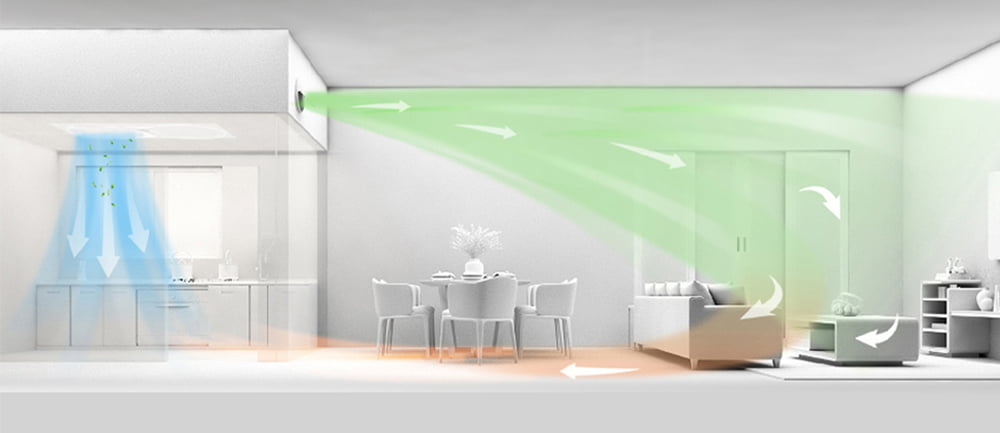
A fresh air system is a device that improves indoor air quality by exchanging indoor and outdoor air. The working principle of a fresh air system is:
● Fresh outdoor air enters the room through the air inlet of the fresh air machine.
● Contaminated indoor air is discharged outdoors through the air outlet of the fresh air machine.
● Fresh air passes through the filter system of the fresh air machine to remove pollutants.
A fresh air system can effectively improve indoor air quality, mainly reflected in the following aspects:
● Reducing indoor pollutant concentration: A fresh air system can introduce oxygen and negative oxygen ions from outdoor fresh air into the room while discharging indoor pollutants, thereby reducing indoor pollutant concentrations.
● Increasing indoor air humidity: Indoor air is dry in winter, which can easily cause respiratory diseases. A fresh air system can introduce moist outdoor air indoors, thus increasing indoor air humidity.
● Maintaining indoor air circulation: A fresh air system can promote indoor air circulation, thereby improving indoor air quality.
Precautions for using a fresh air system in winter:
● Choose an appropriate ventilation rate: A rate that is too high will cause the indoor temperature to drop, while a rate that is too low will not effectively improve indoor air quality.
● Regular maintenance: A fresh air system requires regular maintenance to ensure its normal operation.
In summary, fresh air systems are even more necessary in winter because winter indoor air pollution is more severe, and fresh air systems can effectively improve indoor air quality.
