

Technical Support:
158-7527-1139

With the rapid socio-economic development of our country, atmospheric pollution has intensified alongside the industrialization process. The frequency of haze weather is increasing, and air pollutants in large and medium-sized cities are on an upward trend, becoming a serious environmental health issue that humanity faces together.
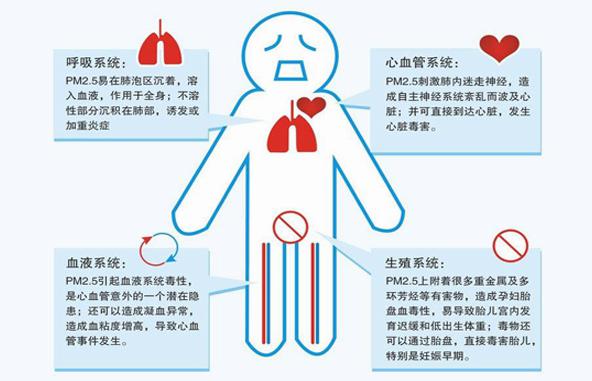
Among atmospheric pollutants, particulate matter (PM) pollution is the most harmful to human health. PM can be classified by diameter into coarse particles (2.5-10μm, PM10), fine particles (0.1-2.5μm, PM2.5), and ultrafine particles (<0.1μm). The diameter of atmospheric particles determines where they eventually enter the respiratory tract: particles of 2.5μm can have a deposition rate of up to 83% in the lungs, while particles of 8.2μm and 11.5μm only deposit at rates of 49% and 31% respectively. The size of the particulate matter is inversely proportional to its total deposition in the lungs. Particles larger than 10μm are easily eliminated by the respiratory mucus and ciliary system, while particles smaller than 10μm can enter the lower respiratory tract; especially PM2.5, which easily deposits in the bronchioles and alveoli and can even enter the blood circulation. Therefore, in addition to its effects on the lungs, PM2.5 can impact all systems throughout the body.
Elevated PM2.5 concentrations can cause and aggravate damage to various systemic functions. This damage includes systemic inflammatory responses in the respiratory, circulatory, and digestive systems caused by immune allergic reactions and oxidative stress triggered by PM2.5, leading to organ damage. Therefore, personal protection and reducing pollutants are particularly important. With the development of industry and transportation, PM2.5 pollution will become increasingly severe, making the strengthening of population protection and the reduction of atmospheric particulate pollution a priority for future work. On the basis of alleviating atmospheric pollution, it is vital to perform air pollution prediction and monitoring so individuals can take protective measures and reduce the occurrence of systemic diseases.
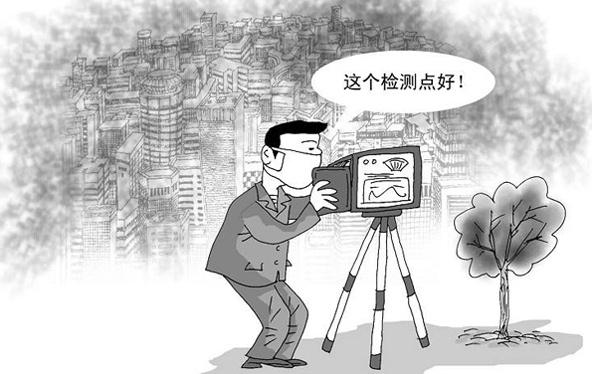
As the core part of PM2.5 online monitoring systems, related dust concentration sensors have also been widely applied. In terms of monitoring effect and cost, the laser scattering principle is currently the preferred choice. What are the available PM2.5 detection and dust sensors?
Dust Concentration Sensor Manufacturers and Product Recommendations
Company Name: Guangzhou LUFTMY Intelligent Technology Co., Ltd.
Product Recommendation: Laser Dust Sensor Module LD09
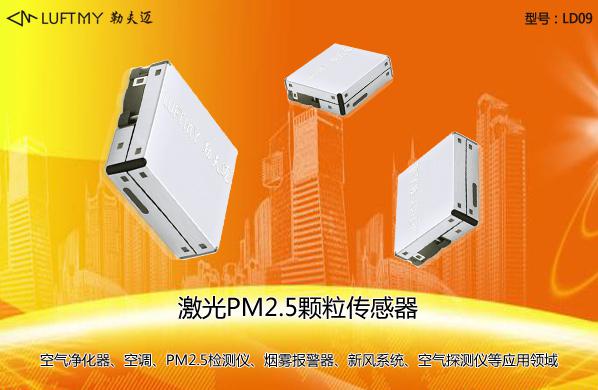
The PM2.5 dust concentration detection sensor LD09 utilizes the optical scattering principle to simultaneously measure the particle number concentration of PM1.0, PM2.5, and PM10 in indoor air. This air quality sensor outputs mass concentration via mathematical algorithms and scientific calibration. It features a same-side air inlet and outlet duct design for convenient application. It also has the following characteristics:
1. Six-sided comprehensive shielding combined with software anti-interference algorithms for stronger anti-interference performance;
2. Wide range of applications, no need for additional air duct design, and compatible with multi-protocol outputs;
3. Thin and light design with a zero false alarm rate;
4. Real-time response and support for continuous acquisition.
Application areas of the LD09 air quality sensor module:
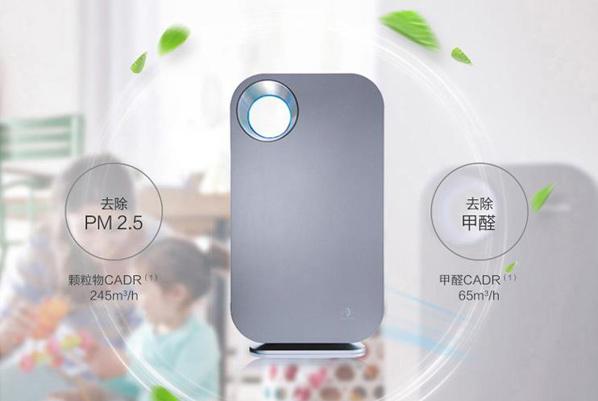
1. Household air purifiers;
2. Air quality monitors;
4. Air conditioners with purification functions;
5. Supporting consumer electronics.
LUFTMY focuses on the research, production, and sales of optical particulate matter sensor technology. LUFTMY sensors, such as particle counters, are widely praised in the industry for their measurement accuracy, stability, consistency, and anti-interference performance.
