Technical Support:
158-7527-1139

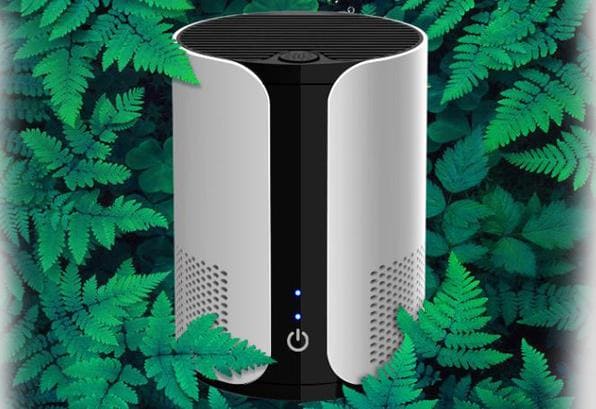
The integration of PM2.5 sensors in air purifiers has gradually become standard. This is because environmental pollution has become a common topic among the public, from initial haze to PM2.5 and PM10 particles, to indoor pollutants like formaldehyde. Some pollution sources, such as dust from construction sites and vehicle exhaust, can be seen with the naked eye, but they also require professional instruments equipped with PM2.5 sensors for detection.
The PM2.5 dust infrared sensor GDS06 uses the principle of optical scattering to obtain particle concentration. Through the conversion of optical and electrical circuits, it measures the dust concentration within the detection range. It can directly use a microcontroller for UART communication. This infrared PM2.5 sensor module is compact, high-precision, and low-power, suitable for air purifiers, air conditioners with purification functions, and fresh air systems.
For pollutants that can cause varying degrees of harm to the human body, experts provide detailed analysis and protection advice. To meet this market, manufacturers have seized the opportunity to produce various purification products. For example, cars come with internal circulation systems or on-board air purifiers; for indoors, there are multi-functional air purifiers or fresh air machines. Today, LUFMES wants to analyze the core components that act as "boosters" for all purification products.
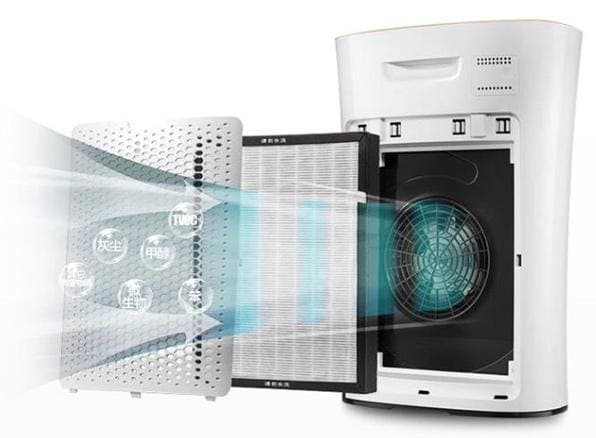
Taking the popular air purifier as an example, it mainly consists of a chassis shell, motor, fan, air duct, filter layer, sensors, and display screen. The working principle of an air purifier is: the internal motor and fan circulate indoor air, and polluted air is cleared or adsorbed as it passes through the filter. The core quality of a purifier depends more on the filter and fan. Generally, merchants follow a "pre-filter + active carbon + HEPA" mode.
Fans are usually EC or AC types. Electrical controls include LCD touch screens, APP control, and sensors. A high-quality purifier is a balance of fan, filter, electrical, noise, and energy consumption factors, but the built-in air quality sensor performance is often the decisive factor. Applications in air purifiers include PM2.5 sensors, CO2 sensors, and temperature/humidity sensors. PM2.5 sensors, also known as dust sensors, can detect the concentration of dust in the surrounding air.
Choosing a high-sensitivity and high-precision PM2.5 sensor is the guarantee for maximizing air purifier functions. LUFMES focuses on optical particulate matter sensor technology, and its infrared dust sensors, laser dust sensors, and air quality sensors are widely praised in the industry for accuracy and stability.