Technical Support:
158-7527-1139

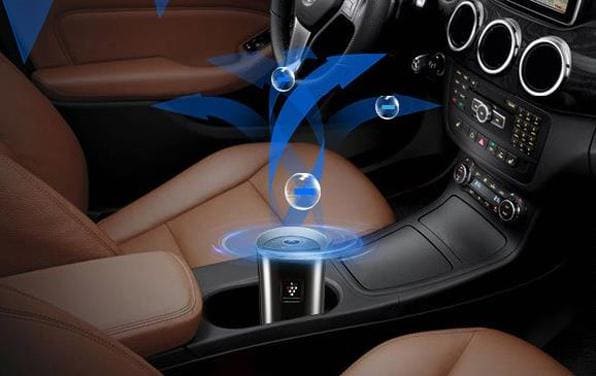
The issue of in-vehicle air quality has gradually become a focus of media and car owners. The quality of the air environment inside cars is increasingly attracting attention, and people's health awareness is strengthening accordingly. Pollution problems are gradually emerging. Especially with the continuous expansion of China's industrial scale, the current PM2.5 values in major cities remain high, causing serious pollution to the in-vehicle environment. LUFMES editors noticed that in-vehicle air quality has become a hot topic. On-board air purifiers can purify the air to the greatest extent, bringing in-car air to healthy levels. Currently, PM2.5 laser particle sensor modules equipped in car air purifiers are commonly used in the market.
Application areas for environmental detection laser PM2.5 dust sensors include: automotive PM2.5 sensors, air purifiers, air conditioners with purification functions, PM2.5 detectors, fresh air systems, and air probes.
The Ministry of Environmental Protection and the General Administration of Quality Supervision, Inspection and Quarantine jointly released the "Limits and Measurement Methods for Emissions from Light-duty Vehicles (China Phase 6)" (GB18352.6-2016, referred to as China 6), which was officially implemented on July 1, 2020. Parts V (Type Inspection) and VII (Production Consistency) of the China 6 standard explicitly stipulate that all M1 vehicles must comply with the requirements and production consistency checks of the "Guideline for Air Quality Assessment in Passenger Cars" (GB/T 27630-2011).
The inclusion of in-vehicle air quality requirements in the mandatory China 6 standard indicates that the management of in-vehicle environments has begun to upgrade. Furthermore, type testing and production consistency testing significantly increase the intensity of standard control, which will surely prompt the faster improvement and release of the "Guideline for Air Quality Assessment in Passenger Cars," and OEMs will pay more attention to in-vehicle air quality.
Regarding current passenger car air quality, assessments are mainly conducted from two aspects: first, whether in-vehicle air quality meets the requirements of GB 27630 and China 6; second, whether in-vehicle odor can be improved to meet consumer demands.
Data from authoritative institutions shows that in-vehicle odor has become a primary concern for Chinese auto consumers. Since odor is part of in-vehicle air quality, subjective evaluations from consumers will provide a clear market guide. This will force OEMs to improve vehicle odors and control the smell of components and materials. With the upgrade of air quality management, the market for in-vehicle air quality sensors will face rapid development.