Technical Support:
158-7527-1139

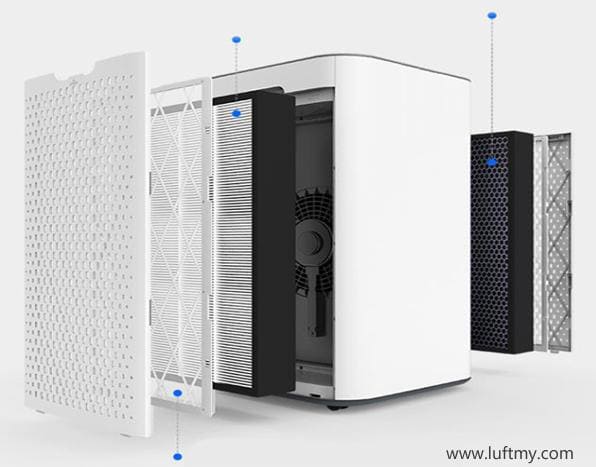
Air quality sensors integrated into smart home devices are increasingly entering the lives of ordinary people, signifying that we have ushered in an intelligent era. This is a product of the rapid development of application technologies such as the Internet of Things (IoT), mobile devices, Apps, and the cloud as the internet matures.
In the era of intelligence, the importance of sensors is self-evident, with extremely important applications in various fields. For instance, in the smart home sector, modern people pursue high-quality, comfortable lives and have higher requirements for their environment. Smart home devices focused on environmental monitoring are highly sought after. A prime example is the continuous increase in air purifier sales on e-commerce platforms.
Environmental monitoring cannot function without detection technology. As an important tool for the development, acquisition, transmission, and processing of information resources in activities such as scientific experiments and industrial production, sensors are indispensable in environmental monitoring. Environmental detection sensors applied in equipment like air purifiers play an undeniable role.
With the invasion of haze, dust, and industrial exhaust, air quality issues are becoming increasingly serious, making indoor air monitoring and improvement imperative. LUFMES editors have learned that based on the composition of pollutants, air quality monitoring parameters should generally include carbon dioxide, micro PM2.5 particles, PM10 particles, various volatile gases, temperature, and humidity. This requires professional haze detection equipment such as air quality sensor modules to complete pollutant monitoring.
PM2.5 detectors use PM2.5 and formaldehyde as the main indicators. PM2.5 sensors use light scattering principles and particle counting technology to accurately detect the number of fine particles in the surrounding environment. After automatically detecting the content of PM2.5 and formaldehyde in the air, the results are displayed on the main controller and smart client. They can also link intelligently with other devices; when PM2.5 levels are too high, they can trigger window actuators to close windows and turn on air purifiers or fresh air systems to purify the air. When formaldehyde levels are too high, they can trigger window actuators to open windows for ventilation, keeping the home fresh and comfortable forever.
The LUFMES laser dust sensor module LD13 is a high-precision particulate matter concentration sensor based on laser Mie scattering theory. It can continuously collect and calculate particulate matter concentration distribution and output it via a universal digital interface. This sensor can be embedded in various instruments or environmental improvement equipment related to suspended particulate matter concentration in the air, providing timely and accurate concentration data.
With the implementation and development of smart cities, smart communities and smart homes have also entered people's lives. As the primary way and means of obtaining information in the natural and production fields, the role of sensors is obvious. Combining the powerful functions of sensors with updated smart home technology, along with designs conforming to modern ergonomics, smart home products are powerful, stylish, and highly favored. For example, vacuum cleaners, sweeping robots, and mite removers in the field of micro-dust sensor applications.