

Technical Support:
158-7527-1139

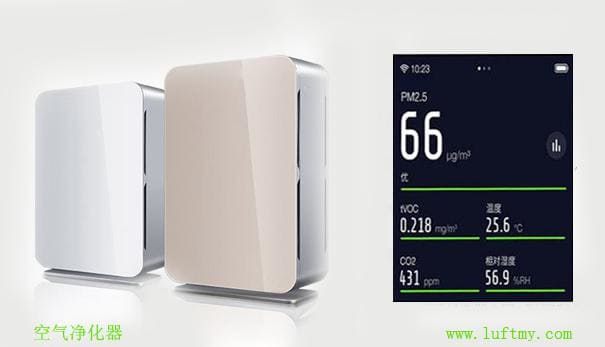
The harm caused by smog, dust, and industrial waste gas to the human body is everywhere. As air quality issues become increasingly serious, monitoring and improving indoor air is imperative. In recent years, news regarding the deterioration of national air quality has increased, which has caused people to pay more attention to air quality, especially those living and working in densely populated areas of first- and second-tier cities. Some even hope that mobile phones will have air detection functions to monitor surrounding air quality in real-time and take necessary measures promptly. Air purifiers are common in our lives, and more people are starting to use air purification equipment. Other sensors used in air purifiers include PM2.5 dust sensors, formaldehyde sensors, carbon dioxide sensors, etc.
Dust sensors utilize an infrared through-beam method. When fine dust particles pass through the infrared light area, the receiving end detects changes in the optical signal corresponding to the particles. Through patented particle signal acquisition technology, the particle data is compared and analyzed against substance data in the database to obtain accurate particle concentration. This allows for real-time display of cleanliness data for floors, carpets, bed sheets, sofas, and car interiors.
1. Healthy Air — Gas Sensors: Formaldehyde Sensor
Formaldehyde sensors detect formaldehyde in the air based on the diffusion principle, while also responding to gases such as alcohols, benzene, and naphthalene to a certain extent. After detecting the concentration of formaldehyde in the air, the value can be displayed on a host or client via communication software technology. It can also intelligently link with other devices in a smart home to control the switch of an air purifier or fresh air system to remove formaldehyde.
2. Fresh Air — Gas Sensors: Carbon Dioxide Sensor
In the field of air environment monitoring, we know that many people are concerned about carbon dioxide levels. Excessive CO2 accumulation in the body can lead to a drop in pH levels, cellular hypoxia, and even functional disorders. After the CO2 sensor detects the CO2 content in the air, when it exceeds a certain range, the controller can manage the volume switch of the fresh air system to exhaust air outdoors.
3. Clean Air — Gas Sensors: PM2.5 Dust Sensor
PM2.5 sensors use the principle of light scattering and particle counting technology to accurately detect the number of micro-particles in the environment. After automatically detecting the PM2.5 particle content, it can be displayed on the master control unit and client via software communication. In smart home applications, it can link with other devices: when PM2.5 levels are too high, it can trigger window actuators to close windows and turn on air purifiers or fresh air systems to purify the air, ensuring the living environment remains fresh and suitable.
Application areas for Luftmy PM2.5 sensors (Infrared PM2.5 dust sensors, Laser PM2.5 dust sensors):
Air purifiers, air conditioners with purification functions, PM2.5 detectors, range hoods, smoke alarms, fresh air systems, dedicated PM2.5 sensors, air detectors, etc.
