

Technical Support:
158-7527-1139

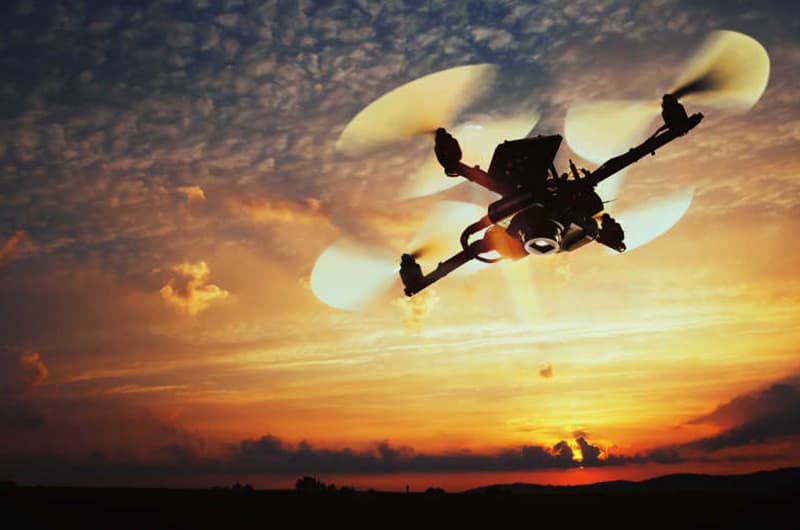
Drones (UAVs) are aircraft that have developed rapidly in recent years, with various applications such as aerial photography, surveying, and logistics. The flight of drones relies on sensors to perceive the surrounding environment and make corresponding control decisions.
So, what sensors do drones have?
● Inertial Measurement Unit (IMU): It is the core sensor of a drone, consisting of an accelerometer, a gyroscope, and a magnetic compass. The accelerometer measures the drone's acceleration in three axes, the gyroscope measures the drone's angular velocity in three axes, and the magnetic compass measures the drone's magnetic field direction. The IMU provides attitude, velocity, and position information, which is the foundation of the drone's flight control system.
● Ultrasonic Sensor: It measures the distance between the drone and obstacles. When drones fly at low altitudes, ultrasonic sensors can be used for obstacle avoidance.
● Vision Sensor: It provides image or video information for the drone. Drones can use vision sensors for tasks such as autonomous navigation, target identification, and tracking.
● LiDAR: It measures the distance and speed between the drone and obstacles. LiDAR has strong penetration capabilities and can be used for obstacle avoidance and distance measurement in complex environments.
● Infrared Sensor: It can detect heat sources. Drones can use infrared sensors for tasks such as night flight, thermal imaging, and target identification.
● Other Sensors: Drones can also use other sensors, such as barometric pressure sensors, GPS, GNSS, etc. These sensors can provide drones with richer environmental information, thereby improving flight performance and mission capabilities.
There are many types of sensors for drones, and different types of drones will use different sensor combinations. The choice of sensors needs to be made based on the drone's application scenario and requirements.
