

Technical Support:
158-7527-1139

There are many types of sensors, among which laser sensors and photoelectric sensors are widely used in daily life. What is the difference between a laser sensor and a photoelectric sensor? LUFTMY will analyze this for everyone through several aspects.
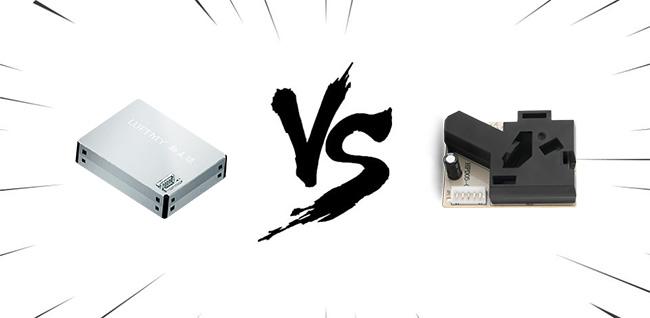
1. Different Principles
Photoelectric sensors achieve control by converting changes in light intensity into changes in electrical signals. A laser sensor first uses a laser-emitting diode to aim at a target and emit laser pulses. After reflecting off the target, the laser scatters in all directions. Part of the scattered light returns to the sensor receiver, where it is received by the optical system, imaged onto an avalanche photodiode, and converted into a corresponding electrical signal.
2. Different Light Sources
The light source of a photoelectric sensor can be visible red light or infrared light. However, a laser sensor is a sensor that uses laser technology for measurement. The difference here is that red and infrared light spots are large and increase with distance, which is unfavorable for detecting small objects. The light source of a laser sensor is a laser. While all light sources change in size with distance, the difference is that a laser spot is very small; as distance increases, the spot also expands, but the change is so subtle that it is invisible to the naked eye. Thus, it is commonly said that laser light sources do not expand.
3. Different Application Fields
Laser sensors are primarily used for object detection (presence/absence), positioning, counting, unevenness, front/back identification, and are widely used in packaging and electronics industries. Photoelectric sensors are used in level detection, liquid level control, product counting, width discrimination, speed detection, fixed-length cutting, hole identification, signal delay, automatic door sensing, color mark detection, punch and shear machines, and safety protection. Additionally, utilizing the stealth of infrared rays, they can be used for anti-theft alarms in banks, warehouses, shops, offices, and other necessary locations.
4. Different Costs
Laser sensors are actually a type of photoelectric sensor. Because the light source is different, the manufacturing cost is different, which is why laser sensors and photoelectric sensors are distinguished.
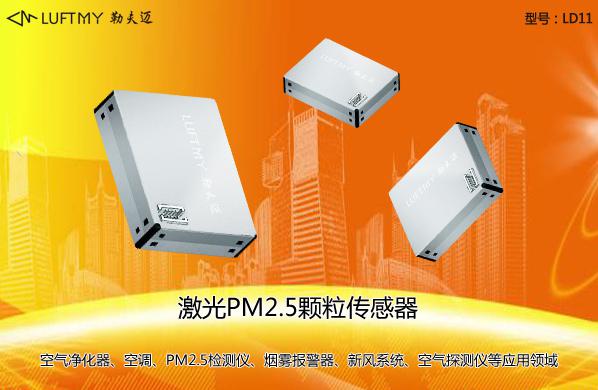
The LD11 laser dust sensor is a high-precision particulate matter concentration sensor based on the Laser Mie scattering theory. It can continuously collect and calculate the number of suspended particles of different sizes in the air per unit volume, i.e., the particulate matter concentration distribution, which is then converted into mass concentration and output via a universal digital interface. This sensor can be embedded in various instruments or environmental improvement equipment related to suspended particulate matter concentration, providing timely and accurate concentration data.
Main Features:
◆ Precise measurement realized by Laser Mie spherical scattering principle combined with LUFTMY spatial measurement patent;
◆ Zero false alarm rate;
◆ Real-time response and supports continuous collection;
◆ Minimum resolution particle size of 0.1μm;
◆ Lifespan of electronic control components ≥ 8 years, MTBF ≥ 5 years;
◆ Six-sided all-around shielding combined with software anti-interference algorithms for stronger anti-interference performance;
◆ Wide range of application, no need for additional air duct design, compatible with multi-protocol output;
◆ Thin and light design, suitable for detectors, wearable devices, air purifiers, fresh air systems, etc.
LUFTMY's current product line includes laser dust sensors, dust sensors, micro-dust sensors, and infrared sensors. Through continuous R&D and manufacturing of the latest processes, these products possess the advantages of high sensitivity, consistency, and stability, earning significant recognition and praise from customers in the industry. For more product information and sample applications, please contact customer service.
