

Technical Support:
158-7527-1139

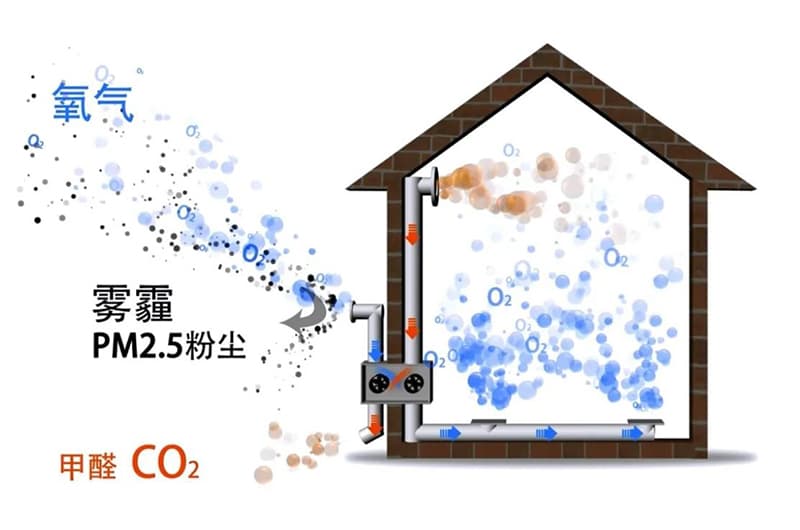
With the increasing demand for healthy and comfortable indoor environments, fresh air systems have gradually become an indispensable part of modern buildings. As an important component of the fresh air system, the carbon dioxide sensor plays a key role in optimizing indoor air quality.
A carbon dioxide sensor is a device capable of detecting the concentration of carbon dioxide in indoor air. It utilizes infrared, chemical adsorption, or optical principles to measure $CO_{2}$ concentration. When the carbon dioxide concentration in the indoor air exceeds a set threshold, the sensor sends a signal to trigger the operation of the fresh air system, achieving indoor air circulation and renewal.
The carbon dioxide sensor has the following roles in the fresh air system:
● Provides accurate air quality monitoring: The carbon dioxide sensor can monitor indoor $CO_{2}$ concentration in real-time, providing accurate air quality data for the fresh air system. By monitoring these levels, the freshness of indoor air and ventilation effectiveness can be evaluated.
● Enables intelligent control and adjustment: Based on the detection results of the carbon dioxide sensor, the fresh air system can intelligently adjust the fresh air volume and ventilation frequency. When $CO_{2}$ concentration is high, the system increases fresh air volume to maintain comfort. Conversely, when levels are low, the system can reduce air volume to lower energy consumption.
● Energy saving and environmental protection: By using carbon dioxide sensors for intelligent control, the fresh air system can maximize energy savings while ensuring indoor air quality. By adjusting fresh air volume according to actual needs, it avoids energy waste caused by over-ventilation, reduces dependence on air conditioning systems, and lowers carbon emissions.
● Provides a healthy and comfortable indoor environment: High concentrations of carbon dioxide in indoor air can cause discomfort, such as dizziness and fatigue. The application of carbon dioxide sensors ensures timely monitoring and control of levels, ensuring fresh and comfortable indoor air for a healthy living environment.
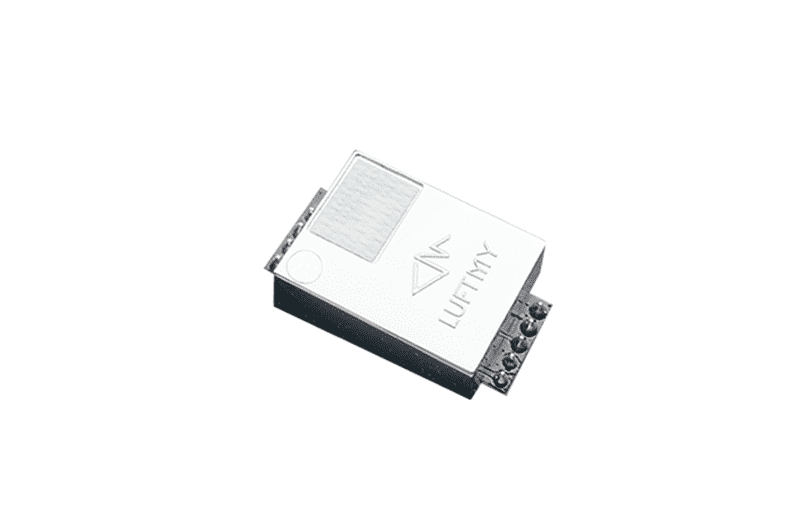
When choosing a carbon dioxide sensor for a fresh air system, the following factors need to be considered:
● Accuracy: The accuracy of the carbon dioxide sensor directly affects the control effect of the fresh air system. Generally, the accuracy of a fresh air system carbon dioxide sensor should reach ±100ppm.
● Response speed: Changes in $CO_{2}$ concentration affect human comfort. The response speed of the fresh air system carbon dioxide sensor should be fast enough to timely reflect concentration changes.
● Stability: During long-term use, carbon dioxide sensors are affected by environmental factors, which can cause accuracy and response speed to decline. Therefore, the fresh air system carbon dioxide sensor should have good stability.
● Cost: The cost of the carbon dioxide sensor is an important factor in its selection.
Currently, common types of carbon dioxide sensors for fresh air systems mainly include the following:
● Infrared sensor: The infrared sensor is currently the most commonly used type of carbon dioxide sensor. It adopts the infrared absorption principle to measure $CO_{2}$ concentration, with advantages such as high precision, fast response speed, and good stability.
● Chemical adsorption sensor: This type uses the principle of chemical adsorption to measure carbon dioxide concentration, offering low cost and small size.
● Optical sensor: Optical sensors use optical principles to measure carbon dioxide concentration, providing strong anti-interference capabilities.
The carbon dioxide sensor is an important part of the fresh air system and plays a key role in optimizing indoor air quality. When purchasing a carbon dioxide sensor for a fresh air system, precision, response speed, stability, and cost should be comprehensively considered.
