Technical Support:
158-7527-1139

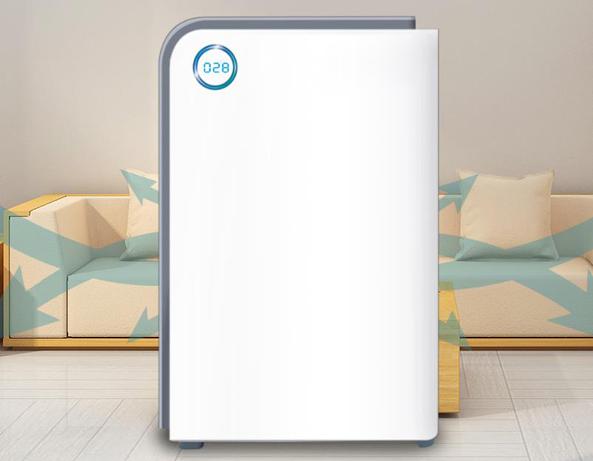
A dust sensor is a sensor device that uses optical methods to measure the characteristics of tiny particles suspended in gas or liquid phase media. It features non-contact measurement using optical measurement technology and does not disturb the measured object.
Characteristics of Dust Concentration Sensors
1. Dust sensors can perceive tiny particles larger than 1 micron, such as smoke generated by tobacco, pollen, and house dust;
2. Small size, light weight, and easy to install;
3. 5V input circuit, convenient for signal processing;
4. Built-in airflow generator can automatically attract external atmosphere;
5. Dust sensors are easy to maintain and can maintain sensor characteristics for a long time;
Principles of Dust Concentration Sensors
Particles and molecules produce light scattering when illuminated by light; meanwhile, they also absorb part of the energy of the incident light. When a beam of parallel monochromatic light is incident on the measured particle field, it will be affected by scattering and absorption around the particles, and the light intensity will be attenuated. In this way, the relative attenuation rate of the incident light passing through the concentration field to be measured can be obtained. The relative attenuation rate basically linearly reflects the relative concentration of dust in the measured field. The intensity of light is proportional to the strength of the electrical signal after photoelectric conversion, and the relative attenuation rate can be obtained by measuring the electrical signal.
Applications of Dust Concentration Sensors
Dust sensors are widely used in atmospheric measurement, fire, smoke measurement, and other fields. They can also be used for damage detection of various dust collectors, measurement of dust removal efficiency of various types of dust collectors, and indoor air detection such as air purifiers, providing reliable signals for automated control in these fields.
Main Parameters of Dust Sensors
1. Optical principle, capable of detecting dust particles larger than 1 micron;
2. Two output modes to solve different sensitivity requirements; Vout outputs a high-level signal (4V) in clean environments;
3. 5V DC power supply;
4. Particle detection range: 0.1-10um particles;